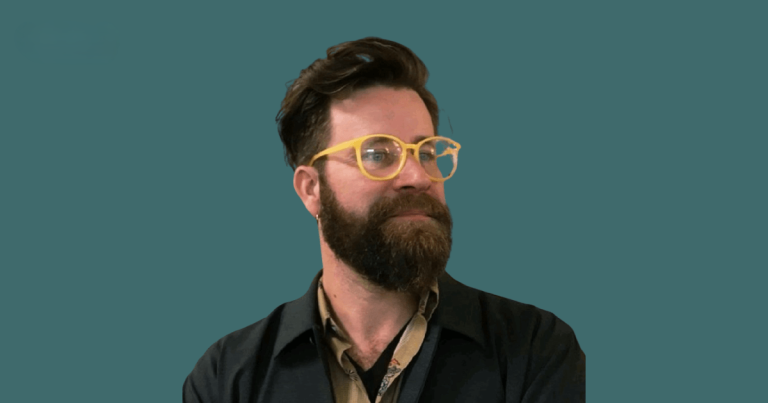
Meet Peter Murphy Lewis — the “three-hat” marketer who learned growth by getting close to people

307 peter murphy lewis featured

Most bios start with credentials.

Peter Murphy Lewis starts with family.

In the first minute of this conversation, Peter introduces himself the way he actually lives: dad to a six-year-old, husband, and then—only then—professional. After years living across South America (and still calling it home), he now wears three distinct hats at once:

  • Revenue-growth consultant helping CEOs make decisions with ROI-backed evidence
  • VP of Marketing at a long-term care (nursing home) healthcare software company
  • TV host for a cultural program in South America

That mix sounds unusual until you hear the throughline: Peter is a generalist who scales by learning fast, connecting deeply, and measuring what matters—without killing the magic.

From “future attorney” to diplomat… to entrepreneur

When the host rewinds the story back to Peter’s teenage years, the answer isn’t a straight line.

Peter wanted to be an attorney from about age 9 to 17—until his dad gave him a blunt reality check:

“I don’t know any attorneys who love their job or love their life.”

That single sentence rerouted everything. Peter pivoted to the next “serious” path: diplomacy. That’s what brought him to Chile to study a master’s degree at a school designed as a pipeline for Chilean diplomats.

And then… history repeated.

He realised he didn’t know many diplomats who loved their job or their life either—so he pivoted again, this time into entrepreneurship. As Peter puts it, he’s still “figuring out who I want to be when I grow up,” but the theme is consistent: he’s willing to change direction when the work doesn’t match the life.

Why Spanish became more than a language

Peter’s relationship with Spanish didn’t begin with textbooks—it began with people.

At a boarding school in Missouri, a large share of students were international. One of his closest friends was from Spain, and Peter realised early that language isn’t just vocabulary—it’s a framework for how people think.

That insight later shaped his marketing worldview: if you can understand how someone sees the world—and help them feel understood—you can build trust, belonging, and action.

He also learned the hard way that “Spanish” is not one thing. When he moved to Chile, he discovered Chilean Spanish is a category of its own, and he had to record lectures and replay them back at faster speeds just to decode what professors were saying.

The job that taught him marketing before marketing

Before the software role, before the consulting, before the TV work—Peter’s first job out of college was deeply human.

He became a bilingual HIV/AIDS caseworker serving the homeless population in Boston.

He didn’t know the system.
He didn’t know HIV/AIDS.
He wasn’t from a community with visible homelessness.

But he learned something that still anchors how he approaches growth:

  • People don’t need you to match their background.
  • They need to feel connected and understood.

Peter describes working with someone who had “absolutely nothing in common” with him—and seeing that none of those differences mattered once trust was present.

The host ties that back to modern marketing perfectly: in a world obsessed with tools, dashboards, and shiny automation, it’s easy to forget the obvious truth:

behind every lead is a human being.

That’s the foundation this episode keeps returning to.

The pivot into long-term care

So how does a former political science PhD candidate turned entrepreneur end up in long-term care software?

The trigger was real-world instability.

In October 2019, Chile faced violent civil unrest. Peter saw the writing on the wall, shut down his travel businesses, and moved back to the U.S. with his young son.

Soon after, he was recruited by the CEO of a long-term care software company—someone he already knew through an entrepreneurial community. The pitch was simple: “I need a loyal generalist who can solve problems fast.”

Peter said yes—and then did what he always does when he’s serious about understanding an industry:

He became a Certified Nurse’s Aide (CNA).

Not for a badge.
Not for content.

But because:

  • most users of the software are CNAs
  • COVID restricted access to facilities
  • long-term care has a massive staffing crisis

And because Peter believes the only credible way to market a world you don’t know is to get close enough to feel it.

What this episode is really about

Even though the conversation touches travel, entrepreneurship, language, identity, and ultra-marathons, the spine of the episode is clear:

Growth isn’t primarily technical. It’s human.

The tools matter.
The metrics matter.
But the real unlock is the ability to understand people, connect with them, and design systems that respect that reality.

Next, we’ll break down the key takeaways Peter shares—from how he thinks about value and trust to why long-term care is one of the most urgent (and misunderstood) industries in the U.S.

Key Takeaways: Growth, Service, and the Power of Perspective

1. Connection First. Tactics Second.

Long before dashboards, funnels, and automation tools, Peter learned a foundational truth working with the homeless population:

If someone feels connected and understood, the rest becomes tactical.

In marketing, this translates directly:

  • Personas aren’t spreadsheets—they’re people.
  • Segmentation isn’t about demographics—it’s about worldview.
  • Technology amplifies empathy, but it can’t replace it.

The biggest mistake growth teams make today? Optimising funnels without deeply understanding the human on the other side.

2. You Can Pivot Without Losing Momentum

Attorney → Diplomat → Academic → Entrepreneur → Travel Founder → Healthcare Software Executive.

From the outside, Peter’s path looks nonlinear. From the inside, it’s consistent.

Each pivot followed the same filter:

  • Does this work align with the life I want?
  • Do the people in this profession actually enjoy their lives?

That question—sparked by his father’s advice—became a decision-making framework.

Growth isn’t about climbing a ladder.
It’s about moving toward alignment.

3. Learn the Industry From the Ground Up

When Peter joined the long-term care software company, he didn’t just study competitors or messaging frameworks.

He became a Certified Nurse’s Aide (CNA).

Why?

  • Because CNAs are the primary users of the software.
  • Because long-term care is in a staffing crisis.
  • Because credibility comes from proximity.

If you’re going to sell into an industry, you should understand the lived experience of the people inside it.

That principle applies broadly:

  • Selling to developers? Write code.
  • Selling to founders? Start something.
  • Selling to operators? Sit in operations.

Proximity builds insight. Insight builds trust. Trust drives revenue.

4. Culture Beats Compensation (But Systems Still Matter)

The episode explores the uncomfortable reality of long-term care in the U.S.: staffing shortages, burnout, and underfunding.

Yet Peter describes visiting a facility where caregivers left higher-paying agency roles to work there—because of culture.

Compensation matters.
Federal policy matters.
Reimbursement rates matter.

But leadership culture can radically shift outcomes—even within broken systems.

The takeaway for CEOs: You cannot outsource culture. And you cannot scale growth without it.

5. Enjoy the Process or the Goal Will Break You

When asked about discipline—particularly around running a marathon and then a 50-mile ultramarathon—Peter’s answer wasn’t about grit.

It was about enjoyment.

He trained without music on a 400-meter track, repeating a mantra:

“Survive. Thrive. High five.”

Instead of chasing the medal, he learned to enjoy the repetition.

That mindset applies directly to business:

  • If you hate prospecting, you won’t scale sales.
  • If you hate content creation, you won’t build authority.
  • If you hate the daily reps, the outcome won’t save you.

The process has to become the reward.

6. The Five Love Languages Applies to Business

When asked about a book that changed his life, Peter didn’t choose a marketing manual.

He chose The Five Love Languages.

His reasoning: the framework helps you understand how people want to feel appreciated.

Replace “love” with “appreciation,” and the application expands:

  • Teams perform better when recognised in ways that matter to them.
  • Partnerships improve when communication styles align.
  • Burnout reduces when people feel seen.

In high-growth environments, relational intelligence is often the most underdeveloped skill.

7. The Only Thing You Control Is Your Attitude

If Peter had a billboard in Times Square, it would carry one message from his mother:

The only thing in life you control is your attitude.

Political unrest. Business collapse. Health scares. Industry crisis.

His story includes all of them.

But the common denominator is choice:

  • Pivot instead of panic.
  • Learn instead of complain.
  • Serve instead of withdraw.

That orientation—not tactics—is what makes sustainable growth possible.

Rapid Fire Q&A: The People and Principles Behind the Journey

To close the episode, Peter answers a series of quick questions that reveal the deeper drivers behind his decisions.

Most Influential Person

Dr. Holcomb — his undergraduate sociology professor.

Peter credits him with teaching a foundational lesson: the world is not black and white. That intellectual flexibility shaped how he approaches politics, business, culture, and leadership.

Best Advice He’s Ever Received

From his mother:

“Live your life like your dead grandma’s watching you.”

In other words: act with integrity even when no one else is looking.

One Book That Changed His Life

The Five Love Languages.

Not a marketing book. Not a business memoir.

Peter has gifted it more than 20 times. He credits it with strengthening his marriage and transforming how he leads teams. His insight is simple but powerful: if you understand how someone wants to feel appreciated, you can transform relationships—at home and at work.

If He Had a Billboard in Times Square

It would carry another lesson from his mother:

“The only thing in life you control is your attitude.”

Given his experience with illness, political unrest, business shutdowns, and career pivots, that mindset isn’t theoretical—it’s tested.

The Song He Secretly Sings

“Amazing” by Aerosmith.

It’s more than nostalgia. Peter recalls running a 50-mile ultramarathon and repeating lyrics from the song as a mental anchor. For him, music isn’t entertainment—it’s fuel.

Transcript

Host [00:00:00]:

It’s my pleasure to welcome Peter to the podcast. Peter, um, no, I’m not going to read from your LinkedIn. I’m going to let you just, just introduce yourself for about a minute or so. Who are you?

Peter Murphy Lewis [00:00:15]:

Start with the personal version in 30 seconds. Most importantly, dad to a 6-year-old named Quentin, married to an amazing woman from South America named Connie, uh, have amazing family from Kansas, lived in South America most of my life. Professionally, I generally say I wear 3 hats. I do consulting with CEOs who are trying to grow their revenue, uh, with some truly, uh, return on investment backed kind of evidence. Uh, I work as VP of marketing for a healthcare software company, and I am a TV host. So I have a TV show, a cultural program in South America.

Host [00:00:54]:

Okay, so, well, that’s a full load of everything, but I, I love the fact that you started with the most important part, that you have a 6-year-old daughter and an amazing wife. That’s really what matters, right? The rest falls into place. Um, so I— look, we’re both on Growth Mentor. I think you started when, when 40 you founded it, right? Like 4 years ago?

Peter Murphy Lewis [00:01:20]:

I think so. I joined as a mentee. I picked up the new healthcare job and I had a lot of experience in, uh, B2C world, starting travel companies in South America when I was young, but didn’t have experience in B2B SaaS, service software as a service. And I needed to scale up from 0 to 100 in 4 weeks. So I joined Growth Mentor, and I remember when I interviewed Foti, uh, because I felt like I was interviewing him because I thought it was such an amazing idea and so inexpensive. I thought it was a scam. And then I became a mentor about 2, 2 months afterwards and tried to give back to all the mentors who’d given me a lot of value.

Host [00:02:07]:

Yeah, so for, for people that don’t know, because I mentioned Growth Mentor all the time, but Growth Mentor is a a platform that started by Foti, and I will never be able to— do you know how to pronounce his last name? Because that makes you special. I can’t.

Peter Murphy Lewis [00:02:21]:

No, but I think Foti is unique enough, at least for those of us who live in the U.S., uh, that Foti is Foti, right?

Host [00:02:27]:

Yeah, Foti is Foti, and the rest of it is Panathinaikakos, whatever the Greek thing is, whatever it is. Um, so he started this company, uh, um, and I guess it’s based in Athens, but it’s a platform that combines— I think we’re up to 500 mentors who are specialists primarily in growth marketing, all aspects of marketing, but also about founding, you know, fundraising, mindset, culture, management, leadership. There’s about 500 people that Foti vets himself, and it’s sort of like a subscription service. So Individuals or company pay a service to have access to us, and we give of our time freely and happily. So, so that’s, that’s Growth Mentor for those who are not familiar with it. So, um, you’re a fascinating guy, man. Uh, I’m looking at some of the notes, right? Adventure seeking, marathoner, TV host, podcaster, professor of international relationship. Chili guru, not the beans but the country, uh, and a marketing guy.

Host [00:03:41]:

So what I like to do, at least in, in my podcast, is, is really sort of like peel the onion and then we get to what you do today, primarily the long-term care stuff. But let’s go back to when you were a teenager and I bumped into you somewhere and I said, Peter, what do you want to be when you grow up? And it’s an interesting question for me with a guy like you because, uh, what you’ve done after that is pretty incredible. So do you know what the answer was?

Peter Murphy Lewis [00:04:09]:

Yeah, I wanted to be an attorney probably from the age of, I guess, 9 or 10 until about 17 or 18. And I don’t know why I wanted to be, other than I think a whole bunch of people told me they thought I’d be good at an attorney, I’d be an attorney. And they— and I— the, the people from my small town in Kansas that I knew that were attorneys were just very smart and very charismatic. So I kind of fit those two things together. But I can remember very specifically the day that my dad told me never to be an attorney. And he said, “I don’t know any attorneys who love their job or love their life.” And my dad was the most important person in my life as a friend, as a mentor, And his words, I didn’t know, I don’t think I said anything other than the why. And with that, I knew immediately I didn’t want to be an attorney. And so, from about 18 till 25, I wanted to be a diplomat.

Peter Murphy Lewis [00:05:13]:

And that’s why I ended up going to Chile to study my master’s degree. And then, when I started my master’s degree in South America at kind of a diplomatic school or a trampoline for a stepping stone for Chilean diplomats. I realized I didn’t want to be a diplomat because I didn’t know very many diplomats who enjoyed their job or their life. And I quickly pivoted to an entrepreneur where I started a company about, about a year or two afterwards. And then since then, I’m still trying to figure out who, who I want to be and what I want to do when I grow up.

Host [00:05:44]:

Well, uh, you’ll figure it out soon enough because you have a 6-year-old that’s waiting to ask you a question at some point. Um, so what So, so it, it’s a big world, right? So if you want to be— so we, we— and your dad is so smart, I want to hug him for— the world doesn’t need another lawyer, uh, and he’s right. Because my best friend, literally my closest friend, is an attorney who quit law. And in, in his world, he’s a phenomenal, amazing human being. Um, he could not stand making a living sitting across from an adversary, realizing that their attorney or them are making the biggest mistake of their lives, and they could— he could not say a word. Uh, he literally could not sleep at night, so he quit. He literally cold turkey walked out of law and never practiced again. Um, and, and I met him years later in the company that I was running, and I, I trained him as a sales guy.

Host [00:06:45]:

And he was phenomenal because he’s a people-loving guy and everybody loves him. So, um, so here’s the thing, uh, it’s, it’s a big universe. What was your attraction with Spanish? You picked Spanish in college. What was that?

Peter Murphy Lewis [00:07:04]:

I went to a boarding high school in kind of central Missouri And at that school in 1994 to ’98, of the 160 students more or less, so 40 freshmen, 40 sophomores, 40 juniors, 40 seniors, about 30 to 40% of the school were international students because it was affordable, the education was amazing, and because it had a dorm. And my best friends were international students from day one. And one of my best friends was from Spain. And I realized at the age, I wasn’t able to say this, what I’m gonna say now, but I was aware of it. Learning a language is learning a different paradigm. It’s a different framework. It’s a different logic of thinking. And every single time those people shared part, they tried to translate part of their framework from their native language into English, I realized they were teaching me something.

Peter Murphy Lewis [00:08:06]:

And there was a percentage of what they were trying to translate I was missing because I didn’t speak their framework.

Host [00:08:13]:

And I was going to say that particularly in— I’m originally from Israel, so I’m a foreigner even though I’m fully a full-blown Yankee by now after 30-something years. But there’s one thing about American culture and Americans especially is they don’t speak another language. We always make fun of the French who don’t want to speak anything but French. But for the most part, Americans just— I mean, my kids took Italian and Spanish in school. They don’t remember a word they learned, and they have no motivation to use it. Uh, so it’s, it’s sort of admirable. Maybe that happens in, in Kansas, but, uh, where this was your attraction. And it’s interesting, I came to go to college from Israel literally 2 weeks after 3+ years military service, walked into a very small school, uh, and I was the main attraction because they’ve never met— I mean, that we had foreign students, and it was like, oh my God, like, who is this guy? I mean, Israel is well known, but still, it was— so I can relate to your infatuation with what that language represents.

Host [00:09:21]:

It’s not just the way you speak. There’s a whole universe of culture and thinking and traditions that comes with that we take for granted. I mean, interestingly, I spoke 5 languages in my youth. Hebrew in Israel, English as a second language which was taught in school. My parents spoke Polish to each other. We had a tenant in our apartment building who lived with us who was German, spoke nothing but German. And in high school, You have to pick up high school, and these are like, it’s like college here. You pick a major, and I was a math major, worked too hard and looked at all my friends playing outside after school and dating girls.

Host [00:10:06]:

And so I switched from math to languages, and I picked French, um, and was, was lucky to travel the world in, in the corporate world as part of my career, and it was fascinating. So So we get the, the Spanish thing, um, and then you finish college and what happens next?

Peter Murphy Lewis [00:10:28]:

My first job out of college is I became an HIV/AIDS caseworker because I spoke Spanish with the homeless population in Boston. I was working— I was a very good student undergrad and was a TA all 3 years in college, and, and my professor of sociology hired me to do some research work right when I got out of college. And shortly thereafter, I get a call, and I remember it really, really very distinctly. And the person who called me, his name was Marcelo, and he said, Peter, I heard you speak Spanish. And I said, yes. And he started speaking to me in Spanish, and he said, would you have any interest in working as a caseworker? And I said, sure, I studied sociology, I volunteered many, many times. He goes, Do you know anything about the homeless population? I said, not much. I interacted with them, but I’m from rural Kansas.

Peter Murphy Lewis [00:11:19]:

We don’t have homeless people in my hometown. And he said, do you know anything about HIV or AIDS? And I said, no. And he says, would you be afraid to work with it? I said, no. And he invited me in and that was kind of a life-changing job for me. It was one of my best jobs I’ve ever had. I always, I’ve done a lot of public speaking and I usually say the two things that I’ve learned the most from professionally was working as a bilingual HIV/AIDS caseworker with the homeless population. Number 2 was working as a certified nurse’s aide in nursing homes, and those two are very fulfilling.

Host [00:11:53]:

What was it about working with HIV/AIDS homeless people that kind of resonated with you so much?

Peter Murphy Lewis [00:12:00]:

I think what I learned from it is that if you work hard as a human being to connect with others and work hard to understand them. It doesn’t matter that you’re a white Anglo-Saxon male from, from the Midwest that has absolutely nothing in common with the illegal Honduran immigrant that I’m trying to help to get services, that’s using an illegal Social Security number, and I’m helping them get a bed so they can sleep on, and they’re pregnant, and I’m trying to get them to the doctor. Though that, that difference between me and her really, really doesn’t matter better if she feels connected and understood. So I learned a lot from that principle. And as a marketer, I always say that if you can figure those two things out, uh, the rest is easy, the rest is tactical. But if you start high and you go up there, that’s the starting point. And I would say probably what, what I felt like it gave back so much was they didn’t feel discriminated upon by their own people. So they felt comfortable speaking to someone who wasn’t in their village, who didn’t look like them, who spoke with an accent, And once I realized that that was my advantage, I realized that there wasn’t anything holding me back from connecting and understanding others.

Host [00:13:22]:

Amazing. And I like how you related it to what I think we do in marketing. And that’s the greatest misconception, particularly as marketing becomes more techie. And there are all these shiny objects and all these applications that, that you can press and magically things happen, which you and I know it doesn’t work that way. But the piece that everybody misses is that behind every customer, behind every lead, there’s a human being, there’s a living, breathing human being, and, and your ability to truly understand and connect with them is what makes for good marketing. Right. I mean, we’ve, we haven’t— I don’t know, whenever whoever came up with personas as a term, it’s a technical term for marketing. I, I kind of always refer to as the, you know, you’re a CSI investigator, crime scene investigator, and your job is to put together the, the profile of the person that committed the crime, right? That’s what we do in marketing, persona thing.

Host [00:14:26]:

But it— everybody falls into— I’m older than you, but when I work for that agency Many, many years ago, the way we used to segment the population was 22 to 80 males, right? There was— that was it, right? The universe was, okay, you’re the male, you’re a female, young, old, and maybe some other things. And today we can dive into, you know, atomic components of the people we’re trying to serve. But we lose, but we lose touch with the fact that they’re people, right? It’s like, whatever, yeah, do the persona thing, do your segmentation, do all the stuff you need to do, but it starts with, do you truly understand your target audience? I mean, really understand them, not just think you do. So, um, I don’t want to read from, from, from LinkedIn, but can you run through, because you’ve done some really cool stuff Um, so you, so you went to— you, you, you got into Spanish with your roommate, right? Then at some point you decide to go and you spend— you travel 10 countries, but over what time— what time frame?

Peter Murphy Lewis [00:15:42]:

So I perfected my Spanish in Costa Rica, uh, dated my Spanish teacher there, and while I was there I took a— I backpacked in a bus from Costa Rica to Mexico and then back when I was 19, and then went to Costa Rica again when I was 20. And when I was 22 years old, I applied for a scholarship through Rotary Club to go study my master’s degree anywhere in the world. At that time, I wanted to be a diplomat, so I had already backpacked through South America and I visited Chile. And happened to be in Chile. Actually, right now I’m talking to you from the south of Chile in the same city I was in, in Chile in 2020. And at that point, I realized I wanted to come back and live in Chile for a good part of my life. So when I won the scholarship, I knew that I wanted to go back to Chile, and I applied to the University of Chile, and I ended up down here, um, studied my master’s, graduated number one, became a professor at the University of Chile., in, in the tenure route and thought I was going to be an academic. And since then I’ve still been in midlife crisis.

Host [00:16:58]:

So, so your Spanish was fairly good if you just went to school there?

Peter Murphy Lewis [00:17:04]:

I would say that it is very good because this Chilean Spanish is, it’s borderline not Spanish. It’s really hard to understand, uh, the slang and the way they pronounce everything. So I thought I spoke Spanish showing up here and I didn’t. Or not Chilean Spanish. I had to record. I had to take a voice recorder to my classes and record the professors because I couldn’t understand their Spanish. And then I’d go back and listen to it in 1.5x or 2x, take down notes, and learn that way.

Host [00:17:33]:

That’s pretty funny because I came here to go to school and I spoke English pretty well, but I went right to college. And I remember I brought with me from Israel the English-Hebrew dictionary. So this was late ’80s, right? It was this big. It was huge. And I would take and I would read and I see words that I didn’t understand and I would circle them and go back to the room and open this giant dictionary. Same kind of process. But so it’s interesting because I don’t speak Spanish and I’m still eager to speak it because I love the culture and I love to speak the language. I know how to curse in Spanish, but that’s terrible.

Host [00:18:12]:

Um, but there are different dialects, right? So Spanish in Spain is different than Spanish in Puerto Rico and Mexico, and now you’re saying Chilean Spanish is completely different.

Peter Murphy Lewis [00:18:22]:

Yeah, very much so. And Chilean Spanish is, uh, I would say really close to a cultural Spanish because the Chilean— like, I would say that the Chilean potential or max usage of the Spanish language has to be the most limited amount of Spanish of any country I’ve ever been to. So let’s just say in Spain, out of 1,000 words that exist in the Spanish dictionary, the Spaniards use 850. And let’s say Costa Ricans use 845. I’d say Chileans use 150. And so you have to pick up on lots and lots of tones because they’re using the same word over and over and over to mean different things.

Host [00:19:09]:

Wow, it’s amazing. So, so I have a— look, we, we— most of the people that I’m actually speaking with, particularly through Growth Mentor, uh, they’re nomads. Like, a lot of them just leave their home country, they go live in Spain, they go to Portugal, they get bored, they move to Mexico, then they go to Bali. Uh, I’m totally, totally jealous of— I wish I could have done it or would have done it. Or if I had to do it again, I would. So we talk about somebody that decides to go live in another country and say, okay, that’s nice. Well, I know what it’s like. I came here, but it’s not exactly the same.

Host [00:19:47]:

You don’t look like the average Chilean, right? I can’t tell if you’re a tall guy, but you might be.

Peter Murphy Lewis [00:19:55]:

I’m pretty tall. I’m about 6 foot, so that makes me about 3 or 4 inches taller than the average Chilean man. And when I walk around, People call me gringo, which is a neutral term in Chile. And also because I have a TV show, a decent percentage of people know who I am. So some people call me by name now. They call me Peter when I walk around. And obviously, you could tell by my hair and 3 earrings and my favorite color is pink, I don’t make any effort to fit in either in Chile. My wife’s like, “Well, Peter, if you don’t want to be mugged, you don’t have to dress like that.” And I said, “Yeah, well, it’s—” rather be mugged than dress like everybody else.

Host [00:20:37]:

So my point was, and I forgot the word gringo from Westerns, uh, you’re still— you’re a gringo, right? And so you can speak the language, but does it take a while before, at least in your inner circles, they accept you at some point?

Peter Murphy Lewis [00:20:56]:

So, but my accent is very thick and I’m really bad at languages. I’m very dyslexic. The, the, the The course or the material that’s been the hardest for me in my entire life has been anything with languages, anything with reading comprehension. So I stand out really bad for my accent, but I just, I’m pretty fearless. I was bullied. I’ll take you back to a small, small kind of personal insight. I was born cross-eyed and I had surgery at the age of 2, 4, 10, 13, and 19. And I was bullied pretty heavily.

Peter Murphy Lewis [00:21:32]:

Probably till about the age of 11 for being very cross-eyed. And at some point I just accepted it and started telling everybody I was cross-eyed. And when I would walk up and meet people, I would make myself go cross-eyed on purpose and make some type of joke. And I think going through that makes me feel really comfortable speaking Spanish average, subpar, poorly. Um, and, and then to kind of answer your question a little bit better, people in South America, in Chile, are pretty pro-American in terms of kind of culture and the framework and the way that we approach life. Um, they, they, they admire kind of our fearlessness and willingness to be individual and, and stick out. So it allows you to be a little bit— it allows you to be a little bit kind of the— I don’t— I can’t think of the English word right now, but allows me to be a little bit more fluid in the class system, the social class system, the socioeconomic class system, because in Chile it’s very strong. But I can hang out with people who have helicopters and go to work in a jet as easily as I can go to someone who, you know, uh, didn’t finish, didn’t finish middle school.

Peter Murphy Lewis [00:22:44]:

Uh, and I can speak to middle school because the person— because I worked with the homeless. I can speak to the jet because I have blue eyes and I’m 6 foot tall.

Host [00:22:55]:

Um, so you, you were teaching international relations, and how did you wind up with entrepreneurship and marketing especially?

Peter Murphy Lewis [00:23:05]:

This is a— this is kind of one of those midlife, um, answers, midlife crisis answers. I was 27, and I knew to make a decent living I had to become a tenured professor, so I got a scholarship to study my PhD. Started studying my PhD in political science. And about 2 years into my PhD, I developed a, like, a chronic illness and had a colonoscopy, and they discovered that I had a tumor in my colon. And they thought I had intestinal tuberculosis after they determined it was benign. And they thought that I’d gotten tuberculosis from working with the homeless population. And at that point, they said, we don’t know what to do with this in Chile. We haven’t had tuberculosis in a long time.

Peter Murphy Lewis [00:23:56]:

Tuberculosis here in a long time. You should go back to the US and see an expert. And I went back to the US and bought a motorcycle, never went to a doctor, rode my motorcycle across the US. And when I moved back to Chile, I quit my PhD. Uh, I quit working as a professor and started what I thought was going to be easiest thing for me to do, which would be show Americans why I love this country. So I started a bicycle tour company. I started a walking tour company, a wine tour company, a high-end luxury package tour company and then also did golf tours. And my customer service was great because I’m from the Midwest.

Peter Murphy Lewis [00:24:33]:

Obviously my English is fine and I knew I learned how to do marketing on the run with, you know, a bootstrap budget. And this was 2007. Yeah, 2007 when I started my first company. I was 27 years old, started my first website and I didn’t know anything back then. But within 6 months after, when you spend your own money, as you probably know, as have you, you, you learn pretty quickly.

Host [00:24:56]:

So were your customers Americans, or were they from all over the world?

Peter Murphy Lewis [00:25:00]:

I would say the first couple years it was mostly Canadian, American, and a little bit of European, uh, in the bicycle world. As I became a little bit more diversified and understood marketing better, I’d say I picked up then the French, German, English, Australian. Uh, then when I got into walking tours and started doing a cool project, which is tip-based walking tours, so you don’t pay for a tour until you’re done, and then when you’re done, you decide what you want to pay, that really just blew up. And from there, it just completely flopped, flipped, flopped the business model because I went from having high-end customers paying $200 to $1,000 a day with me to backpackers who were giving me $7 to $15 tips. But that doesn’t really matter if you’re moving 100,000 to 200,000 people Uh, doesn’t really matter.

Host [00:25:50]:

I, I think that’s a brilliant business model that most people will never do, but, uh, ultimately this is what it’s about, right? You— if I give you value, tip me. If not—

Peter Murphy Lewis [00:26:01]:

well, I saw, I saw on your website that you are— on your LinkedIn that you don’t, uh, ask your clients to sign contracts. I don’t either, uh, and it’s, it’s kind of tip-based. Like, I’ll perform and, you know, if you want to walk away tomorrow, walk away tomorrow. And if you actually want me to work for 2 months and you’re going to pay me late, You’re gonna stick me with 2 months of free work, but, uh, it’s the risk I run. I did it as a travel company, so I could do it in marketing.

Host [00:26:26]:

So I do it a little bit differently because they do pay me upfront, but if at any point during our engagement they want to end, then we stop. I prorate whatever the balance of the month is, and I just write them a check, and that’s it. There’s no— there’s no 20-page legal document. There’s no 6-month commitment. I do it for two reasons. One, I don’t want to give them a reason to say no. But I also found that with this kind of a basis for a collaboration, it opens the door for people that tend to be less tense and relaxed, and we get to work. And because I don’t want to worry about— every six-month contract that I’ve seen in a coaching world was always pro-coach, never pro-customer.

Host [00:27:11]:

So if you want to bail out, because the client will have to prove that they’ve done all the work for them to get— oh, listen, if, if you’re confident in what you do and you deliver value, then that’s it. So, um, yeah, fascinating stuff. So, um, I have to ask the question because I, I sometimes I ask it and, and the answer is pretty interesting. And if you don’t want to go there, that’s okay. But, uh, how’d you meet your wife? How did she— why—

Peter Murphy Lewis [00:27:44]:

who—

Host [00:27:44]:

how did you meet the person that got you to actually settle down instead of running all over the world?

Peter Murphy Lewis [00:27:51]:

Well, she would say that I haven’t settled down. She’d probably say that my, my— the ants in my pants are actually moving more. Uh, but I love to tell this story. She’s the most important person in my life. We met on a blind date in August of 2010. I was just about to quit, uh, everything in academia. My travel company was taking off. I was going to dedicate myself full-time to becoming an entrepreneur.

Peter Murphy Lewis [00:28:19]:

She’d met me coming out of the tumor. She’d met me coming out of a broken hip on a— from a severe motorcycle accident. And I took her— stupidly, I took her to a German restaurant in Santiago, Chile, when she’s a vegetarian. And she didn’t eat a thing. It was pretty embarrassing. And then at least we went and danced, and my dancing skills were goofy enough that she remembered me. So I took her out on a second date the next day. And, and on our third date, um, we were riding our— my motorcycle through, through Santiago, and we saw a whole bunch of people partying in the streets.

Peter Murphy Lewis [00:28:55]:

And we pulled over and said, what are you partying? There’s no soccer game today. What are you— what are you doing? And they said, the, the miners— they discovered the miners in the north part of Chile, and they’re all alive. A couple hours later, I got a phone call from ABC Nightline saying, “Hey, Peter, you worked with us during the big earthquake about a year ago. Will you pick us up at the airport tomorrow morning with a van for a month’s supplies? Pick up our cameraman and our video team and our sound team and our camera and our face and our front woman and take her up, and you guys need to be there within 12 hours to see them rescue the miners.” So, uh, I, I, I, I, I get from your question that it’s hard to get me to settle down. She settled me down in the sense that, uh, I don’t date anyone else, uh, very monogamous. She settled me down in that I’m blessed to have an amazing kid, uh, but she can’t stop me from traveling, and I think she enjoys the ride.

Host [00:29:58]:

Amazing. Um, and, and you’re lucky. Because when you have somebody who loves you for who you are and accepts you for who you are, as opposed to laying the law down and saying, well, you can’t do that anymore because now you’re a father, it’s great. Perfect. So, all right, so now we get to the big reveal. How does someone like you wind up with long-term care? That, like, this is like, to me, it’s like, you think they used the word trampoline before. You’re like, just jumped on the trampoline over some 6-foot fence. How’d you wind up with that?

Peter Murphy Lewis [00:30:39]:

So it’s a unique story. So Chile went through some very violent civil unrest in October of 2000 2019, and my wife and I and our 3-year-old, we lived downtown Santiago, Chile, right next to the protests. And on the first night of the protests, uh, I went out right next to my office and I saw thousands of people jumping on a bridge that I thought was going to collapse. Uh, they burnt down more than 30 subway stations in one evening, and I thought they were going to burn down my office, steal 200 bicycles, take all of my computers, our cash box, and I was going to be without a job. I was worried for personal security. About on day 3 of those protests, still violent, throwing Molotov bombs at the police, police shooting protesters, I called my business partner who was Chilean. He was in Argentina at the time, and I said, “We need to close down the company.” I said, “These protests are going to last for 6 months, a year, 2 years, 3 years.” I’d studied sociology in undergrad, studied my master’s and my PhD in political science I was very in tune with where this was going. He came back to Chile on day 4 or 5.

Peter Murphy Lewis [00:31:57]:

He said, “You’re right.” He said, “We’re closing down the company.” As soon as we closed it down, I told my wife about 20 days later, I said, “I can’t live in the Chile that I love with what it’s going through. People are hateful. The right and the left are fighting over everything. I’m pretty independent. I’m pretty middle of the road, always have been for politics.” I said, “I’m out of here.” I said, I’m taking our son to the US. You come follow as soon as you can. Rent out our apartment, sell our car, get rid of everything that you can. And here’s my power of attorney.

Peter Murphy Lewis [00:32:28]:

Do anything you need to do in my name. And my son and I moved back to the US because I knew my travel companies weren’t going to have a dollar of revenue within 3 weeks because no Americans were going to go to a country that had that amount of violence. And when I got back to the US, One of the first job opportunities I had, I was recruited by the CEO of a long-term care software company. His name’s Jason Long. I consider him a friend now. He was an acquaintance there. We’d met through an online community similar to Growth Mentor. It’s called Dynamite Circle.

Peter Murphy Lewis [00:33:01]:

And I remember his pitch. He goes, “I need a generalist who can solve problems quickly, who knows how to hire and consult.” and, uh, uh, oversee experts so we can grow and scale and rebrand. And, uh, I need someone here to be with me to the end and going to be very loyal. And I said, I’m your man. I asked my wife, I told my wife, I said, I’m gonna probably work 70 or 80 hours for the next 6 months trying to understand long-term care. I’m going to become a nurse’s aide. I need to understand software. I need to know how to sell software that costs $50,000 to $150,000 a year, something I’ve never done.

Peter Murphy Lewis [00:33:37]:

And she said, go for it. And that’s how I got into long-term care, and going on 3 years now, and it’s been amazing.

Host [00:33:43]:

I love it. It’s— so the, the software was for, for nursing homes?

Peter Murphy Lewis [00:33:49]:

Nursing homes, yeah. So it’s electronic, electronic healthcare records.

Host [00:33:55]:

Hmm, interesting. But, but so you got certified as a, uh, CNA, as a certified nurse’s aide, right? Yeah.

Peter Murphy Lewis [00:34:02]:

I did that, I did that for a couple different reasons. One is I started working in long-term care during COVID and you can’t go into nursing homes during COVID because the risk. I did it secondly because the majority of the people who use our software, electronic healthcare records, are CNAs, and so I need to understand them. And then the third reason that I did it is because the biggest issue right now in long-term care is there’s a huge staffing crisis. If there’s a staffing crisis across the US— there’s been a staffing crisis in long-term care for 15 years— the reimbursement rate that the US gets from, uh, the nursing homes get from the US government hasn’t been adjusted in over a decade. So that means CNAs are almost getting paid the same amount that they were 10 years ago, or the owner’s losing out if he’s paying them more. So there’s a staffing crisis. They’re going to work at McDonald’s or staying at home or going to Walmart.

Peter Murphy Lewis [00:34:50]:

So what I did when I became a CNA, I documented the entire process to help combat the negative perception and show that while I might not be making the same amount that you might at a retail store, the human return on investment, the reward that you get from your heart and your soul is superior to anything else, anything else. I mean, that’s why I mentioned, like, when I told you the two best jobs I’ve ever done, one was homeless caseworker and the other one was long-term care. I didn’t say TV show host. I didn’t say podcast. I didn’t say running my own company. I didn’t say meeting Paul McCartney. It was two things where I I, I, I love through acts of service and get more back from the people I work for.

Host [00:35:33]:

So when I saw that, um, and this is nothing to do with software, but it has to do with the just the industry in general, I think anyone who’s ever come into personal contact with any type of long-term care, so I mean, New York nursing homes, same thing, right? Is it the same thing? Am I using— am I—

Peter Murphy Lewis [00:35:54]:

oh, am I— yep, yeah, you could— they’re interchangeable. Nursing homes, post-acute care, long-term care, Right.

Host [00:36:00]:

So anybody, anyone that comes into contact through personal interactions, um, and in my case it was, um, my parents, but that was Israel, so it’s different. But here, my father-in-law, um, initially when he had a heart attack and wind up in rehab, and a lot of the rehabs are inside the, the nursing home facility, they have a, I guess, a wing with their rehabilitated people, and they make more money, I’m assuming. And then at some point when we officially moved him to a facility, I gotta tell you, I mean, my wife used to go home crying and I used to go there a lot just to check on him. It is frightening, especially if it’s a loved one, like if it’s your dad. It’s heartbreaking to have to move them out of their home into a nursing facility. And we waited to the absolutely the last minute we could actually— we had somebody at home care for him for 24 hours, but then it just went beyond that. And then I would do surprise visits, or I just come in and go check on him. And it’s frightening, Peter.

Host [00:37:17]:

It’s just frightening. And I looked at at the staff. Honestly, didn’t see too many white people. I know it sounds terrible. And when you think about the type of work that they do, right, it’s— I could never do it. I admit it. I could never do it. I mean, to go and clean someone, and it’s really tough.

Host [00:37:46]:

You really have to have the willingness to serve at an incredibly high level to do that kind of work. To some extent, and it’s completely different, my, my young daughter is an ER nurse, um, and nurses on their own I think deserve a lot of respect and kudos, but the ER nurses particularly, because she’s been doing it for 10 years, what they go through is insane. Is absolutely insane. Uh, they get punched, they get thrown feces on. They— I mean, the good thing is they, they get paid well, okay? So we have to give them that. But, but there are plenty of professions where you could get paid a lot of money, but if you, if you hate your job, you’re still not going to do it. Um, but the nursing staff, because they get paid minimum wage or a little bit more, I, I mean, I, I just, I can’t wrap my hand around why would anybody want to work in a long-term facility making the kind of money that they get paid under the conditions that they work, right? It’s— and, and yes, if you pay them more, maybe you’ll attract different people, but, um, I don’t know how you solve it. Because I mean, we were worried for his well-being because there’s not enough people there.

Host [00:39:14]:

And I walked into one facility here on a surprise visit, and he was sitting in the corner on a wheelchair and kept saying, I need to go to the bathroom, I need to go to the bathroom, and nobody was paying attention to him. So I don’t want to paint a depressing picture, but I think it is, isn’t it?

Peter Murphy Lewis [00:39:34]:

I think it depends on where you are. So I would say, generally speaking, what you’re saying in the direction that the country is going with long-term care is accurate. My experience is not similar to yours, um, with the particulars. My, my grandparents had Alzheimer’s and their nursing home was amazing. Surprise visits were completely different than what you’re saying. And then where I was a CNA, where I did my training, I never saw anything similar to, uh, what you described with your father. What, where, so like if my experience where I, where I became a CNA was a B+, like the areas for improvement were probably we were understaffed by 1 or 2 CNAs for 30 or 40 residents. And then secondly is people are a little bit burnt out, so you have a little bit less interest of going the extra mile to take care of someone.

Peter Murphy Lewis [00:40:33]:

If someone is undereating because they don’t feel good or they have the flu or they’re not taking enough fluids because, because they’re a little bit disoriented, you know, you’re not thinking of the extra way to coax them to get more water, which, which is dehydration is going to help with their, with their memory, uh, because they might be tired of burnout. But generally speaking, the people that I worked with, their, their hearts were in the right place. And I wish you’d have had that experience. There are people that I would I would feel very comfortable putting my parents in that nursing home facility if I couldn’t take care of them at home. I just got back from a convention in Ohio and went to a facility and walked around and visited all of the CNAs and all of the frontline caregivers. And I said to the person, it was a drop-in surprise visit, the person who, who was taking me around is a friend of mine. And I told him, I said, I’ve never ever been in a place like this. All of these people quit working for agencies, which means that they were traveling from one nursing home to another, making about $5 to $7 per hour more working for the agency.

Peter Murphy Lewis [00:41:39]:

And they all came and worked for him because of his culture. Now, he, he is the minority. That is probably 1% of America’s nursing homes. But there, there are ways to replicate what he’s doing. We can’t do it without the backing of the federal government.

Host [00:41:56]:

Yeah, and I think one way to do it at a ground level, we were always very generous and went out of our way to thank the staff and support the staff and, you know, sometimes bring them something and appreciating what they’ve done. And I think you have to do it. You have to do it. But my lesson from long-term care is that if you’re a family member, you have to be there and make sure that that your, your loved one is taken care of.

Peter Murphy Lewis [00:42:25]:

Uh, I would, I would agree with that, and I would add you should be there if you’re a human being. Correct. Yeah, absolutely. So it’s, it’s not much, it’s not much different than when people complain about what they’re learning at public school, and I, I just say, well, I don’t send my kid to school to be educated. School is more about babysitting. What’s important that he learns, he’s going to learn from me and observing me and his mom. 100%.

Host [00:42:55]:

Yeah, um, interesting. I spoke to one of my guests the other day, and a very successful guy, and he said, I don’t think anybody should go to college. It’s a waste of time and money. Uh, go, go get some practice. Go get some practical work. Go work 10 jobs so you can get cross-section of different industries, different environment, cultures. And if you want to learn anything, just watch YouTube and watch TED, and you’ll be fine. You’ll be okay.

Host [00:43:18]:

And you know what, I, I think given the cost of education, uh, it’s got something.

Peter Murphy Lewis [00:43:25]:

I, I’m not saying this is— yeah, this is kind of a half-baked idea. I’ve never said it out loud, so it might come off wrong, but I almost feel like you should have to take a test of common sense before you go to college and get yourself in debt for $100,000 to $80,000, or $10,000 to $80,000, before you quit. Because I would agree with, with your, with your guess that you should at least do a year or two years of working or volunteering or traveling abroad. Because most of us, myself included, if you would have asked me at 18 why I’m going to college, I don’t think my answers would pass the test that I’m proud of today.

Host [00:44:01]:

Yeah, you’re right. And, and look, I came from, from a country where at 18 we go to serve in the military for 3 years because it’s mandatory, and that’s what you do. And we all look forward just for serving. Um, then at, at 21, 22, I show up here and, and I go to college and I want to live on campus to experience American college life. And I see people that are younger than me, 18, 19, 20, who are just the general party, you know, as I get drunk, have sex, whatever. Um, and I looked and I said, wow, this is, this is where the country where everybody says money grows on trees. Uh, well, I hope it is because I don’t know, I don’t see it here. So, but back to long-term care, I think, I think you’re right, everybody should be there.

Host [00:44:52]:

It’s interesting, and I’ll end with that. I’m going to jump into my rapid questions. I used to run my team meetings, the company that I spent most of my career in medical devices, we used to run a team meeting every Friday at the end of the day, and people always complain about the phones are ringing and, you know, constantly I hang up and the phone rings again, and I do this and do this. And I used to go go back and forth because I travel overseas. I was able to see my parents every 3 to 4 months, and especially when they were in a nursing home. And I remember the shocking transformation that I saw with my dad going into an assisted living first, and literally within 3 to 4 months, the deterioration from an independent guy to— and they move them to different floor depending on their independence Um, it was shocking to me. I was there every 3 months, and then I saw other people. They all lived in a— they ate in a common dining room, and you see people that used to be vibrant, and all of a sudden it was shocked.

Host [00:45:58]:

So when I had my team meeting, I remember saying to everybody that complained, and I said, do yourself a favor, at some point this weekend find a nursing home and please walk through the front door and just walk around, okay? And take a peek at those rooms and understand this is like the preview. This is a coming attraction. And of course, a lot of them have that awful urine smell when you walk in, the ones that are not well cared for. I said, walk in, do yourself a favor, go do that, walk around and look at the people sitting in the rooms. And if you talk to them and ask them what they’re thinking about, they’ll tell you what they regret that they haven’t been able to do in life most of the time. And I said, stop bitching about the phone ringing, okay?

Peter Murphy Lewis [00:46:48]:

Appreciate what you have. I was at a— on a similar kind of conversation about a year ago. I was at an entrepreneurial convention in Mexico, and one of my friends said to me We’d had a couple drinks and he says, you know, my partner wants to have a baby and I don’t think that I’m made of the material to be a good dad. I think I’m too egotistical. I think that I’m too young. And I said, I’m really glad you’re telling me this. Here’s what I’m going to tell you. When my wife told me she wanted to have a kid and I wasn’t certain, We went to a couple’s therapist and the therapist told us to get a dog.

Peter Murphy Lewis [00:47:33]:

I have a 2.0 version of that, which was go volunteer at a nursing home for 2 months every single Saturday. And if you’re capable of caring for people that you don’t have a close connection with yet, who can’t express what’s wrong with them, who can’t say out loud when their stomach hurts or they have diarrhea, and it stresses you out when you can see discomfort in their face and it makes you want to work an extra day and you want you want to extend your time being a volunteer, you’re cut to be a dad, uh, because I think that it’s made from the—

Host [00:48:09]:

it’s made from the same cloth. Wow, that’s— that— I— this is one of the most brilliant, uh, analogies I’ve, I’ve ever heard. Really amazing.

Peter Murphy Lewis [00:48:21]:

Um, I didn’t, I didn’t know it until I became a dad or until I worked in long-term care, so I can’t take credit for anything. I just—

Host [00:48:27]:

I was forced into learning it. Yeah, and by the way, so, so you, you said, you know, doing a test, a common sense test before you get admitted to college. I would add there needs to be some sort of a test before you become a parent. Oh yeah, because there’s no licensing exam. Like, every, every idiot can have sex and have a kid, and then you don’t have a right to destroy a human being because you’re an idiot, right? So not going to happen. That’s okay. So here we go, ready? Peter, one-word answers, rapid fire. One person that influenced you the most? Dr.

Host [00:49:03]:

Holcomb. Okay, I don’t know who he is.

Peter Murphy Lewis [00:49:04]:

You could tell me who he is. Yeah, he was, uh, my sociology professor in undergrad. He taught me that the world is not black and white. Um, he took his life in 2014, and he was the most influential person in my life outside of my father.

Host [00:49:19]:

Wow.

Peter Murphy Lewis [00:49:20]:

Best advice you’ve ever received? From my mom, I would say, live your life like your dead grandma’s watching you.

Host [00:49:37]:

One book that changed your life, fiction, nonfiction?

Peter Murphy Lewis [00:49:40]:

Oh, this is so easy. I do talks on this. I think the first time you and I spoke, I told you that I was interested in doing keynote speeches around this. The Five Languages of Love. I’ve gifted the book 20 times. I’ve read the book many times. I’ve given talks on it. It is fundamental.

Peter Murphy Lewis [00:49:56]:

I think that you can flip a negative relationship by learning the ways that a person wants to be loved or change the word in a work environment to feeling appreciated. It changed the way that I approached life. It saved my marriage. And it’s been a great tool for me teaching people who are burned out in life on how they can make a difference.

Host [00:50:18]:

Well, if, if one of my listeners reads the book and it changes their life, then it’s worth this podcast. Um, two more.

Peter Murphy Lewis [00:50:26]:

If you had a billboard in Times Square, New York City, what would you put on it? Also, uh, something from my mom, and it is, you can, the only thing in life you control is your attitude. And then I would put like a little dash behind it and say Peter Murphy Lewis’s mom.

Host [00:50:46]:

All right, last one. Since you gave Paul McCartney and Steven Tyler tours in Chile, uh, what song would you admit to secretly singing in the shower?

Peter Murphy Lewis [00:51:01]:

Oh man, uh, I would probably say Aerosmith’s song Amazing, and I sang parts of that song when I ran an ultra marathon at the age of 40 in the summer in Oklahoma. Um, and so when Steven Tyler— when Steven Tyler came into my office in South America, um, I was, I was amazed. There was a person who took off their shirt and asked him to sign his chest with a permanent marker. And so I’ll, I’ll, I’ll forever sing Amazing, uh, because of, of, of how great and how important Aerosmith was in my life when I was growing up in high school.

Host [00:51:37]:

What, what’s an ultramarathon?

Peter Murphy Lewis [00:51:38]:

Is that bigger than 26? Yeah, it’s bigger than 26. So I had a, I had a goal to run a marathon before I turned 40, and I did it by about 11 days. And then about right after I finished that, I won that marathon. Uh, when I, about 2 days later when I was no longer sore, I told my wife that I signed up for an ultra marathon, which was 50 miles, and I did that about 3 months later and won that.

Host [00:52:03]:

All right. I didn’t plan on asking this and we’ll keep it short, but but all of us are really good at setting goals. Like you said, marathon before 40, and we know how that ends, right? You and marathon— again, I’m not a runner, never liked running, but I know some people that did the marathon. You have to build up, right? So it’s about discipline, and most people just fall apart, right? It sounds good. They start the process, they tell all their friends, and then at some point it goes away. What’s your— what is the biggest advice you can give someone about goal setting and actually doing it?

Peter Murphy Lewis [00:52:45]:

The simple answer is find a way to enjoy the process. So specifically with the, the marathon and the ultramarathon, I’d heard my wife say over and over again, it’s hard for you to be Silent, Peter. It’s hard for you to be in a room without music on or listen to a podcast. So I forced myself to train for my ultra marathon on a high school track of 400 meters and without music. And I had a mantra that I sang to myself, which was survive, thrive, high five. I’d survived a lot of things that have happened in my life. I decided that I was going to thrive and now I can celebrate it. High five.

Peter Murphy Lewis [00:53:32]:

So I learned to enjoy the process. And when I finished the ultra marathon, I didn’t feel like I had to do something else because I enjoyed the process so much. I was just going to apply that process of enjoyment to something new in my life. Yeah.

Host [00:53:46]:

Again, I think that’s brilliant. And, and I’m thinking about things that I fell apart on. I got bored with I didn’t have the— I didn’t enjoy it, so I got bored with it. And it’s probably why diets fail, because people just, just fell off the wagon or anything else. Um, Peter, this was amazing. Thank you so much. Uh, one of these days I’m gonna make it to South America. I got— I have to go.

Host [00:54:11]:

Um, but now I have a tour guide.

Peter Murphy Lewis [00:54:12]:

Maybe we’ll see. Yeah, come on down. I, I do make it to New York, uh, once or twice a year, so I’ll look you up when I’m there and take you out take you, take you out for beer or dinner or pizza.

Host [00:54:22]:

No, I think I’m gonna do it the other way around, but just let me know and I’ll take you out.

Peter Murphy Lewis [00:54:26]:

Thank you so much, Siv.

Host [00:54:27]:

Thanks, it’s been awesome.

Why a Fractional CMO?


performance

Why choose a fractional CMO with Strategic Pete?

  • Cost-effective expertise: Access high-level marketing leadership without the full-time salary.
  • Strategic agility: Quickly adapt and implement marketing strategies tailored to your business needs.
  • Scalable solutions: Our flexible engagements grow with your business, providing support at every stage.
  • Proven results: Benefit from the expertise of professionals with a track record of driving significant growth.

Transform your marketing with Strategic Pete, where expert guidance meets strategic impact.

Strategic Pete

Growth Hack your business EVEN in a saturated market!

Game-Changing Strategy to Boost Your Brand and Become an Industry Leader

Discover how!