Hello, fellow extraordinary Americans.
Some stories don’t begin with a business plan. They begin with a song.
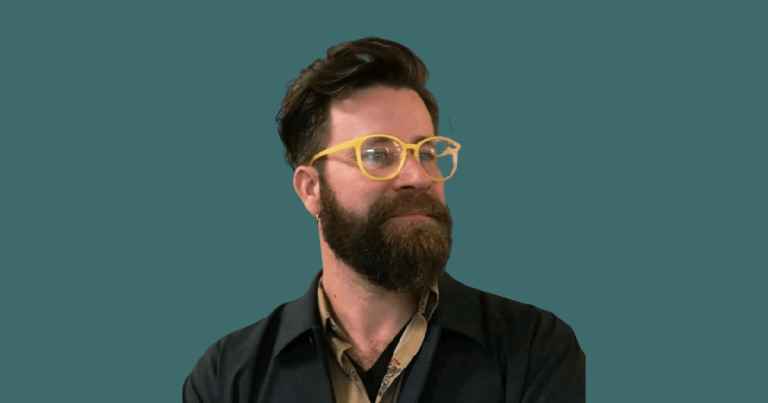
In this episode of Extraordinary America, host Cosmos Dar sits down with Peter Murphy Lewis—founder and CEO of Strategic Pete, a marketing consulting and revenue growth firm—and explores the unlikely chain of events that shaped Peter’s entrepreneurial life: a small-town upbringing in Kansas, an early love of Spanish sparked by Shakira, a life-changing trip to Chile, and the eventual building (and recent sale) of a travel company that became a leader in South American tourism.
Peter’s journey is part cultural immersion, part startup grit, and part mindset playbook. Along the way, he shares what helped him succeed as an outsider in a foreign country, how he built a business on trust, why customer experience was his competitive weapon, and how he thinks about the next wave of technology—AI—as an amplifier, not a threat.
Meet Peter Murphy Lewis
Peter is a multi-hyphenate in the truest sense: marketer, entrepreneur, storyteller, and builder.
- Founder/CEO of Strategic Pete, helping leaders turn overwhelming marketing data into clear growth strategy
- Former CNN foreign affairs correspondent, known for making complex topics understandable
- Long-time entrepreneur in South America, where he built a travel company grounded in cultural storytelling and service
- A creative force behind television and documentary projects, including his work producing People Worth Caring About
But the most compelling part of Peter’s story isn’t the résumé. It’s the through-line:
Curiosity → Courage → Connection → Compounding outcomes.
From a Small Town to a Bigger World
Peter grew up in Osawatomie, Kansas, a town of roughly 2,000 people—the kind of place where community, family, and familiarity shape your worldview.
Then boarding school changed his trajectory.
In high school, many of Peter’s closest friends were international students—from Egypt, Spain, Indonesia, Japan, Mexico, and beyond. Those friendships, he says, taught him more than geography:
- how to see problems through different lenses
- how language and religion shape identity
- how “normal” depends on who you’re surrounded by
That early exposure planted something essential for entrepreneurship: the ability to rethink assumptions.
Why South America?
Cosmos asks the question most listeners are thinking: What makes someone leave the comfort of home, cross cultures, and build a life from scratch somewhere new?
Peter’s answer is surprisingly human.
He started learning Spanish in high school—motivated by music—then followed mentor advice to Costa Rica to strengthen the language. Another mentor urged him to visit Chile, describing it as a place he’d love “as a sociologist and political scientist.”
Peter visited Chile at 20, backpacking and even touring a master’s program—without knowing it would become his future.
At 24, he won a scholarship that let him study anywhere in the world.
He returned to the exact program he’d visited years earlier.
And within six months, he called home with a sentence that would define the next decade and a half:
“I’m not coming home for Christmas. I think I’m going to live the rest of my life in Chile.”
He expected to study, then return to the U.S. as a diplomat.
Instead, he stayed 15 years, built a company, and recently sold it—proving that sometimes the best life decisions don’t start as certainty.
They start as commitment to the next step.
The Theme of the Conversation
This episode isn’t just about Peter’s biography—it’s about what his story represents:
- the immigrant/entrepreneur spirit that built America
- the value of trust in partnerships
- the discipline required to execute over years
- the power of delegation to scale beyond your own capacity
- and a reminder that the “American Dream” is less about fantasy and more about agency
In the next section, we’ll break down the key takeaways from Peter’s journey—especially the practical lessons on trust, customer obsession, delegation, and using technology (like AI) to amplify your output. For more on this, see our article on putting people before the business.
Key Takeaways
Peter’s story is inspiring—but what makes this episode valuable is how practical it becomes. Beneath the travel, TV appearances, and entrepreneurial wins are repeatable principles.
Here are the most important lessons from the conversation.
1. Trust Is a Growth Multiplier
When Peter couldn’t get hired for side work in Chile, he did something bold: he asked his best friend to introduce him to the smartest Chilean he knew. He pitched that person—Joel Martínez—and within weeks they each put $3,000 into a brand-new travel company.
They had never worked together before.
What made it work?
- Mutual trust from day one
- A shared reputation to protect
- Clear 50/50 ownership
- Radical alignment around service quality
Peter’s insight: You can scale faster with the right partner than you ever can alone—but only if trust is foundational.
Many entrepreneurs hesitate to partner out of fear. But fear-based decisions limit upside. Strategic trust, on the other hand, compounds.
2. Customer Experience Was the Real Competitive Advantage
Peter didn’t win in Chile because he was American. He won because he identified two weaknesses in the market:
- Poor customer service
- Surface-level tourism focused on infrastructure instead of people
So he built his business around:
- 100% satisfaction guarantees
- Immediate refunds for unhappy customers
- Story-driven, culture-first experiences
The result?
- Dominance on TripAdvisor for years
- Word-of-mouth growth
- Premium positioning in a commoditized industry
The lesson: Find the industry’s blind spot and overcorrect aggressively.
3. Choose Industries That Are 10 Years Behind
One of Peter’s sharpest strategic insights is this:
“If I were starting today, I’d choose industries that are 10 years behind in digitalization.”
Instead of competing in saturated, hyper-optimized sectors, he looks for markets that:
- Still rely heavily on trade shows
- Underuse digital marketing
- Haven’t optimized online positioning
In Chile, tourism lagged behind the internet boom.
Today, he applies the same lens in B2B consulting.
The strategy: Don’t fight where the competition is strongest—move where modernization hasn’t caught up yet.
4. AI Rewards the Helpful and the Adaptable
When asked about AI and the future of work, Peter’s stance was clear: he’s not afraid of it.
Instead, he sees AI as leverage.
His belief:
If you are:
- Good at critical thinking
- Skilled at synthesizing complex information
- The most helpful person in the room
AI becomes a multiplier—not a replacement.
He uses AI to:
- Repurpose podcast content across platforms
- Draft contracts and marketing frameworks
- Accelerate strategic execution
The takeaway: Technology doesn’t replace value creators—it amplifies them.
5. Delegation Is the Bridge to Scale
From the outside, Peter appears to juggle multiple ventures—consulting, documentaries, speaking, writing.
Behind the scenes?
A team of 15 specialists.
- PPC experts
- SEO strategists
- Branding professionals
- Writers and operators
His philosophy is simple:
- Hire people who are better than you in specific areas
- Empower them fully
- Retain them through culture and trust
He calls delegation a superpower—and links it directly to overcoming fear.
Many founders don’t delegate because they fear:
- Loss of control
- Loss of credit
- Loss of status
But the cost of not delegating is stagnation.
6. The American Dream Is Agency, Not Fantasy
Peter recently filmed a show exploring the American Dream—and reflected on what it truly means.
For him, it’s not material excess.
It’s:
- The ability to move up economically
- The freedom to think independently
- The opportunity to build something regardless of origin
He shared powerful examples:
- Immigrants working relentlessly to build businesses
- Individuals who were once homeless now earning six figures
- Communities where religious and cultural differences coexist
His optimism is grounded in observation—not ideology.
The American Dream, he suggests, still exists. But it requires:
- Discipline
- Trust
- Perspective
- Responsibility for your own mindset
7. Success Is an Equation You Can Influence
Peter referenced a formula tattooed on his arm:
Happiness = Reality ÷ Expectations
You cannot control every external variable.
But you can control:
- Your expectations
- Your discipline
- Your trust in others
- Your willingness to adapt
And that, ultimately, may be the real through-line of this episode.
Rapid Fire Q&A
To close the episode, Cosmos guided Peter through a series of direct, high-impact questions. Here are the distilled insights.
Q: How do you balance multiple ventures without burning out?
Peter: I don’t do it alone.
What looks like multitasking is actually specialization plus delegation.
- I focus only on the roles only I can perform (strategy, visibility, relationships).
- My team executes the systems behind the scenes.
- I hire people who are better than me in specific domains.
The lesson: If you want scale, stop trying to be the bottleneck.
Q: What separates successful entrepreneurs from everyone else?
Peter: Trust and discipline.
- Trust builds partnerships and teams.
- Discipline ensures execution over time.
Talent matters. Timing matters. But without trust and discipline, growth stalls.
Q: What advice would you give someone afraid to start?
Peter: Examine your fear.
Peter referenced the concept of “fear setting” — identifying:
- What you’re afraid of
- The real probability of it happening
- The cost of inaction
Often, the greater risk isn’t failure — it’s staying stuck.
Q: How should people think about AI and automation?
Peter: Use it. Don’t fear it.
AI will democratize skills that were once gated by credentials.
Those who:
- Think critically
- Synthesize information
- Remain helpful and adaptable
…will multiply their output.
Those who resist change may get left behind.
Q: What is the American Dream today?
Peter: Agency.
It’s the ability to:
- Build something from nothing
- Improve your family’s future
- Think independently
- Contribute regardless of where you were born
Peter emphasized that opportunity still exists — but it demands responsibility, ownership, and action.
Q: What’s next for you?
Peter is currently focused on:
- Scaling Strategic Pete as a fractional CMO and agency model
- Expanding documentary work, including People Worth Caring About
- Launching his upcoming book on building high-performing remote teams
He also offers limited pro bono mentoring sessions and invites entrepreneurs to connect directly on LinkedIn.