Peter Murphy Lewis was at Ohio Manor in Ripley, filming residents decorating Valentine’s Day trees, when a woman who had moved in recently took him aside off camera. She was from Kentucky. She had not wanted to come. She had assumed she was going there to die. Then she told him it was the only place she would ever want to live, and that it was her home. “This is where people love me,” she said. He still remembers her face.
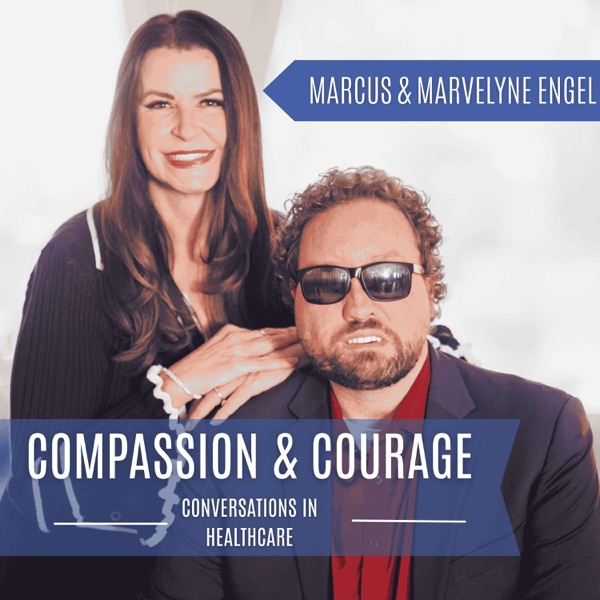
That story sits in the middle of episode 172 of Compassion & Courage, Marcus Engel’s podcast on compassionate communication in healthcare. Engel had two guests: Erin Hart, strategy director at the Ohio Health Care Association, and Peter, the filmmaker behind People Worth Caring About, the caregiver documentary series the two of them built together across Nebraska, Ohio and, as Peter puts it, a couple of other states now.
It was billed as a conversation about a documentary. It turned into a conversation about hiring. Long-term care is short of people, and both guests keep arriving at the same explanation: the public has only ever been shown the worst of the sector, so nobody applies. The episode is 30 minutes of the other evidence, and of what a state association does with it once it has been filmed. Our article on the People Worth Caring About podcast picks up where this conversation leaves off.
Key Takeaways
1. The staff doing most of the hands-on care are the ones almost nobody films
Hart draws the line clearly. In Ohio, she says on the episode, certified nursing assistants have “probably 75 to 80 percent of their hands-on one-on-one interaction with our residents every day,” while registered nurses are largely administrative, running assessments and directing nursing. That is the inverse of a hospital, and it is why the camera has to point somewhere unfamiliar. If you want to show what care in a nursing facility actually feels like, you film the CNA and the LPN, not the person with the most letters after their name.
2. Joy is the part of long-term care that never makes the news
Hart’s answer on surprises is a Super Bowl party in Cleveland, shot on the day of the game. Residents were dancing, playing games and drinking beer, and the people pouring the drinks were the food service manager and a floor supervisor who was herself 72. In the organization she used to work for, she says, the most popular buildings were the ones with pubs. Engel keeps returning to the same word: “joy is not something I think most people think of whenever you think nursing facility.”
3. Residents recruit better than any job ad
At the Manor in Perrysburg, Peter met a woman who ran the main lobby and helped start a resident-run store. She told him she loved the place so much she had brought her whole family, and she meant it literally: a daughter and four or five granddaughters, all working in the building. “She wants her amazing family to give the same love to her friends and residents,” Peter says. Hart describes the same pattern elsewhere, at a home whose motto is families taking care of families.
4. The films work because nobody wrote them
The most-repeated story in the episode is Katie and Mary, two sisters under 30 at Covenant outside Cincinnati who were making sandwiches at Subway a year or so earlier before someone spotted them and hired them as activities assistants. They exist on film by accident. A COVID outbreak cancelled a filming day, Hart found Covenant within twelve hours, and the crew was rolling two hours later. Peter’s rule for the series is short: “We can’t make up stories. We just have to find them.”
5. Ohio is turning the episodes into a high school recruiting tool
This is the part operators should copy. Hart says the association’s workforce committee is building workbooks to use alongside the episodes in front of high school students, asking them directly whether they have ever thought about this kind of work. The films are not a brand asset. They are the front of a hiring pipeline. Her reasoning is that people who come in stay: “I was only going to stay for a week or I was only going to stay for a month… and then it’s 35 years later.”
6. Caregiving work is often invisible to the person doing it
Engel asks both guests for a time someone was there for them. Peter goes back to his first job out of college, as an HIV and AIDS caseworker near Boston, helping a client from Kenya with food stamps, rent and work. He assumed the man had never mentioned him to anyone. After the client died, his wife called and Peter met his son, and they told him how much he had mattered. “Sometimes you work in the dark and sometimes you get thanked and sometimes you don’t,” he says.
Rapid Fire Q&A
Q: Why build a documentary about long-term care caregivers rather than hospital nurses?
A: Because they are the ones providing nearly all the daily hands-on care and almost none of the coverage. Hart says the stories the public hears are the bad ones, and those are “a very small percentage of what actually happens in our industry.”
Q: What surprised the two of them while filming?
A: For Peter, the Kentucky woman in Ripley who had expected to go there to die and instead called it home. For Hart, less surprise than recognition: Super Bowl parties, pubs, residents dancing with the staff who care for them.
Q: Are the videos actually being used to recruit?
A: Yes. Hart’s workforce committee is pairing the episodes with workbooks for high school visits, and the association hosts workforce pages around the series. Peter adds that most of the recruiting stories in the films were already happening; the series just gives them a bigger platform.
Q: Where should someone start if they are curious about working in long-term care?
A: Hart points to the national association’s Careers in Caring site and to OHCA.org’s workforce pages, including one on People Worth Caring About. She notes every state has an association representing long-term care providers with the same kind of information.
Q: Where can you watch People Worth Caring About?
A: Peter announces it live on the episode, before he has told Hart: as of that week you can voice-search the series on a smart TV and find the first season, including through Amazon. He says they are applying to Netflix and expect an answer in six to nine months.
What This Means for Long-Term Care Operators
If you run a building or a state association, the transferable part of this episode is not that the films are moving. It is what Ohio does with them afterwards. The episodes go into schools with a workbook. They sit on a workforce page next to job openings and the names of people a candidate can talk to. A film that only lives on your own homepage is a brochure. A film wired into a hiring process is a recruiting channel, and that difference is entirely a matter of distribution, not production budget.
The second thing to copy is the sourcing. Nothing in the People Worth Caring About documentary series was cast. Katie and Mary were found in twelve hours after a COVID outbreak closed a scheduled building. The woman with five granddaughters on payroll was not a planned interview. Peter’s line is the whole method: they cannot make the stories up, so they have to go and find them. That means booking more time in buildings than a scripted shoot would ever need.
Third, point the camera at ordinary days. The recruiting problem in long-term care is not that families believe care is bad; it is that nobody has shown them a Tuesday. A resident-run store. A 72-year-old supervisor dancing at a Super Bowl party. An LPN who decided she did not want to be promoted because the relationships were the job. Engel keeps saying joy is not the word people reach for when they picture a nursing home, and that gap is exactly where the footage earns its money.
Finally, be honest about who the film is for. It is for the seventeen-year-old, the career-changer and the family touring a building next month, in that order. That is a different edit from an investor video and a different one again from a state advocacy reel, and the strategy question comes before the shoot. That planning is the substance of Strategic Pete’s senior living marketing services, and it is why the Ohio episodes ended up in classrooms rather than in an archive.
Listen to the Full Episode
The full conversation is episode 172 of Compassion & Courage: Conversations in Healthcare, hosted by Marcus Engel, published on 25 August 2025 with Erin Hart of the Ohio Health Care Association and Peter Murphy Lewis. Listen to Finding Joy in Long-Term Care on Compassion & Courage.