Peter Murphy Lewis cried every day of his CNA clinicals. Most of it, he says on the episode, was happiness. The residents with dementia he was bathing and dressing kept returning him to the grandfather he lost while he was living on another continent, and to the grandmother with dementia he had helped move into a nursing home at 22. He enrolled for certification at 41, after his own chief executive suggested it on a management call.
Melissa Brown, chief operating officer of Gravity Healthcare Consulting, booked him for an episode called “Lessons From an Unexpected Nurses Aid.” It could easily have stayed a software interview. Peter was director of marketing at Experience Care at the time and hosted the LTC Heroes podcast, and the first half does cover the EHR. The half that stays with you is the second, where he describes what the job felt like from the floor.
Both halves run on the same idea. You cannot describe work you have never stood inside. Peter went and got certified so he could understand the people he was selling to, and what he brought back was not a campaign. It was a list of product changes and a set of stories he could not have invented. Our article on lessons from the unsung heroes of caregiving picks up where this conversation leaves off.
Key Takeaways
1. Understanding the Customer Meant Becoming One
Peter’s chief executive, Jason Long, floated it on a management call: what if you became a certified nursing assistant? Peter’s first reaction was to ask whether he would really be given the work time to do it. Over the following six months he decided the idea lined up with the three things he had been claiming about the company anyway, which were commitment, customer care and customization. His reasoning was blunt. “For me to be able to understand our customers, I needed to be one of them.” Everything else in the conversation follows from that.
2. A Charting Screen With No Room to Describe a Resident Is a Storytelling Failure
During clinicals at a facility in Kansas, Peter worked in a competitor’s system rather than his own. The activities-of-daily-living screen, he says, was clunky and left no space for description. “I was unable to tell a story. I didn’t understand what I was doing.” Because the unit was short-staffed he was not only shadowing, he was working. A new aide, a busy floor and a form with nowhere to put the detail is how the texture of a resident’s day quietly disappears from the record.
3. The Clinicals Came Back as a Product Change, Not Just Empathy
He did not stop at sympathy for the aides. He went to his chief executive with a specific request: isolate the parts of the interface a newly trained CNA has not been taught yet, so the screen shows only what that person can actually use. He credits the cardex for the rest, color-coded and sized on purpose, and compares it to buying his mother an iPhone because she could not mess it up. “It’s that participation that allows for our design team to customize our product,” he says.
4. Understaffing Shows Up First in the Smallest Kindnesses
Asked what would surprise listeners, Peter went straight to the lows. There were shifts, he says, where he had to rush a resident’s bath, where there was not enough time to put ice in someone’s Kool-Aid, or to sit and listen to someone’s story. He is describing a staffing problem, but the symptom presents as a dignity problem, and it is visible on the floor long before it surfaces in a survey. He makes the case without a single statistic. It lands because he was there for it.
5. Thirty Minutes for Mrs. K Was the Whole Argument
On his first day of clinicals a younger resident, around 50 or 55, came to breakfast and lunch. By the second day she was barely conscious, and she had a DNR. Peter, the CNA training him and another trainee took half an hour to bathe her in bed, shampoo her hair and brush her teeth. On the third day her door was closed and her name was off it. “I did something great yesterday with my team. Today, she passed.” That is the story he kept.
6. The Industry Keeps Naming Integration, Not Features
Peter asks every guest on his own podcast the same question: what is your biggest pain point with the current ecosystem of EHRs? He says on the episode that roughly three in four answer integration. He had already interviewed the president of DirectTrust about it and expected a government mandate within a few years. His analogy is the one every mixed Apple and Windows household knows, and then he cuts it off. “We’re not talking about iPhones here. We’re talking about people’s health.”
Rapid Fire Q&A
Q: What convinced you that becoming a nurse’s aide at this point in your life was the right decision?
A: His chief executive, Jason Long, put the question to him on a management call the previous January. Peter’s response was to check that he would genuinely be given the work time for it. About six months later he was certified, at 41.
Q: What is something unexpected you learned as a nurse’s aide that most people would not understand?
A: How nervous he was. He had not studied in years, and classmates who had not finished high school were far more confident than he was. Then the crying, every day of clinicals, and most of it from happiness rather than grief.
Q: What makes Experience Care different from the better known EMRs?
A: Three things, in his framing: commitment to the industry, customer care rather than customer support, and customization. “I think of support like the way a table leg keeps up a table,” he says. Care, he argues, is a different posture entirely.
Q: How does the documentation software actually save nursing leaders that much time?
A: Mostly the redesigned point of care and the cardex, color-coded and laid out to be obvious to agency staff who may be in the building for one shift. He cites a case study in which an MDS nurse credits it with saving her facility more than 5,000 documentation hours a year.
Q: Who is the LTC Heroes podcast for, and where should people find it?
A: Long-term care executives. At the time of recording it had passed 50 episodes across a podcast and a live stream, covering staffing, infection control, census, costs and reimbursement, training and leadership. He points listeners to LinkedIn and to searching the show name.
What This Means for Senior Living and Long-Term Care Marketers
The transferable move here is not the certification. It is the decision to buy proximity before buying media. Peter did not commission a study on how CNAs use software. He stood at the cart with a competitor’s ADL screen open while the floor was short-staffed, and he came away with a product request and a set of details no persona document would have handed him.
The details are the asset. Ice in the Kool-Aid. A closed door with the name taken off it. Half an hour of shampoo and toothbrush for a woman who would not see the next shift. Families and prospective staff recognize those as true, and they are exactly what a category full of stock photography and the phrase “person-centered care” never produces.
If the job is filling beds or filling shifts, the sequence is the one Peter used. Go stand in the work, capture it properly, then let the footage carry the argument rather than the claim. That is the premise behind Strategic Pete’s senior living marketing services, and the reason healthcare video production for these buildings should start with a shift rather than a script.
One caution, borrowed from how Peter handles his own claims. He routes the numbers through customers, quoting nurses and case studies rather than asserting figures himself. Do the same. An operator can test a claim against their own building in about ten seconds, and a story somebody actually lived through survives that test in a way a statistic does not.
Listen to the Full Episode
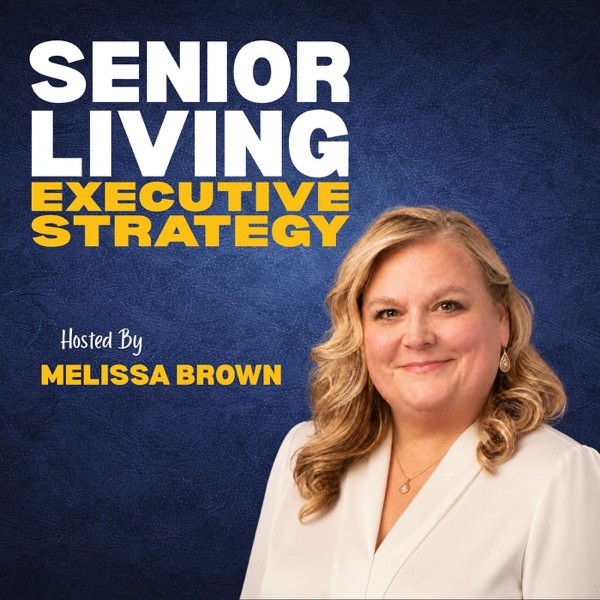
“Lessons From an Unexpected Nurses Aid” went out on 1 February 2022 on Gravity Healthcare Hacks, hosted by Melissa Brown, chief operating officer of Gravity Healthcare Consulting. The show now runs under the name Senior Living Executive Strategy. Listen to the full conversation with Peter Murphy Lewis.