Introduction
At nearly every industry convention he attends, Peter Murphy Lewis hears the same thing:
“The voice you’ve created for your company is special. Your focus, your niche, your delivery — it’s incredibly well done. How did you build this?”
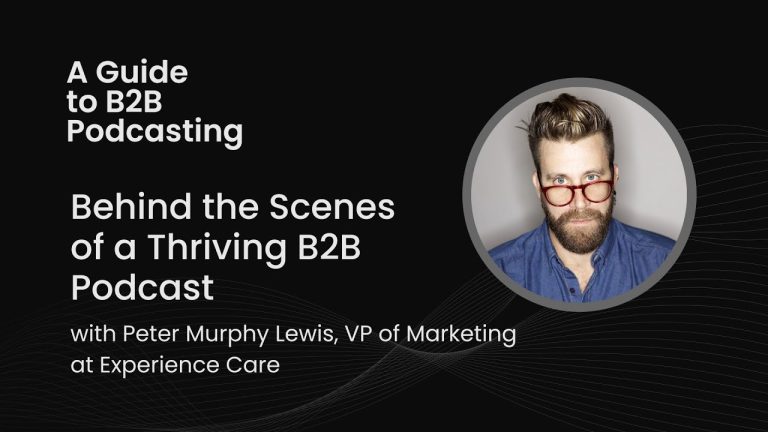
Peter is the Vice President of Marketing at Experience Care, a long-standing software provider serving nursing homes, skilled nursing facilities (SNFs), and post-acute care organizations. He is also the host of the industry-leading podcast LTC Heroes, now ranked among the top podcasts in long-term care.
But his podcasting journey did not begin with clarity or confidence.
When he first decided to launch a show, Peter had no strategy, no defined audience, no playbook, no brand identity, and no system for booking guests. He describes himself as “completely lost.” What he did know, however, was that podcasting had the potential to position him — and Experience Care — as a trusted voice among industry decision-makers.
Instead of attempting to piece together freelancers and manage a fragmented production process, Peter partnered with Content Allies. What followed was not simply the launch of a podcast — it was the creation of a strategic B2B growth channel.
With the operational heavy lifting handled externally, Peter focused on what he does best: communicating clearly, asking sharp questions, and representing the brand with authority. The result? A top-ranked industry podcast, measurable SEO impact, high-quality executive listenership, and more than 25 speaking engagements across the United States — all fueled by a disciplined podcast strategy.
In this article, we break down how Peter transformed podcasting from an uncertain experiment into a scalable, thought-leadership engine for Experience Care.
Key Takeaways
1. Podcasting Is a Strategic Asset — Not a Side Project
Peter’s success did not come from casually publishing interviews. It came from treating the podcast as a structured marketing channel. The show was designed to:
- Position Experience Care as a thought leader in long-term care
- Attract executive-level decision-makers
- Strengthen brand authority over time
- Create evergreen digital assets that compound
The lesson: B2B podcasting works when it is aligned with business outcomes — not vanity metrics.
2. Leverage Expertise — Don’t DIY the Infrastructure
Instead of assembling freelancers and managing production logistics, Peter partnered with a full-service team. This removed the operational burden of:
- Guest outreach
- Editing and production
- Distribution across platforms
- Social promotion and tagging
- Analytics and quarterly reporting
As a result, Peter spends approximately 90 minutes per week on a podcast that ranks #1 in his niche. His time is focused exclusively on high-value activities: interviews, strategic direction, and brand communication.
3. Quality of Audience Beats Quantity of Downloads
One of Peter’s strongest insights is that not all listeners are equal.
He would rather have two CEOs listening for 60 minutes than 10,000 entry-level listeners with no purchasing authority.
The podcast is intentionally designed to reach:
- Owners
- COOs
- Executive directors
- Industry board members
In B2B, influence and buying authority matter more than raw reach.
4. Turn Guests into SEO & Backlink Assets
A major growth driver behind the podcast is a deliberate backlink strategy.
Peter targets guests with strong domain authority and established industry credibility. After interviews, his team creates guest blogs that generate backlinks to both the podcast and Experience Care’s website.
The result:
- Compounding organic traffic (now exceeding 40,000 monthly visits)
- Ownership of high-intent industry keywords
- Long-term SEO impact that outlives individual episodes
This transforms each interview from a one-time conversation into a permanent digital growth asset.
5. Podcasting Unlocks High-Leverage Offline Opportunities
The podcast directly contributed to:
- 25+ speaking engagements
- Travel across 20+ states
- Exposure to 15,000–20,000 industry executives
- Fully covered travel and speaking costs
Instead of paying for booth space or ad placements, Peter gains hours of stage time in front of ideal prospects — positioning himself as an authority before a sales conversation ever begins.
6. Ongoing Optimization Drives Sustained Growth
Quarterly performance reviews, strategic feedback, and audience targeting refinements ensure the podcast continues improving.
Rather than publishing blindly, Peter benefits from:
- Structured analytics reporting
- Strategic recommendations
- Continuous guest targeting refinement
- Messaging improvement feedback
The takeaway: Growth compounds when content is measured, optimized, and aligned with business goals.
Peter’s journey demonstrates that B2B podcasting is not merely about content creation — it is about building a distribution engine, authority platform, and SEO strategy that works in parallel with sales and brand positioning.
Rapid Fire Q&A
How much time does Peter spend on the podcast each week?
Approximately 90 minutes per week. This includes a 15-minute pre-interview chat, a 30–35 minute recorded interview, a short introduction recording, and light coordination. Everything else — editing, publishing, distribution, social promotion, and analytics — is handled externally.
What was Peter’s biggest challenge at the start?
A lack of clarity. He had no defined strategy, no clear audience, no branding, no guest acquisition system, and no production workflow. The turning point was partnering with a team that provided structure, strategic thinking, and execution.
What makes the podcast successful in a B2B niche?
A deliberate focus on executive-level listeners. Rather than chasing downloads, the podcast targets:
- CEOs
- COOs
- Owners
- Executive directors
The goal is influence, not volume.
How does the podcast support SEO growth?
By intentionally inviting high-domain-authority guests and converting interviews into guest blogs that generate backlinks. This strategy has helped drive over 40,000 monthly website visits and secure ownership of high-intent industry keywords.
What tangible business results has the podcast generated?
- 25+ paid speaking engagements
- Travel to 20+ states
- Exposure to 15,000–20,000 industry executives
- Increased brand authority in long-term care
- High-quality inbound recognition at conferences
Why not rely on ads or trade show booths instead?
According to Peter, podcasting provides sustained authority at a fraction of the cost. Rather than renting attention through ads or paying for exhibitor space, the podcast builds owned media that compounds in value over time.
What is the core takeaway for B2B leaders?
Podcasting is not about recording conversations. It is about building a strategic content asset that:
- Positions your brand in front of decision-makers
- Generates measurable SEO impact
- Unlocks speaking and partnership opportunities
- Strengthens long-term brand authority
When executed with discipline and strategic alignment, a podcast can become one of the highest-leverage marketing channels in a B2B organization.