Stats
- 28 episodes produced across four seasons
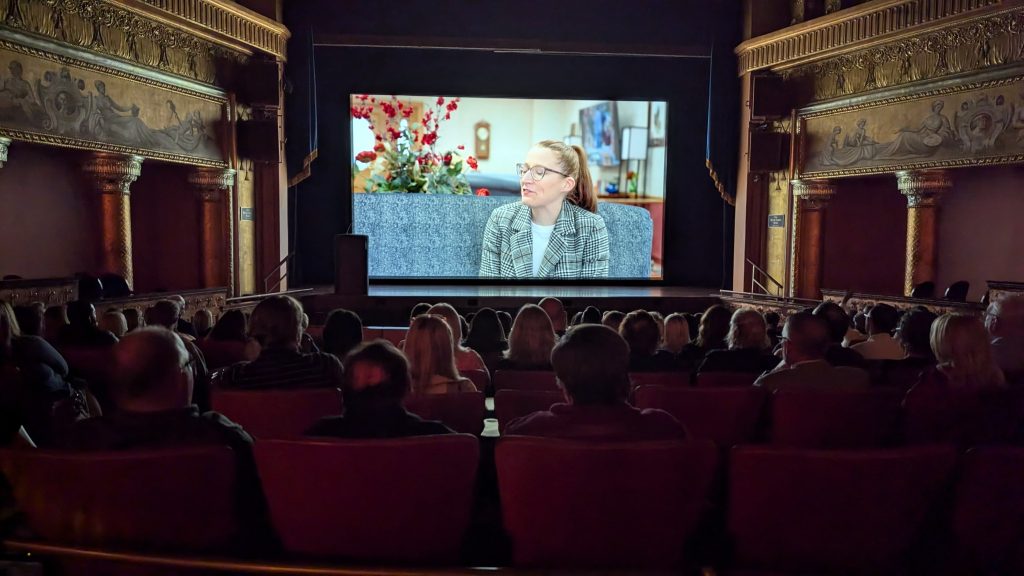
- 80,000+ views in the first six months of the Nebraska Healthcare Association documentary
- National distribution on smart TVs across the U.S.
- 10+ years of collaboration
Introduction
“ Your story deserves more than 30 seconds.”
That belief is what drives Peter Murphy Lewis, Fractional CMO and founder of Strategic Pete, and Valentina Essus, his longtime creative partner. Together, they’ve spent over a decade telling stories that slow down, dig deep, and let real people be seen.
Their partnership began in South America with a Spanish-language TV series where Peter worked over 100 jobs—everything from gold miner to shrimp fisherman—in a documentary style often compared to Dirty Jobs. That experience laid the foundation for a new storytelling vision: capturing the lives of ordinary people whose stories were rarely told.
In 2020, that vision became the nationally distributed docuseries People Worth Caring About. What started in long-term care—one of America’s most misunderstood industries—has since expanded into a 28-episode project streaming on smart TVs across the United States.

The series has made viewers laugh, cry, and rethink how they see the people behind overlooked professions.
The Challenge
Today, brands are under pressure to produce more content than ever before. AI tools make it possible to “100x their output,” as Peter explained, but this flood of short clips and templated messaging comes with a cost: Short stories void of the deeper story.
The duo saw that 30-second sound bites, while attention-grabbing, often strip away the human connection. As Valentina put it:
“ It’s really hard for a format of 30 seconds to send that message across. It’s difficult for the person who is seeing the video to feel that they know you, to feel that your story is fully understood, for them to feel that they connect with you.”
The challenge was twofold:
- Shifting Perceptions in Difficult Industries: Long-term care, for example, is one of the most negatively viewed sectors in the U.S.
“The plan here is to talk to the 60% of America who have a negative perception of nursing homes… and share with them why [people] are working in a job that would be significantly underpaid, and the win-win relationship they have with America’s seniors,”
– Peter
- Cutting Through AI Saturation: With AI multiplying generic output, how could companies and people maintain trust and authenticity?
The solution would require creating work that was not only visually compelling but also deeply human—stories that would resonate with audiences far beyond a scroll or a click.
The Solution: Long-Form Storytelling
Peter and Valentina’s answer was to design a storytelling process centered entirely on the subject—not the filmmakers—kept unscripted to remain raw, real, and human.
“ The hero of this episode is not me. Rather, we’re going to protect them [the caregivers] so that the best version of who they are comes out,”
– Peter
Their philosophy: everyone has a story worth telling.

What makes their approach unique is how they draw out those stories:
- Curiosity-Driven Interviews: Peter noted that his relentless curiosity is key in helping uncover meaning in everyday work.
“I find something interesting in everyone that I talk to… what might be unique is that I’m curious enough to ask lots of questions,”
- Creating Comfort On Camera: Valentina emphasized the importance of trust.
“They feel like they are with friends. We joke a lot, we have fun, and we try to invite people and our protagonists to feel that chemistry. That way, people don’t feel they are camera shy.”
- Process and Teamwork: From arriving on-site without knowing the subject, to building ease in front of the camera, to identifying which aspects of a story resonate most—every step is guided by professionalism and empathy.
This collaborative system, developed over years of working together, ensures that people who have never been on camera feel safe, seen, and celebrated. And it’s why audiences leave with more than just information—they leave with an emotional connection.
Results & Impact
The results of this approach have been both measurable and deeply emotional. When the first season of People Worth Caring About aired, Peter recalls:
“The emotional impact that people see and feel when they watch that first season tells me that there were so many people who doubted that it was possible.”
By choosing to spotlight nursing homes—an industry often viewed negatively—they managed to shift perceptions and spark empathy.

The Nebraska Healthcare Association documentary alone garnered over 80,000 views in six months, amplified by coverage in outlets like McKnight’s, the American Health Care Association magazine, and Becker’s Healthcare podcast. Peter explained,
“Just in the first six months, the Nebraska Healthcare Association had more than 80,000 views on the documentary.”
The impact extended beyond numbers. Episodes consistently generate laughter, tears, and genuine reflection. As Peter put it:
“Watch any of the episodes where I laugh within the first five minutes and I cry in the next five minutes, and I invite you to do it with me.”
Audiences don’t just watch the stories—they feel them.
Perhaps most importantly, the people featured remain part of Peter and Valentina’s lives long after filming ends.
“This is not a once and we’re out moment. This is a person with whom you create a special bond and with whom we stay in touch afterwards. They become part of our stories and part of our lives,”
– Peter
By combining professional craft with authentic storytelling, People Worth Caring About has shown that long-form storytelling doesn’t just capture attention—it changes perceptions, builds trust, and creates lasting connections.
Why It Works
At the core of People Worth Caring About is a simple truth: authentic stories resonate in ways that mass-produced content cannot.
“Your personal brand, your company brand is going to be more efficient and effective if you can tell a story on video,”
– Peter
Several elements explain why their approach works:
- Authenticity Over Volume: In an age where AI allows creators to “10x to 100x to 1000x the amount of output,” authenticity becomes the differentiator.
“What can’t be 2x’d or 3x’d is authentic stories and long-form storytelling,”
– Peter
- Emotional Connection: Valentina emphasized how long-form allows audiences to genuinely connect and enhances both emotional impact and long-lasting recall.
“It’s difficult for the person who is seeing the video to feel that they know you, to feel that your story is fully understood, for them to feel that they connect with you.”
- Evergreen Value: These documentaries are not fleeting clips—they are reusable, multi-channel assets. As Peter explained:
“This is a project. This is an evergreen project that has multiple facets of a marketing campaign that tells who you are, so you can define that narrative and control it.”
By pairing deep curiosity with professional production and empathetic storytelling, Peter and Valentina demonstrate that long-form content is more than just entertainment—it is a strategic tool for changing perceptions, strengthening brands, and building bonds that last. This format is also growing because audiences are hungry to hear real stories from undervalued industries. With Season 4 filming next year, the only question is: will Season 5 feature you?
People Worth Caring About is the flagship of our healthcare video production work for associations, senior living, and care teams.
Associations and brands fund seasons like this one through documentary sponsorship.