At a glance
The challenge
Most podcast outreach is ad hoc: missed follow-ups, wrong-fit shows and no record of what worked.
What we did
Built one spreadsheet to research shows, pitch them, log weekly updates and track every booking.
The result
42 podcast bookings in six months and an audience of 500,000 listeners.
Introduction
It’s a well-known and often repeated fact that digital presence is essential for businesses today. Advertising is an extremely important and effective way to reach one’s potential customers, but podcasts are also another way to leverage influencer marketing and mass reach all in one.
Podcasts are a powerful medium for thought leadership, brand awareness, and direct communication with engaged listeners who have expressed interest in a particular topic or subject.
Over the past six months, I embarked on a journey to tap into this medium’s potential and achieved remarkable results: 42 podcast bookings, reaching an audience of over 500,000 listeners within my niche market.
This case study chronicles that journey, detailing the strategies and methodologies that led to this. The process was not just about securing guest spots but doing so in a way that was efficient, scalable, and aligned with my business objectives.
The purpose of this case study is twofold:
- To Provide a Step-by-Step Guide for Replication: I aim to break down the entire process into actionable steps that any CEO or business leader can follow. From setting up tracking systems to crafting personalized pitches, every aspect of the journey is covered in detail. This guide is designed to be practical, allowing you to implement the strategies in your own outreach efforts immediately.
- To Share Insights and Strategies Learned Along the Way: Throughout the process, I encountered challenges, learned valuable lessons, and developed best practices that enhanced the effectiveness of my outreach. By sharing these insights, I hope to help you avoid common pitfalls and accelerate your path to similar or even greater success.
Why You Need a Comprehensive Spreadsheet
Accurate tracking is the cornerstone of effective outreach, enabling you to manage communications efficiently, adapt strategies based on real-time feedback, and ultimately achieve your booking goals.
Without a systematic approach, opportunities can easily be missed due to overlooked emails or forgotten follow-ups. Furthermore, you also gain valuable insights into your outreach effectiveness.
To manage the complexities of the outreach process, I developed a comprehensive spreadsheet that served as the central hub for all activities. This tool was instrumental in organizing information, tracking progress, and facilitating analysis.
Let’s break it down:
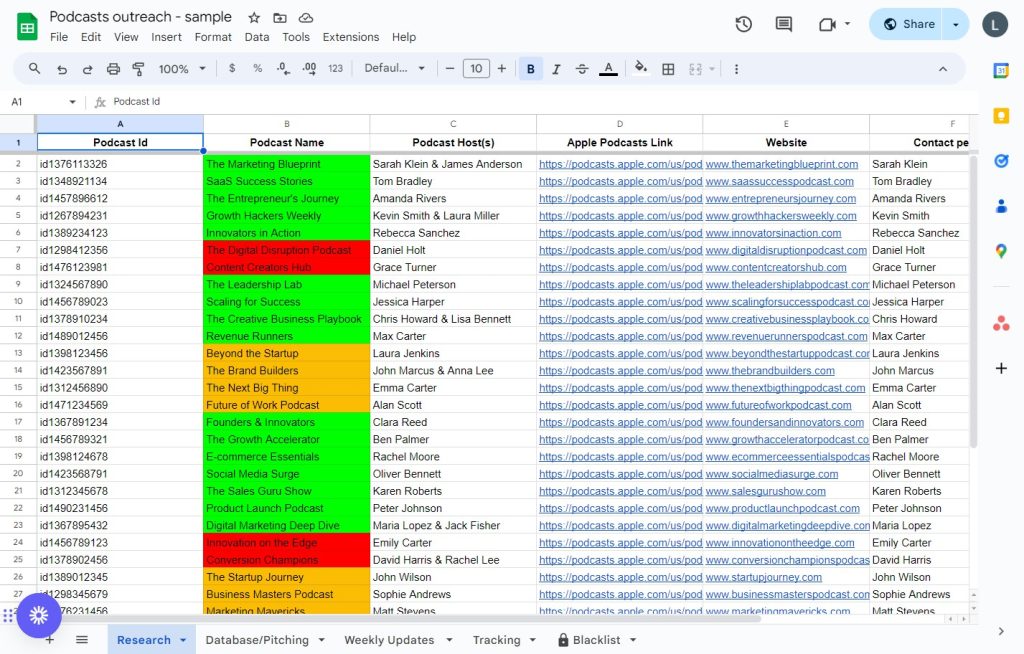
- Research: The Research tab is the foundation of your outreach campaign. It involves compiling a list of potential podcasts that align with your niche and objectives.
- Database/Pitching: This tab focuses on the podcasts you’ve deemed suitable for outreach.
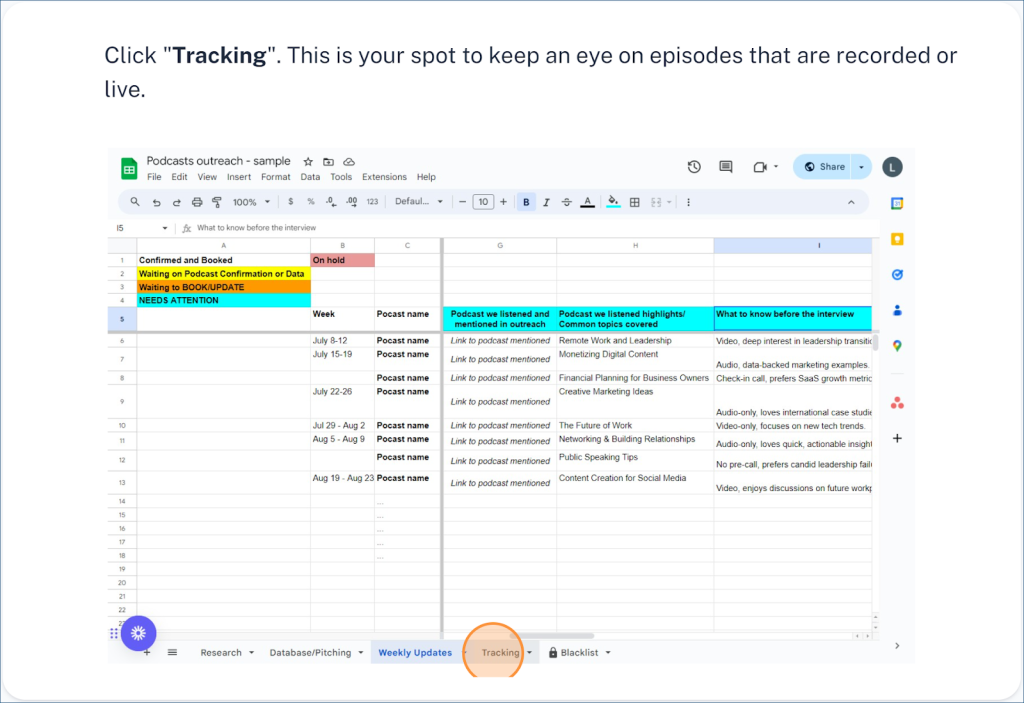
- Weekly Updates: Regular updates help monitor progress and keep the outreach campaign on track.
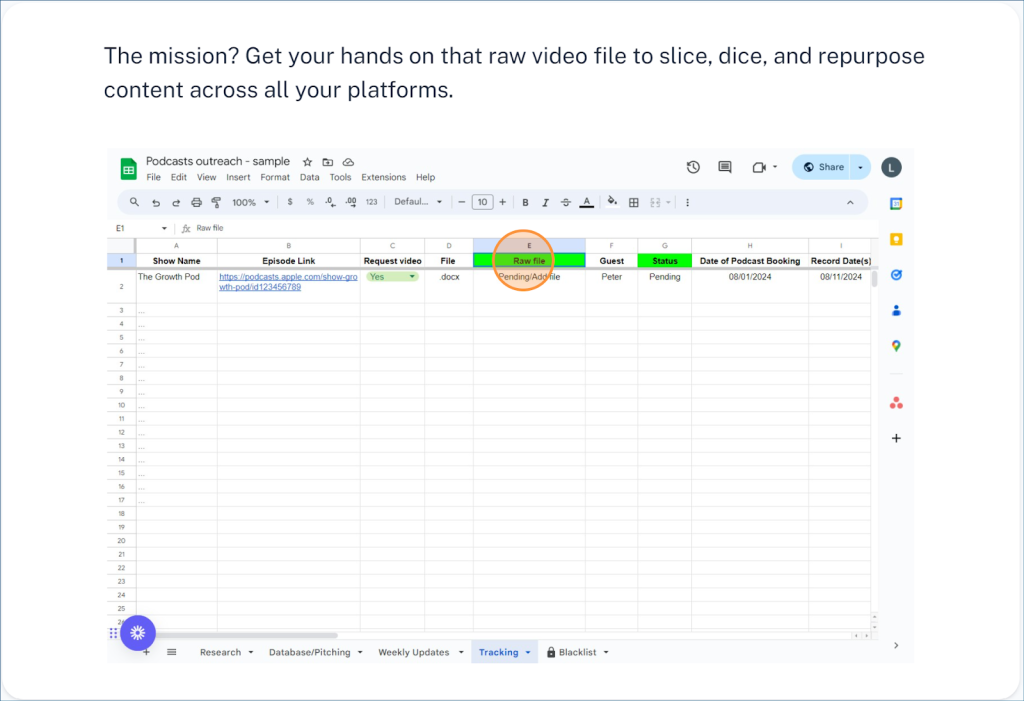
- Tracking: The Tracking tab provides a macro view of your engagements and their outcomes.
- Blacklist: Maintaining a blacklist prevents wasted effort on unsuitable podcasts.
While the basic structure is provided, tailor the spreadsheet to suit your specific goals and workflow.
Researching Potential Podcasts
Securing podcast appearances begins with identifying the right shows that align with your niche, audience, and expertise. Thus, begin by compiling a comprehensive list of potential podcasts.
There are a number of tools that you can use to find up-to-date contact information. These include:
Email Finder Tools:
- Hunter.io: Searches for email addresses associated with a domain.
- RocketReach: Provides contact information and social media profiles.
- Clearbit Connect: A browser extension that helps find email addresses directly from your inbox.
Professional Networks:
- LinkedIn: Use LinkedIn to find and connect with podcast hosts or producers.
- Twitter: Hosts often share contact information or are open to direct messages.
Podcast Directories:
- Platforms like Podchaser and Listen Notes offer detailed podcast information and sometimes contact details.
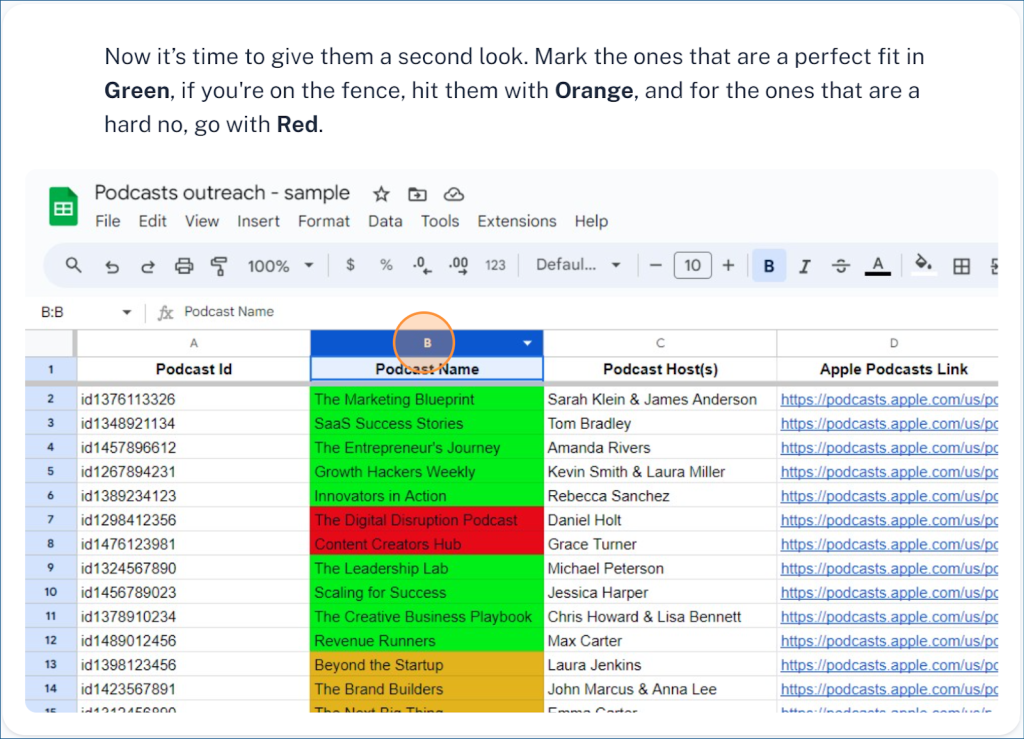
Sometimes, podcast websites contain media kits, guest submission guidelines, or specific contact forms for guest inquiries, which will make it easier to make a pitch. From here, your color-coding process can begin.
Pro Tips:
- Spend time listening to at least one full episode of each potential podcast.
- Pay attention to the host’s style, recurring themes, and the type of guests they feature.
- Determine who the podcast’s listeners are and whether they align with your target audience.
- Consider demographics, interests, and engagement levels.
- Don’t dismiss podcasts with smaller audiences; they may have highly engaged listeners and less competition for guest spots.
- Podcasts may change focus, hosts, or even discontinue. Regularly update your spreadsheet to reflect the most current information.
Preparing and Organizing Your Pitches
With your Research tab populated and color-coded, it’s time to focus your efforts on the podcasts most likely to result in successful bookings. This involves transferring the selected podcasts (the ones you highlighted in green) into a dedicated space where you can manage your outreach and track your interactions.
Here’s what that would look like:
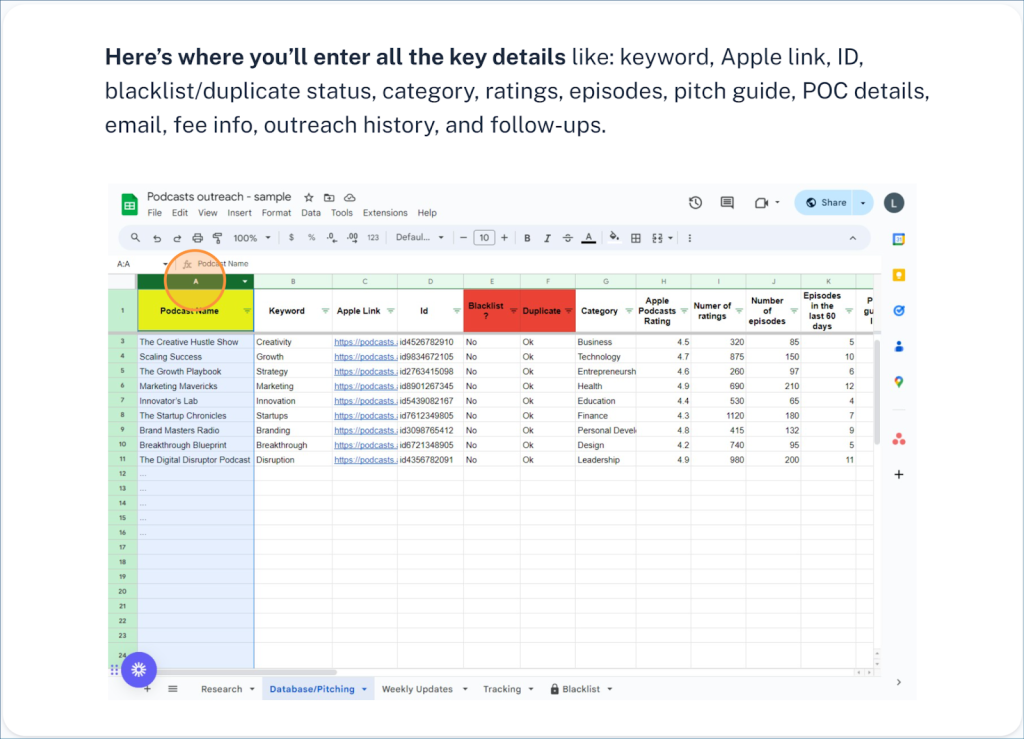
Remember: A well-crafted, personalized pitch significantly increases your chances of securing a podcast appearance. Hosts receive numerous requests, so standing out requires demonstrating genuine interest and a clear understanding of their show.
Note that not all podcast hosts will respond immediately, and that is where the next sheet comes in.
Maintaining Weekly Updates
The Weekly Updates tab in your spreadsheet serves as a log of your interactions, helping you manage the status of each potential podcast appearance. Consider it your central hub for organizing all pre-interview requirements and ensuring you’re fully prepared for each opportunity.
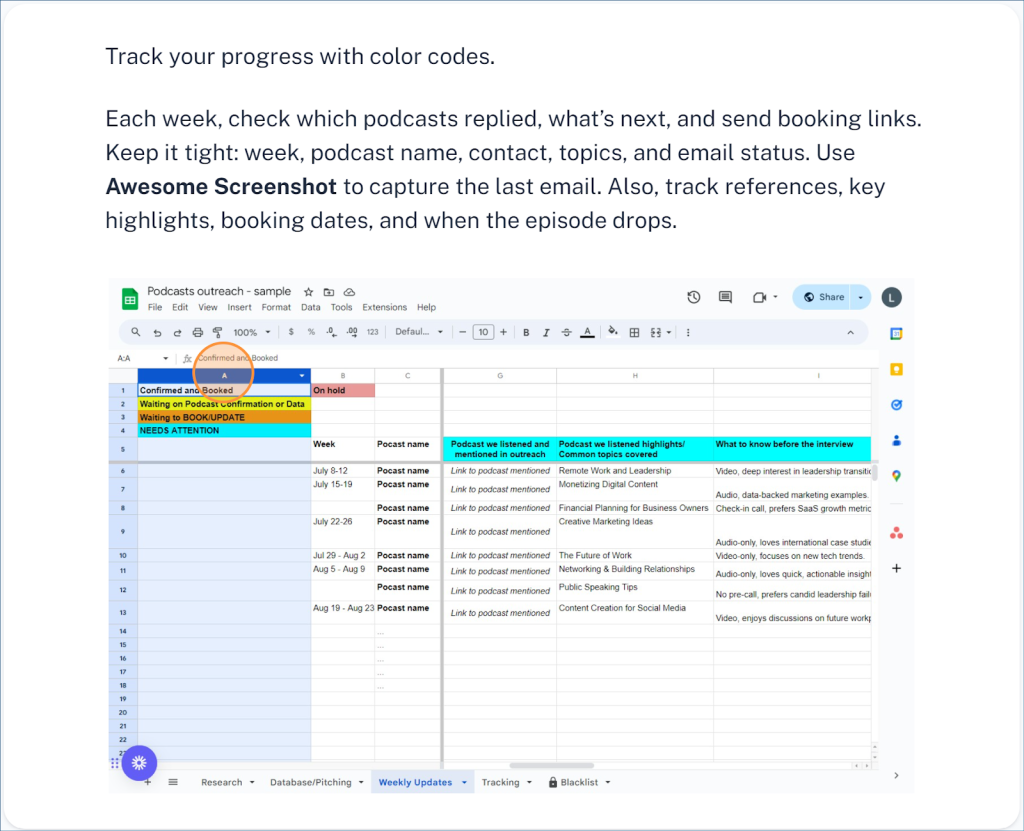
Tracking Progress
The Tracking tab is where you consolidate all the critical information about your podcast appearances. It helps you keep an eye on the status of each engagement and manage post-interview activities efficiently.
Maintaining communication with podcast hosts after the interview is crucial for nurturing professional relationships and maximizing the benefits of your appearances.