Video storytelling is the practice of making a point through a real person, filmed in a real moment, so the viewer reaches the conclusion before anyone states it. Most marketing teams already know what a good story needs on paper. Where story videos go wrong is the part that only exists on screen: who carries the story, what the camera sees while they talk, and what the edit leaves out.
That is what this guide covers. It is written for the marketing lead who has to brief, approve or produce a story video, often inside a healthcare, senior living or mission-driven organization where the real story is hard to put in a brochure.
If you need the underlying structure first, our five-part business story structure covers it. This post picks up at the moment you decide to film.
What Video Storytelling Is, and What the Camera Adds
A written story carries facts well. It struggles with everything else: a person’s manner, the pause before they answer, the way a resident looks at the caregiver who just walked in. Video storytelling exists for exactly those things.
Storytelling through video is not the same as making a corporate video. Strategic Pete’s brand story page draws the line in one sentence: “A corporate video delivers a message; a brand story film builds belief.” A message can be scripted. Belief usually has to be witnessed.
There is research behind the instinct, and it is worth reading carefully rather than as a sales line. A 2020 meta-analysis in Human Communication Research by Chelsea Ratcliff and Ye Sun pooled experiments comparing narrative and non-narrative messages. It found that narratives produced less audience resistance, and that the more engaged people were with a story, the less they pushed back.
- The effects were modest. Stories lowered resistance; they did not switch it off.
- Engagement did the work. The link between engagement and lower resistance varied with genre, length, medium and the characters in the story.
- So craft matters. The same story, told on screen through one well-chosen person, can engage people more or less depending on the decisions below.
That is the premise behind video storytelling built on documentary at Strategic Pete. Its four-step process runs Discover the stakes → Find the humans → Film with care → Deploy the asset. The rest of this guide follows the middle two steps, because that is where a story either survives the camera or doesn’t.
Video Storytelling Techniques: Five Decisions Made Before Anyone Hits Record
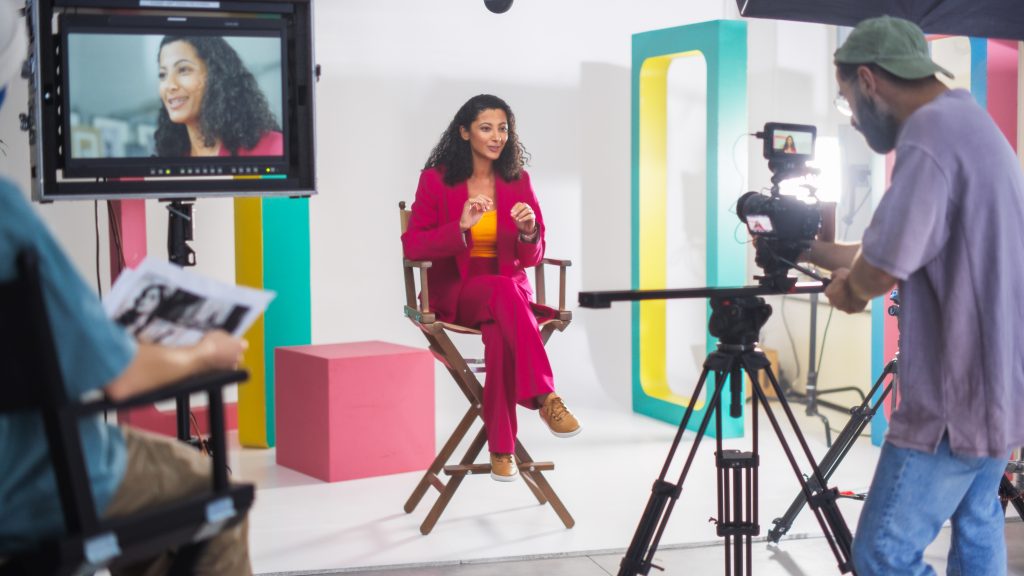
Most video storytelling techniques are decided before the shoot, not during it. By the time the camera is rolling, the important calls about who, what and how have already been made, or missed.
Cast the Person Who Carries the Story
The subject is the story. Pick the wrong person and no amount of editing will fix it.
When Glass Peaks Senior Living in Toledo, Ohio, needed to recruit memory-care specialists, the film was built around one caregiver. According to the Glass Peaks mini-documentary case study, Peter chose Lavida, a veteran memory-care specialist, after a discovery call with leadership. The reasons given were her passion for residents, her ability to connect through shared memories and her years at the community.
That points to a short casting test:
- They do the work. Not the person who describes it in meetings.
- Others seek them out. Colleagues ask them how it’s done; residents or customers light up when they arrive.
- They can talk about it plainly. In their own words, without notes.
- They are willing. A reluctant subject reads as reluctant on camera.
Seniority is not on the list. The most convincing person in a film is rarely the most senior person in the building.
Let the Interview Write the Script
Strategic Pete’s documentary method is blunt about scripts: “No actors. No scripts that sand down the truth.” In a documentary-style storytelling video, the interview is the script. Your job is to ask questions that let a real answer happen.
Oral historians have refined this for decades, and their guidance transfers directly. The National Park Service’s oral history interviewing guide recommends open-ended questions, one at a time, and warns against leading questions that steer people toward an expected answer. It also gives advice most marketing interviews ignore: “Become comfortable with silences.” People need time to think, and the best line often arrives after the pause.
Here is the difference in practice:
- Leading: “Do you love working here?” You will get “yes,” and nobody will believe it.
- Open: “Tell me about a day you knew you’d stay.” You will get a story, with a time, a place and another person in it.
The Smithsonian Institution Archives’ oral history guide adds two habits worth stealing. Start with easy questions to build rapport, and let the interviewee wander off your outline, because those detours can be the best part of the interview. Bring an interview guide, not a script, and be ready to abandon it.
Plan What You Will Show, Not Just What They Will Say
A talking head is not a story. It is a person describing a story that the viewer cannot see. The difference between the two is b-roll: footage of the work itself, cut in while the subject speaks.
At Glass Peaks, Lavida’s seated interview was filmed in a quiet corner of the memory-care wing. The crew intercut it with shots of her greeting residents and running a 1960s “Days” reminiscence activity, where residents talked about penny candy, vinyl records and what McDonald’s cost in the ’60s. The interview says she connects with residents. The b-roll proves it.
Nebraska’s long-term care series worked the same way. The case study lists the small moments that carried it: cake shared in Wakefield, succulents planted in Auburn, a former dance teacher in Lincoln moving her arms to a video of her younger self on stage.
The planning rule is simple. For every claim you expect the subject to make, list the shot that would prove it, and make sure the shoot day includes the moment when that shot can happen.
Protect the Subject on Set
Real people are not performers, and the quality of what they give you depends on how safe they feel. Strategic Pete’s process names this directly: psychological safety on set, so the subject remains the hero.
In practice that means a few unglamorous things:
- Keep the crew small. Nebraska’s 21 stories were filmed by a three-person crew. A room full of strangers changes how people talk.
- Film around the real routine. Schedule shooting around shifts and activities rather than pulling people out of them.
- Explain how the footage will be used. Get written consent from everyone on camera, and in healthcare settings, check residents’ and patients’ consent and privacy requirements with your own compliance team before the shoot.
- Don’t chase retakes. Nebraska’s approach was described as no scripts, no staged lighting and no retakes. A second take of an honest moment is rarely as honest.
Design for Sound-Off from the Start
Some viewers will meet your story video with the sound off or captions on, in a waiting room, on a train or at a desk. Captions are, in the W3C’s definition, a text version of the speech and non-speech audio needed to understand the content. The W3C Web Accessibility Initiative’s captions guidance notes they serve people who are Deaf or hard of hearing and also people who process written information better than audio. It also warns that automatic captions need editing before they are accurate.
Plan for this at the shoot, not the edit. Make sure the opening moment makes sense visually, record clean audio so captions can be accurate, and keep ambient sound. Glass Peaks’ editors mixed resident laughter and background chatter under the interview to keep it authentic while making sure Lavida’s voice stayed clear.
None of these five video storytelling techniques needs a large budget. They need decisions made early, by someone who knows what the story is for.
If your organization has a story that a script keeps flattening, start a documentary project with Strategic Pete.
How Runtime Changes the Structure of a Storytelling Video
The same story has a different shape at different lengths. A common mistake is to film for one runtime and then try to squeeze or stretch it into another. Decide the lengths before the shoot.
| Runtime | What it can hold | Its usual job |
|---|---|---|
| 30–60 seconds | One moment and one line | Reach: social and paid placements that earn a click |
| 4–7 minutes | One person, one complete arc | Persuade: a website, an event, a meeting |
| 15–20 minutes | One person, plus context, a reframe and a direct ask | Commit: candidates, families, boards who give it time |
| Docuseries | Many people, one through-line | Shift an industry’s image over months |
Thirty to Sixty Seconds: One Moment
A short cut cannot tell a whole story. It can show one true moment and point to the rest. The Glass Peaks cut-down for social and paid ads was built around the most compelling visuals and a single message about joining a team that values dignity and connection. Its job was to drive viewers to the full film, not to replace it.
Four to Seven Minutes: One Complete Story
Strategic Pete’s nonprofit video page calls four to seven minutes “the sweet spot” for a single branded story. It is long enough for a real arc: who this person is, what is at stake, what they do and why it matters to the viewer. It is short enough to hold a room at an event.
Fifteen to Twenty Minutes: Room to Reframe
The Glass Peaks episode ran 17 minutes, and its structure shows what the extra time buys:
- Context. An introduction to the series and establishing shots of the community.
- Connection. The reminiscence activity, showing how Lavida builds rapport.
- Daily care. Candid footage of mealtimes and activities, intercut with her interview.
- The reframe. Dementia presented as a chapter in each resident’s life story, not an endpoint.
- The ask. Lavida speaking directly to potential caregivers, with on-screen text pointing to applications.
That fourth beat, the reframe, is what longer video storytelling can do that a short cut cannot. It changes how the viewer sees the whole subject, not just one moment of it.
A Docuseries: Many Threads, One Through-Line
In Nebraska, each of seven communities contributed one thread: belonging in small towns, pride in an immigrant workforce, dignity in hospice care, high schoolers planting flowers with residents. The through-line was the same in every episode, so the series added up to more than its parts.
Whatever the runtime, plan the short cuts from the same shoot. Our guide to how to plan a year of cut-downs from one filming block covers that side in detail.
Video Storytelling Examples from Long-Term Care

The clearest video storytelling examples are ones where you can see every decision above at work. Two from Strategic Pete’s own documentary practice show the range, from a statewide series to a single community.
People Worth Caring About: Caregivers as the Main Characters
The Nebraska Health Care Association wanted the public to see long-term care differently. The result was People Worth Caring About, an unscripted docuseries: 21 stories across 7 Nebraska communities, filmed over two weeks in April 2024 by a three-person crew. It premiered on October 24, 2024, at the Rococo Theater, Nebraska’s largest historic theater.
The casting decision was the whole point. As Peter Murphy Lewis said of the premiere: “This was one of the most important days of my life, because caregivers weren’t in the background. They were the main characters.” Jalene Carpenter, President and CEO of the Nebraska Health Care Association, summed up the approach in three words: “Human, not Hollywood.”
What it did is documented in the Nebraska docuseries case study:
- State senators started quoting scenes from the film during discussions about funding and workforce shortages.
- One facility reported its largest fundraiser ever after a screening.
- The series was adopted into curricula at the UNO Department of Gerontology and the Nebraska Health Careers Pipeline.
- Clips from the wider series, which has since expanded beyond Nebraska, drew 7.9 million-plus TikTok views. That is a social figure, not television viewership, and the two should never be added together.
Glass Peaks: One Caregiver, One Reframe
Glass Peaks is the realistic mid-sized example. One subject, one community, one 17-minute episode and a short cut for paid social, distributed through the community’s own channels, Facebook and LinkedIn ads aimed at caregivers, and press outreach.
The story turns on a single idea from Lavida’s interview: that every resident “was a parent, a sibling, a person” long before dementia. Everything in the edit serves that line.
The case study names the measures the film was built to move (view counts, application submissions and website traffic) but does not publish the results. Treat it as a model of structure, not proof of return.
What to Borrow from These Examples
Different as they are in scale, these video storytelling examples share four habits:
- Cast for the work, not the title. Both films are carried by frontline staff.
- Film ordinary routines. The Nebraska case study calls it “ordinary shifts revealing extraordinary humanity.”
- Give the story one idea. Glass Peaks is about dignity; Nebraska is about visibility.
- Plan where it will be seen. A film nobody sees is an expensive keepsake.
For the step before any of this, our guide to finding a story worth filming covers how to search your own organization for the people and moments worth putting on camera.
The Edit Is Where Video Storytelling Is Won or Lost
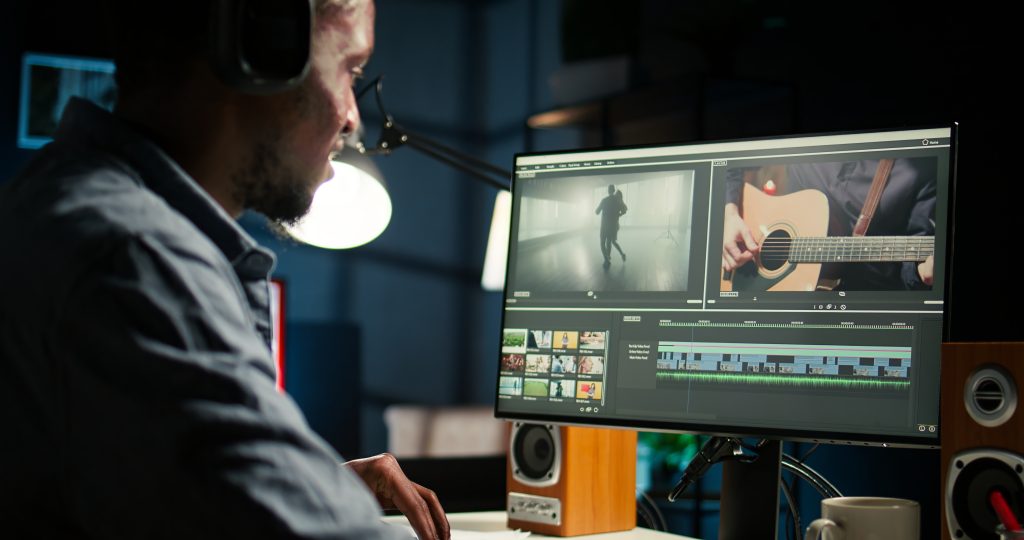
At Glass Peaks, editors reviewed roughly three hours of raw footage to build a 17-minute episode. That ratio is the real lesson about video storytelling: most of the craft is in choosing what to leave out.
Do a Paper Edit First
Before anyone touches a timeline, transcribe the interviews and mark the lines that carry the story. Arrange them on paper in the order the viewer needs them. Only then match them to footage. It is far cheaper to rearrange a document than an edit.
Cut Everything That Isn’t Doing Work
Every line should either move the story forward or show the viewer something new about the person. Explanations a shot already makes obvious can go. So can most of the context you were proud to capture.
Keep the Human Texture
Don’t polish out the pauses, the laughter and the half-finished sentences. They are what make the viewer believe the person is real. As Strategic Pete’s documentary page puts it, “Paid media puts your name in front of people; it cannot make them feel the work you do.” The rough edges are part of what makes them feel it.
End on the Decision
Close on what you want the viewer to do or think differently. Glass Peaks ended with Lavida speaking directly to potential caregivers. The Nebraska case study closes on a line attributed to Ken Burns: “The only real way you can change someone’s opinion is through a story.”
Review with the Subject
The people in the film should see it before the public does. Strategic Pete builds this step into the documentary video storytelling techniques it uses on every film: the process runs from a discovery call and story scouting through filming days built around real work, an edit with your review, and a launch package. A subject who has seen and approved the cut becomes its best advocate.
When to Bring In a Video Storytelling Partner
Not every story video needs a production company. If the story is one moment, the audience is internal and a phone with a decent microphone will capture it, film it yourself using the techniques above.
A partner earns the cost when the stakes are higher:
- The audience is a board, a legislature or a funder. Their decision matters more than your production budget.
- The story spans several sites or people. A series needs one through-line and consistent craft.
- The subjects need careful handling. Residents, patients and frontline staff deserve a crew that knows how to film them with dignity.
- The film has to work for years. An asset you will use in recruiting, sales and advocacy needs to hold up long after launch.
On cost, Strategic Pete’s documentary page does not publish a range: “Every project is scoped as a fixed engagement before filming begins. Book a call and we’ll give you a number, not a range.” The one published figure is on the published healthcare video pricing page, where short branded stories of four to seven minutes are listed at $5,000–10,000 per episode. For association work, sponsorship models can offset production costs. The nonprofit video page puts a single branded story at six to ten weeks.
Frequently Asked Questions
What Is Video Storytelling?
Video storytelling is making a point through a real person filmed in a real moment, rather than through claims or a script. It relies on casting, interviewing, footage of the work itself and a disciplined edit to let the viewer reach the conclusion on their own.
What Are the Three Types of Storytelling?
Several competing lists circulate online, and none is a settled standard. For marketing video, a more useful split is by runtime and job: the single moment (30–60 seconds) that earns attention, the complete story (four to seven minutes) that persuades, and the series that shifts how a whole field is seen.
How Long Should a Storytelling Video Be?
For a single branded story, four to seven minutes is the sweet spot. Cut 30–60 second versions from the same footage for social and paid placements, and consider a longer episode only when the audience will give it the time, such as candidates, families or a board.
How Can I Make a Storytelling Video on a Small Budget?
Keep it to one person, one location and one idea. Interview them with open-ended questions, film them doing the work in their normal routine, record clean audio and caption the result. The decisions cost nothing; the equipment can be modest.
Do We Need a Script for a Storytelling Video?
Not for documentary-style video storytelling. You need an interview guide with open questions and a shot list of the moments that would prove what the subject says. The story is shaped in the edit, not written in advance.
Conclusion
Most story videos fail quietly. Nothing is wrong with the camera work. The wrong person was cast, the interview was scripted into blandness, or the edit kept everything and so said nothing.
Good video storytelling reverses each of those. Cast the person who does the work. Let the interview write the script. Film what proves the words. Cut until one idea is left.
The less obvious payoff is internal. In Nebraska, the case study reports that caregivers watching the film felt seen, and proud of their work, in a way they hadn’t before. A film that treats your people as the main characters tends to change how they see their own work, before it changes anyone else.
If you have a story that deserves more than a script, talk about a project like this with Peter and the team.