
Launching an online business has never been easier. Making one actually work, consistently, is a different story. If you’re wondering how to market an online business (because you’re failing on doing so or because you’re wondering why some stuff is just not working) you must know that most online businesses don’t fail because the product is bad or you haven’t tried hard enough: they fail because marketing is treated as a checklist, instead of an operating system.
Think about this. Many owners post a few times on social media, run some ads, maybe write a few blogs, and hope magic happens. Sometimes it does, briefly. A stunning out-of-nowhere rage of success. But it doesn’t last. And, most of the time, nothing happens.
In 2026, marketing an online business isn’t about doing more. It’s about building infrastructure that compounds over time. Systems that attract the right people, convert them efficiently, and keep working even when attention shifts elsewhere.
This is why many businesses feel stuck in a cycle of short bursts of growth followed by long plateaus. The foundation was never designed to scale.
The reality today is that trust, data, and distribution matter more than hacks. Search engines prioritize credibility.
Social platforms reward consistency and clarity over volume. Paid media punishes weak funnels faster than ever as costs rise across nearly every channel. Businesses that win aren’t louder. They’re better built.
Today, we want to share some important and interesting insights on how to market an online business from the ground up, with a focus on proper and effective marketing.
We cover getting the fundamentals right, choosing the right ways to promote the business online, and understanding what small business digital marketing really looks like heading into 2026. The goal is not activity, but leverage.
Foundation First: Your Business Needs to Be Marketable Before It’s Promotable
One of the most common mistakes online businesses make is promoting something that isn’t ready to convert. Marketing is blamed for poor results when the real issue is structural.
A website is not a digital brochure. It’s a conversion asset. If it’s slow, confusing, or vague, no amount of traffic will fix that.
Research consistently shows that simple, easy-to-navigate websites significantly outperform cluttered ones, with clean UX linked to substantially higher revenue growth. That’s not “ooh, I like this design more than this other one”. It’s a business advantage.
But performance alone isn’t enough. Positioning matters just as much. Clear answers to three questions should be obvious within seconds of landing on a site:
- Who is the business for?
- What problem does it solve?
- Why is it different?
When this isn’t clear, visitors hesitate. Hesitation kills conversions.
There are also operational fundamentals that quietly influence marketing success. Payment flow reliability, security signals, compliance, and site stability all shape trust, especially for first-time buyers.
Stripe frames payments, compliance, and technical infrastructure as foundational to launching and scaling an online business, not as secondary operational details that can be addressed later in growth. If checkout fails or feels risky, marketing dollars are wasted upstream.
Before investing heavily in promotion, a few core systems need to be in place:
- Mobile optimization and fast site speed to support modern browsing behavior
- Clear UX hierarchy that reduces friction and guides action
- Basic analytics setup to track what’s actually happening, not just what feels busy
Tools like GA4, event tracking, and conversion measurement don’t apply to vanity metrics. They reveal where interest drops, where users hesitate, and where growth is capped. Without this visibility, scaling marketing efforts becomes guesswork.
Once the foundation is solid, promotion stops feeling like pushing a boulder uphill. It starts to compound. And that’s when the next question becomes relevant: how to choose the right ways to promote business online without burning cash too early.
Ways to Promote Business Online Without Burning Cash Early

When people talk about ways to promote business online, the conversation often jumps straight to ads. That’s understandable. Ads feel measurable, fast, and controllable. But for early-stage and growing online businesses, paid channels are usually the most expensive way to learn what works.
The smarter approach is to start with promotion methods that compound. These methods are often labeled “organic,” but that doesn’t mean they are free in the strict sense. They require time, focus, and consistency.
But unlike ads, they keep working after the initial effort is done. This distinction matters when figuring out how to market an online business without constantly increasing spend. These approaches arecost-effectiveprecisely because they continue working long after the initial effort, helping businesses build visibility and trust without constant reinvestment.
Organic growth still has a cost. Time, attention, and execution are all important. But unlike paid media, organic efforts stack over time. A well-optimized profile, a strong review base, or a solid piece of search-driven content can support growth for months or even years.
This is why organic promotion is often the smartest starting point when figuring out how to market an online business efficiently.
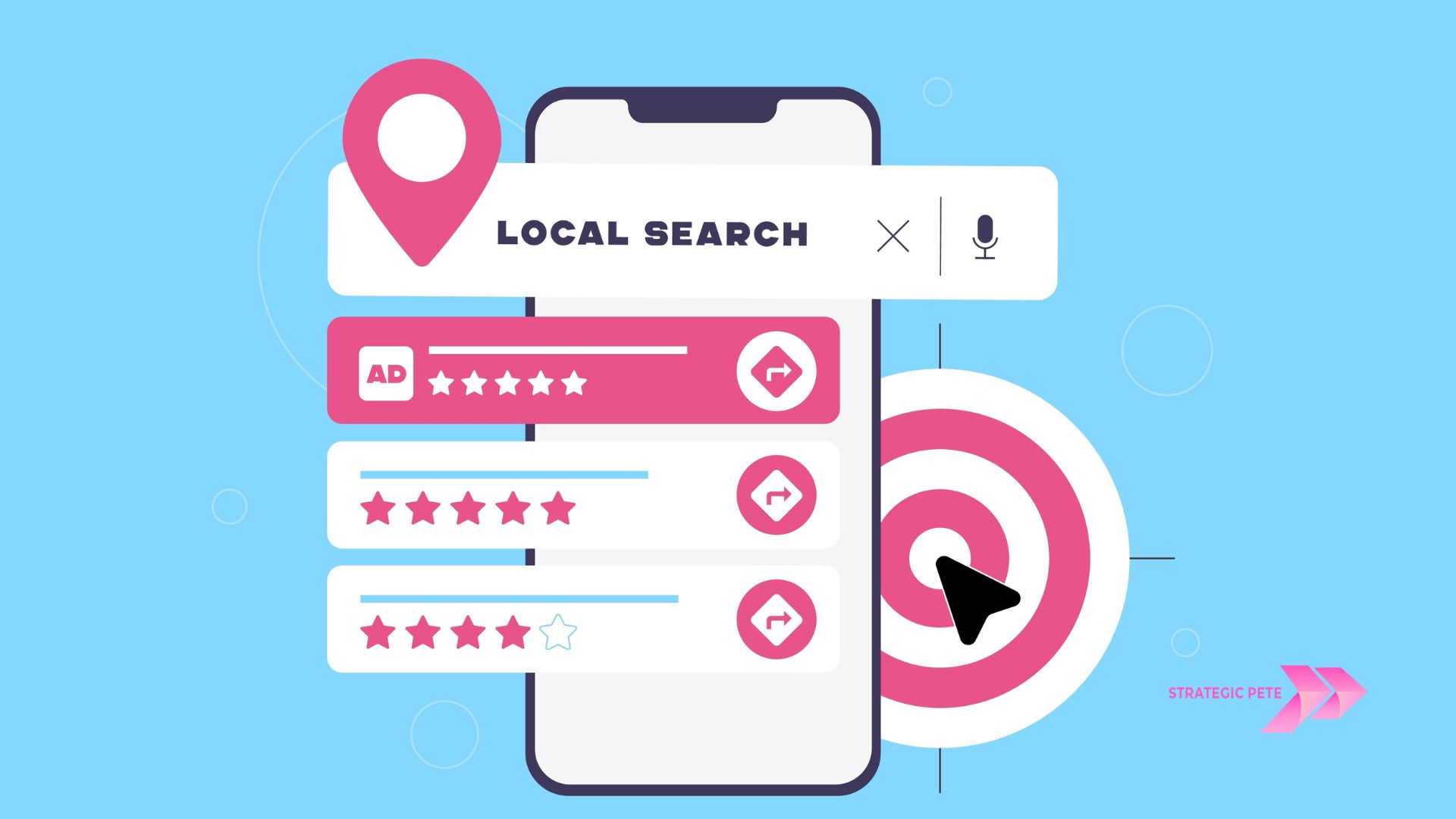
Google Business Profile
One of the most underused assets in online promotion is Google Business Profile.
Even for online-first brands, a properly optimized profile acts as a credibility checkpoint. Potential customers often search for a business name before buying, and the presence of a complete, active profile helps confirm legitimacy.
An effective Google Business Profile includes:
- Accurate business information and categories
- A clear description of what the business offers
- Updated images or brand visuals
- Links to the website and social channels
- Consistent activity and responses
For SaaS companies, ecommerce brands, and service businesses, this visibility supports trust at the exact moment decisions are made.
Directories
Being listed in directories like Yelp, G2, Clutch, or niche industry platforms isn’t about chasing traffic volume. These listings serve two strategic purposes:
- They reinforce legitimacy through third-party validation
- They provide high-quality backlinks that strengthen SEO over time
Directory listings are an important part of building online trust and local or niche visibility, especially when paired with reviews.
The key is selectivity. High-intent platforms matter more than broad exposure. A few well-maintained listings outperform dozens of forgotten ones.
Reviews
Reviews are often treated as social proof. In practice, they work as conversion accelerators.
Customer reviews not only build trust with new buyers but also influence purchasing decisions and provide insight into what customers actually value. When reviews are visible at the right moments, they reduce hesitation and shorten decision cycles.
The most effective businesses don’t wait for reviews to happen. They build systems to collect them:
- Automated post-purchase or post-onboarding emails
- Follow-ups after positive support interactions
- Simple review prompts integrated into existing workflows
Over time, this turns customer feedback into a scalable growth asset.
SEO as Demand Capture, Not Traffic Chasing
SEO works best when it’s aligned with real intent.
Rather than publishing content for volume, focus on topics people are actively searching for and building pages that clearly address those needs. This shifts SEO from a traffic game to a demand-capture strategy.
Strong SEO doesn’t operate alone. It’s reinforced by:
- Clear positioning on the website
- Trust signals like reviews and directory listings
- Consistent brand presence across platforms
When these elements work together, organic visibility becomes predictable rather than accidental.
These approaches may not deliver overnight spikes, but they represent the most sustainable ways to promote business online without burning cash early. Once they’re in place, every additional effort, whether content, social media, or paid campaigns, becomes more efficient instead of more expensive.
And with that foundation set, the next lever to examine is distribution. That’s where content moves from being “a blog” to becoming a growth engine.
Content Isn’t a Blog, It’s Distribution
For many online businesses, “content” means a blog that gets updated when there’s time. A post here, another one months later, usually written because someone said SEO was important. The result is predictable: a lot of effort, very little return, and the lingering feeling that content marketing just doesn’t work. The problem isn’t the content itself. It’s how it’s used.
Content only matters when it’s designed to move people. Not every piece should sell, but every piece should have a job. Random posts don’t compound. Systems do.
Blogging and content are long-term plays for traffic and credibility, but only when they’re anchored in what people are actively searching for and distributed intentionally, not published and forgotten.
Content Works Best When It Matches the Funnel
Not every reader is ready to buy. Some are just discovering a problem. Others are comparing options. A smaller group is actually deciding.
Content that performs is mapped to those stages:
- Educational content that answers early questions and captures search demand
- Comparative or explanatory content that helps people evaluate options
- Proof-driven content that reinforces trust right before conversion
When content isn’t aligned with intent, it feels disconnected. Like writing because “we should be posting more,” instead of because the piece solves a real problem at a specific moment.
SEO, Social, and Email Should Reinforce Each Other
Content doesn’t live in isolation. A strong article shouldn’t rely on search alone to succeed.
Growth accelerates when channels work together rather than independently: SEO captures demand, social media drives discovery, and email sustains attention and brings people back.
A single high-quality piece can:
- Rank for a relevant search query
- Be repurposed into short–form social content
- Be shared through email to re–engage existing audiences
This is where content stops being “work” and starts behaving like an asset.
Thought Leadership Beats Keyword Stuffing Every Time
There’s a big difference between writing for search engines and writing for people who use them. Yeah, keyword stuffing still happens. It just looks more polished now. Pages are “technically optimized” but, truly? They say nothing new, nothing useful, nothing credible. They might rank briefly, but they rarely convert.
There’s high value on building credibility through expertise, original insights, and contributions from people who actually know the space. Content that reflects real experience tends to earn backlinks, get shared, and stay relevant longer.
This is the difference between:
- “We wrote this because a tool said to”
- and “We wrote this because it answers a question no one else is answering well”
One builds traffic. The other builds trust.
From a Strategic Pete perspective, content isn’t a growth hack. It’s long-term equity.
High-performing content continues to attract visitors, support sales conversations, and reinforce positioning long after it’s published. Research-driven, high-quality digital assets are part of what makes online businesses more valuable and scalable over time. So, no, we’re not saying “stop creating content because it won’t work”; we’re saying that content doesn’t just support marketing. It supports your business itself.
So, none of this works without getting the basics right:
- SEO driven by search intent, not just keywords
- Clear structure and readability
- Credible sources and expert input that add value
Repurposing matters too. One strong idea can become a blog post, multiple social snippets, an email, and even sales enablement material. That’s leverage, not content overload. And when content is backed by real data, real experience, or real experts, it becomes easier to trust. Easier to share. Easier to convert.
This is where content shifts from being “something the marketing team does” to actively supporting distribution, credibility, and growth. Once that system is in place, visibility is no longer the bottleneck.
That’s when the conversation naturally moves to social media, where attention is abundant, but conversion is not.
Social Media: Visibility Is Easy, Conversions Aren’t
Social media often feels like a land of opportunity: post more, followers grow, sales happen… right? In reality, visibility on social platforms is the easy part. Turning that attention into meaningful conversions—consistent leads, repeat buyers, or measurable revenue—requires strategy, not just presence.
Today, platforms reward specific formats and behaviors. Short-form video continues to dominate feeds because it matches how people scroll and consume content—quick, engaging, mobile-friendly moments that interrupt the thumb-scroll and hold attention long enough to matter. This dynamic is projected to continue well into 2026 and beyond, with TikTok, Instagram Reels, and YouTube Shorts leading the way (short-form video dominance in consumer attention).
But before diving into specific formats like TikToks and Reels, it’s worth stressing a broader point: social media should be mission-driven, not trend-driven. Posting across every network because someone said “be everywhere” is a recipe for burnout and mediocre results, not growth.
Pick Platforms Based on Strategy, Not FOMO
Platforms are not all the same. Each serves different purposes and attracts different behaviors.
A business model that relies on visual inspiration, like fashion, food, or fitness, naturally sees higher returns from Reels or TikTok because users on those platforms are already in discovery mode. Other models, like professional B2B services, may benefit more from targeted content on LinkedIn or deeper storytelling on long-form channels, with social serving as a distribution layer rather than the conversion finish line.
Social media trends this year have reinforced this: short-form videos and niche community engagement are among the key drivers of effective online presence because they help brands connect authentically with audiences who are otherwise inundated with content.
Short-Form Video as Discovery, Not Checkout
Short-form video is the gateway, not the cash register. It’s the content type most likely to be seen, shared, and looped, but most people won’t buy from a 15-second clip.
Instead, think of these formats like a bookstore window: an eye-catching display designed to draw people in. Once they’re interested, the content must guide them to something more substantial: your website, your email list, a deeper explainer, or a product page.
Nearly half of marketers report that short-form videos like TikTok and Reels are the most engaging content formats, especially with Gen Z and millennial audiences. This means these formats are excellent for top-of-funnel awareness, but they rarely close the deal on their own.
UGC and Community: Trust Accelerators
User-generated content (UGC)—content created by real users, fans, or customers—does something traditional posts can’t: it brings authenticity into the equation. People trust real voices more than polished ads or uncertain branded messaging. UGC helps lower the skepticism barrier and injects social proof directly into your brand story.
Multiple social media trend reports place UGC as a central component of social strategies going into 2026. It’s part of why brands that become community hubs, not just broadcasting channels, tend to outperform those chasing vanity metrics alone.
UGC loops (incentivizing customers to create content in exchange for visibility, features, or recognition) create a flywheel of social proof that increases trust and relevance without requiring big ad budgets.
Influencers used to mean big-name faces with millions of followers. Today, the smartest brands rethink influence through two lenses:
- Micro and nano creators — smaller followings, higher trust, tight niche relevance. These creators often drive more meaningful engagement because their audiences perceive recommendations as genuine.
- Influencer systems over one-off posts — instead of paying for a single shout-out, build ongoing relationships that integrate creators into your content calendar, seasonality, and campaign goals.
This approach turns influencer efforts from a bolt-on tactic into part of your distribution infrastructure. When influencers participate in storytelling, community experiences, or joint creations that feel natural rather than transactional, the content resonates deeper.
Emerging industry data also indicate that mid-tier creators are often the sweet spot between reach and influence, particularly as brands seek measurable ROI and authentic engagement.
Just remember: Social media visibility can be thrilling, but it’s rarely where conversions happen.
Visibility starts conversations; conversions close them. The gap between the two is filled with authentic context, purposeful sequencing, and community trust, not just trending sounds or flashy production.
With that groundwork, social media becomes less of a noise machine and more of a strategic amplifier, supporting everything from SEO to email nurture to paid efforts that finally land on fertile ground.
Paid Media Only Works After the Fundamentals Are Right
Paid media is often treated as the moment an online business becomes “serious.” Launch the ads, scale the budget, watch the numbers go up. In practice, paid media is far less forgiving than most founders expect.
Across nearly every industry, cost per click continues to rise while margins get tighter. Platforms are more competitive, users are more skeptical, and algorithms are less generous with cheap reach. This doesn’t mean ads no longer work. It means they only work when the fundamentals are already doing their job.
Google Ads, Meta, and other paid platforms operate on auctions. As more businesses compete for the same attention, prices increase. While average CPCs can remain manageable in some industries, highly competitive spaces routinely see CPCs climb into double digits, especially for high-intent keywords.
When margins are thin or conversion paths are weak, these costs surface problems fast. Ads don’t fail quietly. They burn the budget loudly.
This is why paid media works best once:
- The website converts consistently
- Messaging is clear and proven
- Trust signals are already in place
Without that, ads simply accelerate losses.
So, take into consideration all the things we’ve been discussing so far, and only then, when those boxes are checked, apply the ad strategy.
Paid media doesn’t operate in isolation. Ads may introduce a brand, while conversions occur later through email, organic search, or direct visits. It’s important to understand the full customer journey rather than attributing success or failure to a single click.
This is why realistic measurement matters:
- Look beyond last-click attribution
- Factor in assisted conversions
- Separate testing budgets from scaling budgets
Not every campaign needs to be profitable right away. But every campaign needs to be informative.
Different paid channels serve different roles:
- Google Ads capture high-intent searches and work best when demand already exists
- Meta Ads excel at retargeting and demand amplification through creative storytelling
- Dedicated retargeting campaigns reinforce awareness and reduce decision friction
If you want a strong setup, forget relying only on one platform; instead, use each channel for what it does best.
Paid media is powerful, but it’s not forgiving. When fundamentals are strong, ads accelerate growth. When they aren’t, ads simply expose weaknesses faster. This is why paid media works best as a multiplier, not a foundation. And once organic traction, content, social proof, and systems are in place, paid channels can finally do what they’re supposed to do: scale what’s already working.
What Small Business Digital Marketing Looks Like in 2026

Small business digital marketing in 2026 looks very different from the “post, boost, repeat” playbooks that dominated the last decade. For online businesses, the shift is structural, all the way through. The biggest change is this: growth no longer comes from stacking tactics. It comes from coordination and systems.
In practice, digital marketing for small businesses means channels no longer exist in silos. They interlock (SEO, content, social, email, and only then paid media) and should reinforce each other to generate real momentum for online businesses.
For those wondering how to market an online business effectively, the shift is clear: fewer tactics done well are better than many tactics done poorly. The question today isn’t “what’s the next shiny thing?” but rather “how do all our efforts form one connected revenue engine?”
Online businesses win in 2026 by being coherent, not chaotic.
Instead of treating SEO, content, social media, email, and paid ads as separate projects, the best marketers integrate them into a single strategy where each part amplifies the others:
- SEO captures the demand people already have
- Content builds authority and fuels organic visibility
- Social media drives discovery and engagement
- Email nurtures and converts audiences over time
- Paid media accelerates what already works
Digital marketing leaders increasingly focus on connected, automated experiences that span channels and touchpoints, a trend predicted as central to 2026 strategy.
A common early mistake still seen today is trying every platform at once. That quickly dilutes attention and creates inconsistent execution.
Choosing which platform to advertise your business on or to focus your content on should start with intent and audience data. In 2026, successful online businesses take a strategic view:
- Search environments help capture users already looking for solutions (SEO & SEM)
- Social fuels discovery and affinity
- Owned channels like email convert and retain audiences without paying for reach
- Paid channels amplify only proven paths rather than being the first test
Experts now stress that marketing performance depends on strengthening what already works, not adding random channels because they’re “trending.”
The hallmark of today’s digital marketing isn’t speed or volume. It’s repeatable systems:
- documented workflows
- data-driven decisions
- consistent messaging
- automation for nurturing and personalization
A framework like this turns marketing from a series of isolated efforts into an engine that scales with the business. Channels reinforce one another rather than compete for attention or budget. This approach aligns with strategic thinking in some of the most current digital marketing trend analyses.
For example, marketers increasingly rely on integrated platforms that connect web content, email automation, CRM, and analytics, allowing journeys to adapt in real time to user behavior and not manual decisions.
AI Is No Longer Optional
In 2026, artificial intelligence isn’t something businesses “experiment with.” It’s embedded into how modern marketing systems operate, often quietly.
For online businesses, AI shows up less as flashy content generators and more as infrastructure that reduces friction and increases leverage.
Examples already considered standard:
- AI-assisted keyword research and search intent clustering to prioritize demand, not volume
- Predictive analytics and automated insights inside platforms like GA4, CRM systems, and ad platforms to surface performance issues faster than manual review
- AI-driven personalization in email marketing, adjusting send times, subject lines, and content blocks based on user behavior
- Creative testing in paid media, where platforms increasingly optimize delivery based on creative signals rather than audience targeting alone
The key shift is this: AI amplifies existing systems. It doesn’t replace strategy. Businesses without clear positioning, clean data, or defined funnels don’t suddenly perform better just because AI is added on top. In fact, weak foundations often cause AI to scale the wrong outcomes faster.
The ROI Reality Check
According to recent marketing data:
- Email marketing is still one of the top ROI channels for small businesses, even as paid media becomes more competitive
- Organic search (SEO) continues to deliver strong ROI for small businesses: nearly half of them report SEO as one of the most effective drivers of growth.
This means that for online businesses, digital marketing often starts with owned and earned channels (SEO, email, content) before heavy reliance on paid spend.
The Most Common Marketing Bottlenecks (And How to Fix Them)
Even talented teams can stall. Not because they lack effort, but because the system around them wasn’t designed for multi-channel execution. This bottleneck concept comes directly from the analysis of structural challenges that quietly limit growth.
Marketing bottlenecks are any points where the flow of work, decisions, or performance becomes constrained because systems aren’t built to support consistent execution.
Here are the top bottlenecks that stall even the best teams:
- Limited capacity: Too few people to manage the volume of channels (content, analytics, automation, CRO).
- Skill gaps: Modern digital marketing demands specialization—SEO, analytics, automation, and conversion optimization all require deep expertise.
- Burnout: Overload leads to inconsistent output and missed opportunities.
- Slow execution & backlog: Good ideas sit unfinished because bandwidth is limited.
- Misaligned messaging: Inconsistent voice and value propositions confuse audiences.
- No consistent lead follow-up: Leads go cold without systematic nurturing.
- Underutilized data: Data is collected but not interpreted or acted upon.
- Friction-filled journeys: Slow sites, unclear CTAs, or confusing flows kill conversions before they begin.
- Scattered focus: Trying too many channels at once dilutes impact.
- Misallocated budget: Spend spread thin across low-priority tactics.
Fixing these bottlenecks isn’t about more effort. It’s about better architecture — systems that support consistent execution, clear ownership, and streamlined prioritization.
In 2026, small business digital marketing isn’t about checking every box. It’s about making each box count. To see how we handle this for clients, read about consumer marketing with Strategic Pete. The same principles change shape by sector, and we have separate playbooks for marketing a restaurant, marketing food products, marketing a school, marketing a funeral home and marketing a book, plus a guide to marketing to Gen Z.
Online businesses succeed by:
- Prioritizing strong, owned channels first (SEO, email, content)
- Integrating channels into cohesive journeys
- Choosing platforms and spend strategically
- Using data to drive decisions, not dashboards to justify opinions
- Building systems, not just doing tactics
That’s how ways to promote business online become reliable, repeatable, and profitable.
Conclusion: How to Market an Online Business in 2026—Build, Don’t Chase

Learning how to market an online business in 2026 isn’t about discovering a new tactic or jumping on the next platform faster than everyone else. It’s about understanding that marketing is no longer a collection of actions. It’s an operating system.
The online businesses that grow consistently don’t rely on bursts of activity or isolated wins. They build foundations that convert, systems that reinforce each other, and distribution strategies that compound over time. They treat content as equity, social media as discovery, paid media as an accelerator, and data as a guide, not a report card.
Most importantly, they stop asking “what should we try next?” and start asking “how does this fit into the system we’re building?” That shift changes everything. It reduces wasted spend. It shortens learning cycles. It turns marketing from a source of frustration into a predictable driver of growth.
There are many ways to promote business online. But the ones that work long term are aligned, intentional, and built to scale. When fundamentals are strong, promotion stops feeling like pressure and starts creating leverage.
That’s the difference between marketing that keeps you busy and marketing that actually moves the business forward.


