

Tree service marketing is no longer optional in a competitive landscape where the residential tree-trimming industry is expected to reach $32.1 billion. Learning how to market a tree service business effectively is essential to stand out and grow. Success hinges on a well-defined Unique Selling Proposition (USP), such as sustainability practices, tech adoption, or service promises like 24-hour storm response.
A clear USP not only differentiates your business but also drives significant increases in both customer acquisition and retention. Marketing strategies should bridge technical expertise and customer assurance through educational content, visual storytelling, and interactive engagement tools like TikTok and automated reviews.
Timely and geo-targeted advertising plays a crucial role, especially after weather events. Utilizing Google Local Services Ads, Instagram geofencing, and Nextdoor posts ensures visibility when demand spikes. A strong, consistent brand identity across physical and digital channels reinforces trust, while tactical initiatives like door-to-door prospecting and QR code-enabled review collection extend your reach and reputation.
Beyond visibility, marketing should communicate professionalism and security—proof of insurance, certifications, and responsive communication all reduce perceived risk and convert leads.
Optimizing a Google Business Profile (GBP) is foundational: complete every field, upload geo-tagged images, activate Messenger, and highlight credentials. Reviews should be systematically requested post-job and tracked via ethical gating workflows.
High-converting Google Ads with responsive search ad formats and negative keyword filters enhance cost-efficiency. Local SEO efforts must include geo-specific service and area pages, technical SEO basics, and continual measurement via Google tools.
Offline tactics still drive conversions, from targeted postcards and business cards that double as quotes to community sponsorships and HOA partnerships. Referral programs, educational content, and partnerships with landscapers, property managers, and realtors further cement your market presence. Strategic use of equipment demos, insurance advantages, and video content amplifies trust and engagement.
The culmination of these strategies—executed consistently and measured rigorously—can turn any tree service into a high-margin, lead-generating powerhouse. Let’s look at all of these in detail in the next sections.
Leaf Your Competitors Behind: Tree Service Marketing Starter Hacks
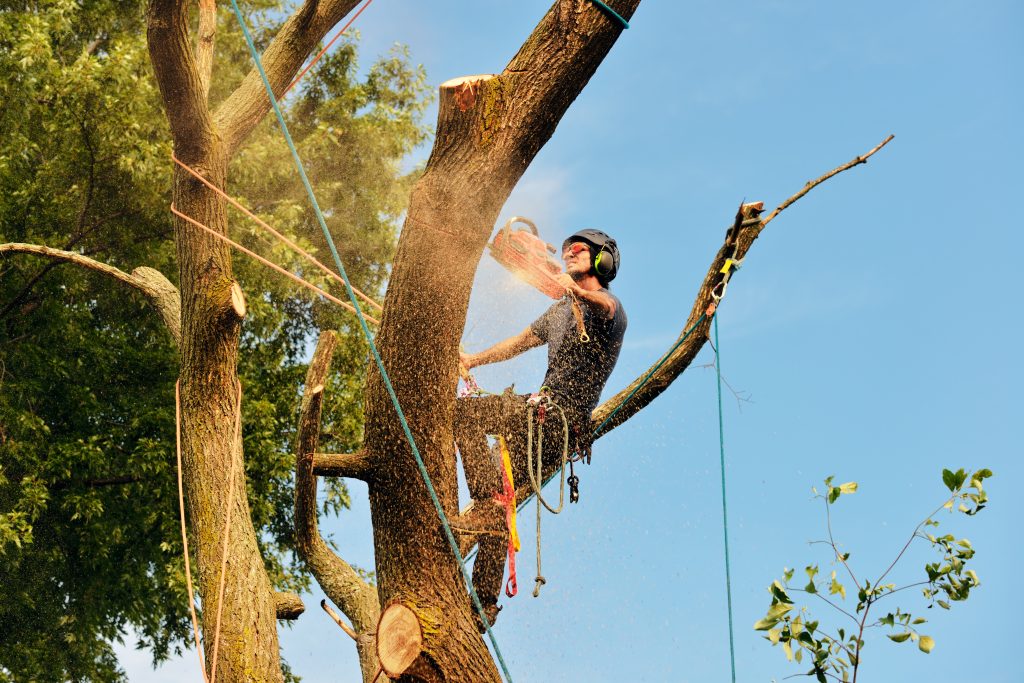
Tree service marketing isn’t an afterthought for tree service providers. It’s the root system that draws in the nutrients of revenue and reputation. With the residential tree-trimming sector expected to reach $32.1 billion in the next eight years, the industry is highly competitive. Knowing how to market a tree service business and having a deliberate, data‑driven marketing plan keeps your company’s sunlight unobstructed.
A. Differentiate or Disappear
Your Unique Selling Proposition (USP) is the saw that slices through market noise. Some of the ways you can stand out include:
- Credentials & Expertise: ISA‑Certified Arborists, TCIA Accreditation.
- Service Promise: 24‑hour storm response or “no ruts” lawn‑protection mats.
- Sustainability: 90% debris recycling; biochar production.
- Technology Edge: Drone inspections, CRM‑based real‑time scheduling.
Here’s something worth noting: Brands that emphasize a clear USP enjoy up to a 20% increase in customer acquisition and a 33% increase in customer retention.
B. Using Marketing as the Communication Bridge
Marketing translates arboricultural jargon into homeowner peace of mind. You can do this via:
- Educational content: Blog articles comparing crown reduction vs. topping.
- Interactive media: TikTok clips explaining ANSI A300 pruning standards.
- Feedback loops: Automated post‑job surveys integrated with Google Reviews.
C. Have the Right Offer at the Right Time
Was there a windstorm in your local area on a Friday? Have your ads live and running by Saturday morning. Some examples of high ROI channels include:
- Google Local Services Ads: Pay-per-lead model with a background-check badge.
- Nextdoor Sponsored Posts: Geo‑pinpoint blocks recently hit by storms.
- Instagram + Geofencing: 15‑second reels targeting ZIP codes with mature tree stock.
D. Plant Mental Seeds
Consistency across trucks, uniforms, and digital touchpoints nurtures familiarity. Therefore, focus on:
- Visual identity: Distinct color palette, mascot, and tagline (“Safety First, Roots to Branch”).
- Frequency rule of 7: Aim for 7 impressions across 3 channels within 14 days.
- Community presence: Sponsor local Arbor Day events; hand out saplings branded with your logo.
E. Leverage Your Expertise Into a Selling Point
Show, don’t tell. Meaning:
- 4K demo video of sectional dismantle over roofline using floating rigging.
- Time‑lapse of crane‑assisted removal with safety callouts.
- Interactive infographic: Anatomy of a Proper Pruning Cut.
Now that we understand some of the more effective starter marketing hacks to keep in mind, we can move on to how to market a tree service business effectively.
How To Market a Tree Service Business for Tree Service Leads

1. Optimize Your Google Business Profile (GBP)
- Complete Every Field, Down to Holiday Hours: Google’s Map Pack captures ~44 % of local‑intent clicks, but only for businesses that max out their profiles. Fill in services, service areas, a keyword‑rich description, opening and holiday hours, and the all‑important “From the Business” section, to generate tree service leads.
- Add Visual Proof: Listings with 20+ geo‑tagged images generate 62% more calls. So, when thinking about how to market a tree service business, upload before/after photos, equipment shots, crew portraits, and 15‑second vertical clips of a climber making a precision cut. Geotags tie the media to the neighborhood you want to rank in.
- Activate Google Messenger and Beat the 10‑Minute Rule: Enable the in-platform chat and select an alert tone that catches attention. Your chances of conversion drop by half if you respond after the first 10 minutes (HBR). Use quick-reply templates for common questions like “Do you remove stumps?” or “Are you insured?”
- Flaunt Your Credentials & Insurance: Homeowners fear liability more than price. List ISA Certified Arborist numbers, your tree cutting business license, TCIA membership, and $2M liability + workers comp right in the description and photo captions.
2. Generate and Control Reviews
- Time Your Ask: Train your crew leader to text the review link as soon as the chipper stops and the yard is raked. Strike while adrenaline and relief are high. The ethical review‑gating workflow to follow is:
- Customer lands on one‑page survey.
- 5 stars ➜ automatic redirect to your live Google review page.
- 1–4 stars ➜ private feedback form emailed to you.
This “filter” nudges promoters publicly and detractors privately, while keeping you within Google’s guidelines, because guests can still post anywhere they want. If you want to go further, start with our guide to how to market a business locally, then read about home service marketing support.
- Use QR Codes for Offline Capture: Print a QR code pointing to the survey on the back of every business card, door hanger, and invoice. Curious neighbors who watched you work can scan and rate, boosting review velocity.
- Respond to Every Review Promptly: Reply within 24 hours, whether it’s a positive review or a complaint. Thank positive reviewers with a personal note and acknowledge any negatives with a solution and a phone number. Google indexes response language, boosting keyword relevance.
3. Use High‑Converting Google Ads
- Craft Problem‑Focused Headlines, Not Vanity Names: Replace “Billy Badass Tree Service” with “Emergency Tree Removal — 24 Hr Crew in Duluth.” Mirror the exact pain and the city so Quality Score climbs and CPC drops.
- Use a Smart Keyword & Match‑Type Strategy
- Exact match for high‑intent phrases: [tree removal near me]
- Phrase match for service + city variations: “tree trimming Savannah”
- Negative outliers like “Christmas trees,” “bonsai,” or “jobs.”
- Iterate Weekly With Responsive Search Ads (RSA): Upload 10 headlines and 4 descriptions; let Google’s algorithms assemble combos and surface winners. Pause variants whose cost‑per‑lead rises above your profit ceiling.
- Track the Only Three Metrics That Matter:
- Cost per lead (CPL)
- Close rate
- Average job value
4. Implement Lean Local SEO That Works
- Services Page = What You Do: Create one H2 per core service—Tree Removal, Crown Thinning, Cabling, Stump Grinding—each with 150–200 words, a geo‑tagged photo, and an FAQ accordion.
- Service Areas Page = Where You Do It: Bullet out every city, neighborhood, and ZIP code. Embed an interactive map and sprinkle the copy with natural mentions: “We have two climbers who live in North Hills and can respond in under 30 minutes.”
- Technical SEO Basics
- Mobile‑first load under 2 seconds
- SSL certificate
- JSON‑LD LocalBusiness schema
- Alt‑text on every photo
- Measure With Free Tools: Google Search Console for impressions, and GA4 events for click‑to‑call tracking. Look for rising impressions on “[service] + [city]” queries every quarter.
5. Make Your Phone Number Unmissable
- Above‑the‑Fold Placement: Position a contrasting “Call Now” button in the top‑right corner of header on desktop and sticky bottom bar on mobile. Use digits, not an image, so Google can parse it.
- Click-to-Call & Dynamic Number Insertion: Format telephone links for smartphones and use a call-tracking number that swaps only for paid-ad visitors, ensuring organic NAP parity remains intact.
6. Conduct Door‑to‑Door Prospecting Right After a Job
- Build a Portable Mini‑Portfolio: For your tree service marketing needs, have a single laminated sheet showing: insurance certificate, ISA card, two dramatic before/after photos, and a QR link to reviews.
- Five‑House Radius Walking Script:
- Introduce yourself: “Just finished at the Smiths’. Noticed your oak leans a bit—free assessment?”
- Hand portfolio.
- Offer a same‑day quote while gear is on site.
- Leave‑Behinds for No‑Shows: Door‑hanger with offer (“$100 off dead‑wood pruning”) or a fridge magnet. Track by printing a unique QR or promo code.
- Legal & HOA Compliance: Check municipal solicit rules; some require permits or ban evening visits.
7. Build a Referral Flywheel
- Craft the Irresistible Offer: $50 digital Visa card or $100 credit toward future service for any referral that books $500+ work within 60 days.
- Automate Tracking in Your CRM: Use Jobber tags or Arborgold campaigns to log who referred whom and trigger automatic gift‑card emails post‑payment.
- Encourage User‑Generated Content (UGC): Ask if you can tag the client’s yard in an Instagram Reel of the final cut. UGC delivers 28 % higher engagement than branded posts alone.
- Seasonal Drip Reminders: As part of your local tree service marketing strategy, send a “winter pruning reminder” each November and a “storm‑prep check” before hurricane season.
8. Forge Strategic Partnerships
- Landscapers: Offer 10% of any tree revenue they refer. They avoid risky climbs; you gain turnkey jobs.
- Property Managers / HOAs: Pitch a free annual hazard walk‑through. Document every risky limb; they look proactive to boards and insurers.
- General Contractors: Pull permits weekly, filter for site‑clearing jobs >10″ DBH, and cold‑call with a bid packet.
- Realtors: Bundle a “Curb‑Appeal Tune‑Up”: removal of dead limbs, canopy lift, and mulch ring—work that photographs well for MLS listings.
- Structuring the Agreement: Simple one‑page doc stating scope, turnaround time, and finder’s fee or wholesale rate. Pay digitally within 48 hours to stay top of mind.
9. Use Low‑Cost Digital Channels
- Google Local Services Ads (LSA): Pay per lead (~$27 national avg). Complete background check and upload insurance to earn the green “Google Guaranteed” badge.
- Nextdoor Business Page: One‑third of U.S. households scroll monthly. Post storm‑damage tips the day before forecasted high winds—engagement spikes 4×.
- Meta Reels & Marketplace: Vertical 60‑second videos of a climber descending with a GoPro view reach 2–4 × more accounts than still photos. Always geo‑tag and hashtag the neighborhood.
- Weather‑Triggered Posting: Automate posts or ads that fire when wind gusts >40 mph or ice storms hit your service area, catching homeowners when need is highest.
10. Use Print Marketing That Still Converts
- Business Cards as “Pocket Quotes”: Thick, matte, 16‑pt stock with room on the back to hand‑write a ballpark estimate. Prospects keep quotes longer than plain cards.
- Targeted Postcard Campaigns: Mail a 4×6 postcard to one affluent ZIP right before spring bud‑break. Include a QR to schedule and a limited‑time offer (“Free arborist assessment – book by April 15”).
- Community Sponsorships: A $400 youth‑baseball outfield sign stays visible all season—cheapest billboard in town.
- Track Response: Add a unique URL or QR so you can attribute calls to print.
11. Employ Education‑Based Marketing
- Community Presentations: Offer a 15‑minute “Tree‑Safety 101” at garden clubs or HOA meetings. Bring a cracked limb as a prop; tangible danger sells.
- Video Content Strategy: Record 60‑second tips (“Why We Never Top a Tree”) and title them with local keywords: “Tree Topping Dangers—Denver Arborist Explains.” YouTube videos often rank on Google in <72 hours.
- the marketing scorecard & Email Capture: Create a one‑page PDF “Storm Prep Checklist for Homeowners” and gate it behind an email form. Follow up with a drip of seasonal tips and promotions.
- Repurposing Content: Turn one video into an Instagram Reel, a Facebook post, a blog summary, and a LinkedIn article targeting property managers.
12. Use Equipment as Marketing—Your Chipper’s Roar
- On‑Site Demonstrations: Neighbors gather when a 12‑inch drum chipper fires up. Train crew to greet onlookers, hand cards, and offer free limb checks.
- Upsell Micro‑Jobs: While gear is ready, pitch $200 limb removals or stump grinding; closing 1.7 add‑ons per week is realistic.
13. Insurance as a Sales Advantage
- Display Proof Everywhere: Embed certificate PDFs on your site, attach them to big‑ticket proposals, and mention coverage limits in ads targeting high‑end neighborhoods.
- Use Insurance Language to De‑Risk the Sale: “We carry $2 M general liability and full workers comp, so if anything happens your roof—and our climber—are covered.” According to HomeAdvisor (2024), 68 % of homeowners will pay a 10–15 % premium for fully insured contractors.
- Differentiate From the Uninsured: Politely educate prospects on their personal liability if an uninsured tree worker is injured. Position your premium as peace of mind.
How To Market a Tree Service Business: Conclusion
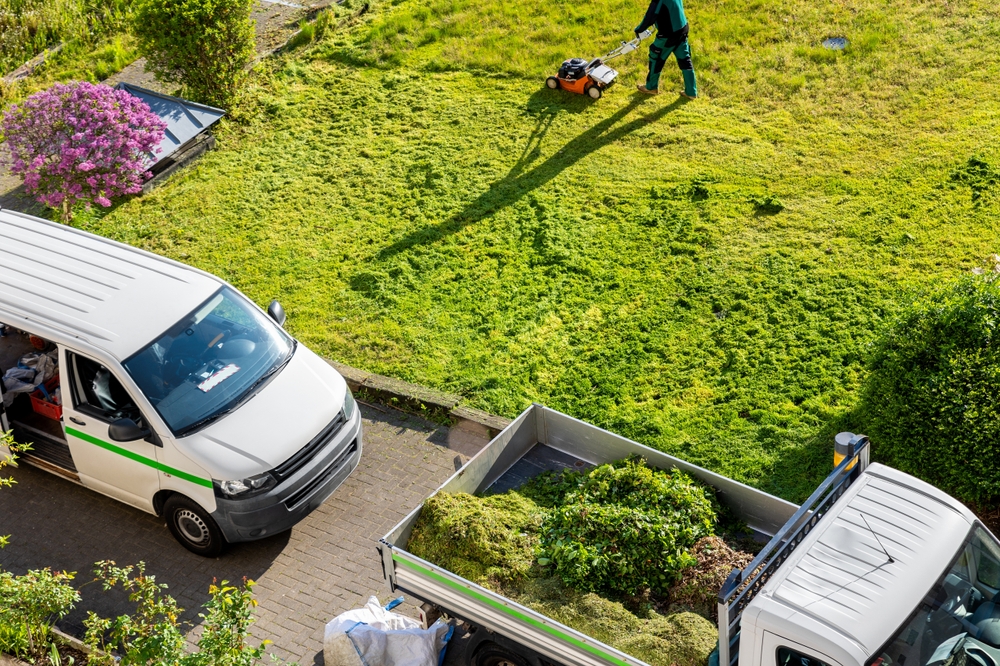
Homeowners don’t wake up thinking about “arboricultural best practices.” They notice a limb over the roof, storm debris in the yard, or a dead tree scaring the kids—and then they grab their phone. This is why knowing how to market a tree service business is essential, as the tree service that wins is the one that’s right there with proof, speed, and trust.
Everything above boils down to five levers:
- Be Findable Fast: Max out your Google Business Profile, answer chats in under 10 minutes, and geo-target storm-hit areas before your competitors roll out of bed.
- Prove You’re Safe & Legit: Credentials, insurance, before/after visuals, and on-site crew professionalism reduce homeowner risk anxiety (which beats price almost every time).
- Capture Social Proof in Real Time: Post-job review texts, QR codes, neighbor walk-ups, and fast responses compound visibility and ranking.
- Match Offer to Moment: Weather triggers, neighborhood targeting, and door-to-door follow-ups convert urgency into booked work.
- Track What Pays: CPL, close rate, and average job value keep your marketing honest and your bids aligned with profit.
Use this week to install the highest-impact basics:
- Day 1: Complete/clean your Google Business Profile (hours, services, photos, insurance).
- Day 2: Set up an instant review-request + survey/redirect workflow.
- Day 3: Launch a “Emergency Tree Removal + [City]” Google Ads test with tight negatives.
- Day 4: Print QR-enabled cards + door hangers; train the crew on the 5-house radius script.
- Day 5: Film a 60-sec “Why We Never Top Trees” vertical video; post to GBP, Reels, Shorts.
- Day 6: Build email list starter: “Storm Prep Checklist” lead magnet.
- Day 7: Tag every booked job in CRM with source so you can see what’s working next month.
Markets are crowded. Gear is expensive. Crews are hard to keep. But the companies that systemize visibility, trust, and timing don’t just survive—they stack high-margin work months out. Start with the fundamentals above, measure relentlessly, and keep iterating. Every cleaned profile, fast reply, and storm-timed ad is another ring in your growth.


