

How to market corporate housing starts with positioning your property for business buyers, not vacation guests. To attract more corporate tenants, list on corporate-friendly platforms, highlight business-ready amenities like Wi-Fi and workspace, show clear all-inclusive pricing, and make compliance and invoicing easy for employers. The most effective marketing also emphasizes commute, parking, flexibility, and reliability—because companies book furnished housing based on convenience, consistency, and speed.
How to market corporate housing effectively usually comes down to 6 priorities:
- List on platforms business travelers and relocation teams actually use
- Make the unit business-ready with fast Wi-Fi, workspace, and flexible stays
- Show simple, all-inclusive pricing with clear terms
- Emphasize location, commute, parking, and convenience
- Make invoicing and documentation easy for company buyers
- Track occupancy, lead sources, and stay length so you can improve results
These units command higher rent because they include furniture, high-speed Wi-Fi, and amenities like weekly cleaning, yet they are still cheaper than extended hotel stays. Major tenants include consulting and tech companies, healthcare staffing agencies, film production crews, and insurers accommodating policyholders after disasters.
Effective marketing begins by:
- Synchronizing calendars to prevent gaps: Align move-in dates with the Monday–Wednesday cycles preferred by business travelers.
- Partnering with a corporate‑housing specialist: Decide between guaranteed rent and revenue‑share contracts based on your risk tolerance.
- Publishing where corporations actually shop: Cross‑list on Airbnb Monthly Stays, CHBO, Furnished Finder, HouseStay, and similar portals.
- Speaking the compliance language: Provide machine‑readable e‑invoices, VAT breakdowns, and proof of collective‑bargaining compliance.
- Selling the commute: Highlight transit times, assigned parking, and any on‑site EV chargers.
- Designing an apartment that works like an office: Offer fiber‑speed Wi‑Fi, an ergonomic desk setup, blackout curtains, and noise control.
- Pricing smartly: Offer an all‑inclusive rate with volume discounts and clear utility caps.
- Tracking what matters: Target ≥94 % occupancy, maintain an ADR premium, and keep guest‑satisfaction scores ≥4.7.
- Executing, measuring, and iterating: Review photos, amenities, and pricing monthly to push net returns into double digits.
Let’s dive deeper into all of these in the next sections.
What Corporate Tenants Look For Before They Book
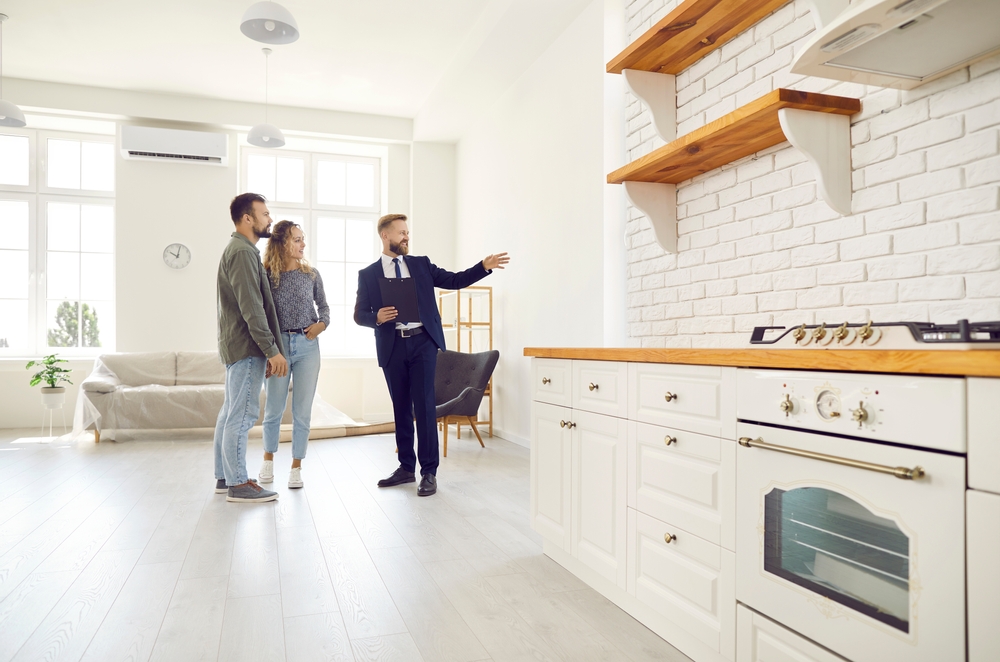
A corporate tenant—sometimes referred to as an enterprise tenant—is a legally recognized business entity that signs a residential lease to house its employees. Unlike a private renter who usually occupies one apartment for personal use, the company rents multiple dwellings and rotates employees, contractors, or executives through the space as corporate needs change.
The executive rentals model developed to fill the gap between hotels, which are expensive for stays longer than a few weeks, and traditional twelve‑month leases, which are too inflexible for project-based teams, hybrid work patterns, and disaster response deployments—a context that also informs how to market corporate housing. Here’s how they differ from a standard fixed‑term residential lease:
- Furnished & Turnkey Expectations: The hallmark of a corporate tenancy is its turnkey status. Apartments are fully furnished and equipped with linens, cookware, high-speed Wi-Fi, and often weekly housekeeping. The goal is simple: the incoming staff member should be able to “plug and play” on day one without waiting for broadband engineers or shopping for flat-pack furniture.
- Flexibility & Term Lengths: While a traditional fixed-term residential lease usually binds both parties for twelve months, a corporate lease generally includes rolling or month-to-month provisions that let either party extend or shorten the term with thirty days’ notice. Break options every three to six months have mostly replaced the punitive mid-term penalties commonly found in traditional agreements.
- Pricing & Rent Premiums: Because the landlord covers the cost of furniture, provides concierge-level services, and accepts shorter lease commitments, rent has a substantial premium.
As for who uses them:
- Consulting & Technology Firms: Global consultancies and large technology companies habitually deploy teams of six to twenty professionals to client sites for projects lasting anywhere from eight weeks to a year.
- Healthcare Systems & Staffing Agencies: Hospital networks and staffing agencies place travel nurses and locum doctors on contracts that can extend from six to twenty‑six weeks. Compared with hotel rooms, corporate apartments reduce accommodation costs by roughly 30–50% while offering clinical staff a homelike environment that improves retention.
- Film & Entertainment Companies: Production houses secure blocks of apartments near studios to house cast and crew during filming. For instance, for Season 6 of Netflix’s The Circle, producers took over multiple apartments at Sonder Midtown South in Atlanta.
- Insurance Carriers After Disasters: When severe weather or fire displaces homeowners, insurers cover the cost of temporary accommodation.
How To Market Corporate Housing: 10 Tactics That Increase Bookings

1. Stop Vacancy Before It Starts
Because mortgage payments, HOA dues, insurance, and basic utilities keep coming due even when no rent is collected, a single vacant month typically erases about one-twelfth—roughly 8 percent—of that unit’s annual gross rental income. For a median-priced U.S. one-bedroom (around $1,600 a month), that’s a loss of about $1,600; in higher-cost metros where similar units rent for about $2,050, the loss is roughly $2,050.
The antidote is relentless calendar discipline when it comes to corporate housing marketing: synchronise availability across every listing site so double‑bookings never force you to decline a paying guest, align move‑in dates with the Monday‑to‑Wednesday start cycles that corporate assignees prefer, and schedule a professional cleaning crew the moment a tenant departs so that the next occupant can roll a suitcase in on the same day.
2. Partner with a Corporate‑Housing Specialist
If you’re exploring how to market corporate housing, partner with professional operators who are more than just highly rated letting agents—they are demand aggregators, compliance officers, and 24‑hour concierges combined. Choose a firm that already manages at least twenty multinational accounts, offers a transparent fee schedule, and provides e‑invoices through a PEPPOL‑ready platform so procurement departments can pay you electronically without manual paperwork.
Two primary commercial models dominate this industry. A fixed‑income guarantee provides a consistent monthly rent—ideal if you’re risk‑averse or borrowing against the property—while a performance or revenue‑share agreement pays a percentage of gross receipts above a certain threshold. The latter typically involves management fees of 15–25%.
3. Publish Where Corporations Actually Shop
Corporate mobility managers seldom browse local classifieds; they prefer purpose-built marketplaces that filter for furnished listings of thirty nights or more. Listing on Airbnb’s Monthly Stays, CHBO, Furnished Finder, or HouseStay ensures visibility where it counts, and cross-listing on at least two of these platforms can boost lead volume.
Translate your headline and opening paragraph into both English and the local language to reduce friction for overseas decision-makers. Always check the box that labels the unit as Business‑Ready or Corporate Friendly so it appears at the top when filters are used.
4. Speak the Compliance Language
What makes successful executive rentals stand out from ordinary sublets is paperwork. Large companies now require machine-readable e-invoices that comply with EU Directive 2014/55, clear statements of gross versus net rent when VAT cannot be recovered, and proof that the apartment adheres to collective bargaining agreements.
5. Pick the Revenue Model That Fits Your Risk Profile
If steady cash flow helps you sleep at night—or keeps your lender happy—opt for a guaranteed lease that passes occupancy risk to the operator. If you can tolerate fluctuations in exchange for higher upside, choose a revenue‑share contract.
Whichever model you select, compare the twelve‑month projections side by side, insist on caps for extraordinary maintenance costs, and reserve the right to audit the operator’s books once a year.
6. Sell the Commute: Location, Transit & Parking
Business travellers judge a listing first and foremost by how quickly they can reach the office or job site. Properties that fall within a twenty‑minute public‑transit radius command rent premiums of five to ten percent, while in North American suburbs, the simple promise of an assigned, well‑lit parking space shortens time‑to‑lease by a fortnight.
Spell out the walking distance in metres to the nearest metro entrance, mention bus rapid‑transit lines and bike‑share docks, and, if you have one, highlight an EV charger to satisfy companies with rigorous sustainability targets.
7. Design an Apartment That Works Like an Office
High‑yield corporate housing feels less like a weekend Airbnb and more like a ready-to-use workstation. Start with reliable fiber—100 Mbps down and 25 Mbps up minimum—and include a screenshot of a recent speed test. Add a desk at least 120 × 60 centimeters, an ergonomic chair, and quality task lighting so tenants can host video calls without perching on the bed.
A USB‑C docking hub, an HDMI cable, and, if space permits, a compact laser printer can turn occasional guests into long-term visitors. Enhance the physical space with blackout curtains, hypoallergenic linens, and soundproofing that keeps nighttime noise below forty-five decibels; listings that include photos of a dedicated workspace attract more inquiries.
8. Price Smart
Seasonal algorithms, such as Wheelhouse or Beyond, can increase rates during local events and lower them in slower weeks; however, corporate clients value certainty.
Offer a single, all-inclusive rate that covers utilities up to a reasonable cap—such as 250 kWh per month—and include volume incentives: five percent off for a ninety-day stay and ten percent off for six months or more. Clear, predictable pricing aligns with expense-management software, helping travel managers justify bookings to finance teams.
9. Track What Matters
Numbers show whether your B2B marketing consultants. Aim for an occupancy rate of at least ninety-four percent, set your Average Daily Rate twelve percent above the local furnished baseline to reflect the extra amenities and compliance value, keep maintenance costs below six percent of revenue, and strive for a guest‑satisfaction score of 4.7 or higher because platform algorithms favor consistency. A reliable property‑management system like Hostaway combined with a free dashboard in Google Looker Studio is sufficient to track the essentials.
10. Execute, Measure, Iterate
Marketing corporate housing isn’t a one-time effort but a monthly cycle. Calculate the cost of each vacant night, select two trusted operators and request sample contracts, publish and synchronize your listings, upgrade Wi-Fi and office furniture, enable dynamic pricing with tiered discounts, and review your KPIs at the end of each month.
If occupancy drops, update your photos; if ADR falls behind, improve amenities or bundle parking. Continuous, data-driven adjustments are the key to boosting net returns into the double digits. A good next read is our guide to winning local customers; for hands-on help, read about home services marketing.
FAQ: How To Market Corporate Housing
Where should I list corporate housing?
Start with platforms that support furnished monthly stays and business travel, such as corporate-housing directories, relocation platforms, and marketplaces with monthly-stay filters. The goal is to appear where HR teams, travel managers, recruiters, and relocation coordinators already search.
What amenities matter most for corporate tenants?
The essentials are fast Wi-Fi, a proper desk and chair, simple check-in, reliable cleaning, flexible stay lengths, and clear invoicing. Commute, parking, and safety also heavily influence booking decisions.
How is marketing corporate housing different from marketing a short-term rental?
Corporate housing marketing is less about vacation appeal and more about functionality. Companies want consistency, convenience, and fewer admin headaches, so your listing should focus on workspace, location, lease flexibility, pricing clarity, and business-ready service.
How should I price corporate housing?
Use simple all-inclusive pricing whenever possible. Corporate buyers prefer predictable monthly costs, clear utility terms, and longer-stay discounts over complicated fee structures.
How do I attract repeat corporate bookings?
Repeat bookings usually come from reliable operations: accurate listings, smooth communication, easy documentation, clean units, and consistent guest experience. Once one stay goes well, companies are far more likely to book again.
How To Market Corporate Housing: Conclusion

Executive rentals aren’t just a niche of short-term lets; they are an enterprise-level offering with enterprise-level expectations. The companies that utilize them—such as consultancies, healthcare organizations, film crews, and insurers—prefer properties that are flexible, turnkey, compliant, and easily accessible.
Owners who coordinate distribution, documentation, workspace design, pricing, and service as a unified system don’t merely fill calendars; they secure repeat contracts and longer stays.
If you’re deciding how to market corporate housing, think like a procurement team. Publish where corporate buyers actually shop, speak their compliance language, pick the revenue model that matches your risk tolerance, and track the few KPIs that matter every month.
Then iterate: refresh photos, tighten calendar discipline, upgrade connectivity and desks, and keep pricing simple and all‑inclusive. Start with one unit, apply the ten tips for thirty days, and review the numbers. Momentum follows execution.


