Most people don’t choose discomfort — they avoid it.
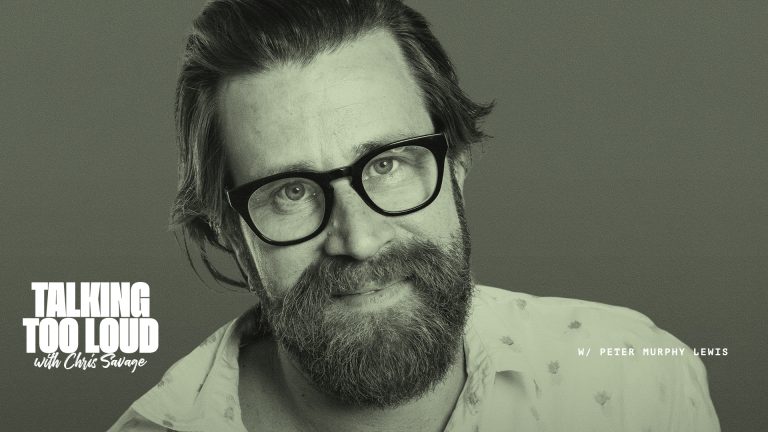
Peter Murphy Lewis built a career by doing the opposite.
In this episode of Talking Too Loud, host Chris Savage (with co-host Sylvie) sits down with Peter — award-winning storyteller, founder of Strategic Pete, and fractional CMO known for turning messy marketing into clear ROI-focused strategy. Peter’s path has been anything but linear: TV hosting, building and selling a travel company in South America, producing a docuseries about long-term care workers… and, yes, living inside a zoo in Wichita, Kansas.
That “living in a zoo” detail isn’t a gimmick — it’s a perfect metaphor for Peter’s core operating system: get close to the real world, embrace the weird, and learn through discomfort.
From the jump, Peter makes his thesis clear:
“You can’t scale what you can’t measure — but if you only measure, you’ll miss a lot of effing magic.”
This conversation moves fast and goes deep — from career pivots and fear-setting, to what fractional CMOs actually do, to why businesses get stuck with five agencies and no strategy. If you’ve ever felt stuck in a path you “should” want, or you’ve been drowning in marketing activity with no clear business impact, this episode will hit home.
In the sections below, we’ll break down the biggest insights — including how to face discomfort without blowing up your life, how to align marketing with business goals, and why long-form storytelling and trade shows might be more valuable than the latest social trend.
See the whole podcast episode here: https://wistia.com/series/talking-too-loud?wchannelid=9c5u5vvz1d&wmediaid=hzhf5rlomy
Key Takeaways
1) Discomfort isn’t the goal — it’s the teacher
Peter’s pattern is consistent: he seeks out situations that stretch him because they reveal what he’s capable of. He frames discomfort as a shortcut to clarity — not as punishment, but as feedback.
- If you’re avoiding a decision, you’re probably avoiding a feeling.
- The real cost isn’t the fear itself — it’s what you lose by never acting.
Practical tool he recommends: Tim Ferriss’ “Fear-Setting” exercise (a fast way to map the worst-case outcomes and the cost of doing nothing).
2) Big pivots get easier after you survive a painful one
One of Peter’s defining moments was quitting his PhD after getting seriously ill. He describes it as embarrassing and painful — because on paper, he was “right at the finish line.”
But once you walk away from something that looked like success and you’re still okay, future pivots don’t feel as terrifying.
Translation: the first big identity shift is the hardest. After that, your tolerance for change increases.
3) Hedge your bets: build the next thing before you burn the current thing
Peter pushes back on the idea that career changes have to be dramatic leaps. His reality was more strategic:
- He started his travel business years before leaving his PhD track.
- That side venture grew enough to de-risk the decision.
Takeaway: you don’t need blind bravery — you need a runway. Start pulling threads now so you’re not starting from zero later.
4) Mentors matter more than motivation
A subtle but powerful insight: Peter surrounded himself with mentors 10–20 years older who had already lived through the messy midlife transitions.
That normalized change.
If everyone around you is afraid, your fear feels like “truth.”
If everyone around you has reinvented themselves, your fear feels like “a phase.”
5) The #1 marketing problem: lots of execution, no strategy
When Peter steps into companies, he sees the same thing repeatedly:
- 3–6 agencies working in silos (paid, SEO, web, podcast, etc.)
- No unified strategy tying activity to business outcomes
- Leadership frustrated because marketing feels like “random acts”
His point is blunt: you can’t blame a marketer (or an agency) for lack of strategy if nobody above them set clear business goals and KPIs.
6) A real strategy starts with goals, then priorities, then controlled experimentation
Peter’s strategic sequence is simple and practical:
- Define the big picture goal (10-year “crazy” vision)
- Define what’s possible but unlikely (3-year stretch)
- Define what must happen this year (annual targets)
- Decide what marketing can do to support those targets
Then he allocates effort like this:
- 70–90% to proven channels and optimisation
- 10–30% to exploration (new channels, new bets)
He’s not anti-experiment — he’s anti-chaos.
7) Channels: do fewer things, better
If your team is spread across five channels, you’ll get “fine” results everywhere and great results nowhere.
Peter’s rule of thumb:
- If you’re early or uncertain: focus on 1–2 channels for a couple quarters
- Add channels when you’ve nailed the process and resourcing
8) Underrated right now: trade shows + long-form storytelling
In a world obsessed with quick clips, Peter argues that two “old school” approaches are still underpriced:
- Trade shows (because in-person connection is rarer — and therefore more powerful)
- Long-form storytelling (podcasts, docs, YouTube) because most brands quit early
Not everyone is doing it well — that’s the advantage.
Rapid Fire Q&A
What’s the balance between gut instinct and hard data in marketing?
Peter: Gut tells you what’s possible. Data tells you what’s working.
He believes your intuition should guide long-term bets (the 3-year and 10-year vision), while data should validate or kill short-term execution. His framing is sharp:
You can’t scale what you can’t measure — but if you only measure, you’ll miss the magic.
Use your gut to generate ideas. Use data to decide whether they live or die.
When should a company hire a fractional CMO instead of a full-time one?
If you can afford a strong full-time CMO, hire one.
If you can’t — or you’re not ready — a fractional CMO gives you:
- Senior strategic oversight
- Execution accountability
- Lower long-term risk
- Easier disengagement if it’s not the right fit
It’s not a freelancer. It’s not an agency. It’s executive-level marketing leadership on a part-time basis.
What’s the most common mistake CEOs make with marketing?
Expecting execution without alignment.
Marketing teams are often tasked with “growth” without:
- Clear annual KPIs
- Defined business goals
- Cross-functional support
If marketing isn’t tied directly to business objectives, frustration is inevitable.
How often should leaders get involved in the “unscalable” work?
Not based on time — based on change.
When launching:
- A new product
- A new market
- A new pricing model
- A new growth channel
That’s when leadership should lean in: listening to calls, reading emails, watching how prospects respond. Those close-to-the-ground moments create both insight and culture.
Most underrated marketing channels right now?
- Trade shows (because in-person relationship-building is now rare — and therefore powerful)
- Long-form storytelling (podcasts, documentaries, YouTube series)
Short-form content is saturated. Long-form builds authority.
What product has him “talking too loud” lately?
- Peak Design — for obsessive product quality and brand execution.
- Breakcold — a LinkedIn-native CRM tool built for agencies.
Both reflect what Peter respects most: thoughtful positioning, strong execution, and customer obsession.
Transcript
Peter Murphy Lewis [00:00:00]:
Those are two things that I don’t necessarily think were good for me, especially because my earrings got ripped out of my ear while skydiving. Oops. Quitting my PhD was probably the most embarrassing, most painful thing that I’ve ever done.
Host 2 [00:00:13]:
Wow, wow, wow, wow, wow.
Peter Murphy Lewis [00:00:15]:
You can’t scale what you can’t measure, but if you only measure, you’re going to be missing out on a lot of effing magic.
Host [00:00:22]:
Welcome to Talking Too Loud. I’m your host, Chris Savage, and this is the show that’s serving up the loudest takes on building businesses, top-notch products, and unforgettable brands. Today’s guest is Peter Murphy Lewis. Peter is an award-winning storyteller. He’s a former TV host, the founder of Strategic Peeped, a company that helps CEOs grow through smart ROI-focused marketing. He’s lived and worked across the globe, built successful travel brands in South America, and even launched a docuseries to elevate long-term care workers. Very interesting. From creative roots to data-driven marketing, Peter’s journey is anything but linear.
Host [00:00:55]:
And today we’re digging into how he helps businesses cut through the noise and scale with purpose.
Peter Murphy Lewis [00:01:04]:
Where I am today is probably what has me talking too loud. I live in the middle of a zoo in Wichita, Kansas. The zoo is a kind of an all-inclusive wildlife resort park called Tanganyika. It’s really, really boutique. It’s just spectacular. I’ve been living here for 5 years. I came in as a fractional strategist about 5 years ago with my wife and my 3-year-old, and they gave me a house when I came in for the 6-month engagement, and they haven’t kicked me out of the house.
Host [00:01:34]:
That’s great. And are you still consulting?
Peter Murphy Lewis [00:01:36]:
I am, yeah. Yeah.
Host [00:01:37]:
Okay.
Peter Murphy Lewis [00:01:37]:
So I have zebras 30 yards that way and cheetahs 60 yards to my left.
Host [00:01:44]:
That’s— I didn’t even know a place like this existed.
Host 2 [00:01:46]:
I didn’t either. What’s it called again?
Peter Murphy Lewis [00:01:48]:
Tanganyika Wildlife Park.
Host [00:01:50]:
Tanganyika Wildlife Park. And can anyone live there if they want?
Peter Murphy Lewis [00:01:54]:
No, there’s only two families, the owners and my family. But anyone can come here 7 days a week. It’s As far as I know, it’s the only wildlife park in the United States that you can swim with penguins. Soon you can swim with otters and you can feed hippos, rhinos, giraffes, lemurs, and then a whole bunch of birds all within 3 hours.
Host [00:02:14]:
We’ve made a terrible mistake. We should be recording there in person. Yes, we’ve made a terrible mistake. Yeah, that is, that’s our next field trip. That’s great.
Peter Murphy Lewis [00:02:24]:
Wow.
Host [00:02:25]:
Okay. I am actually heartened to hear that it’s just you and one other family because the idea that there’s a place that exists that you could just like buy buy a home and live in a zoo is too amazing, um, to actually exist. So I do feel better about it knowing that this is like an exclusive thing. That is, that is very cool.
Host 2 [00:02:41]:
I’ve never met a person who lives in a zoo.
Peter Murphy Lewis [00:02:45]:
I think that’s why it was—
Host 2 [00:02:46]:
isn’t there a Matt Damon?
Peter Murphy Lewis [00:02:47]:
Yeah, there’s a— that’s why it became a movie, I think. I always tell people I’m the fat version of Matt Damon. Um, I didn’t buy the zoo, but I live inside the zoo.
Host [00:02:58]:
Oh my God.
Peter Murphy Lewis [00:02:59]:
Wow.
Host [00:03:00]:
I mean, how often do you swim with the penguins?
Peter Murphy Lewis [00:03:03]:
I don’t swim with the penguins very often. It is sold out usually about 6 months in advance. It’s the number one excursion here. People fly all over the country. About 70% of our clients come from outside the Midwest. So it’s, it’s a destination. It’s like a small Discovery Cove from Florida, but right in the middle of the U.S.
Host [00:03:20]:
That’s wild. That’s amazing.
Host 2 [00:03:22]:
Incredible.
Host [00:03:23]:
That was—
Host 2 [00:03:24]:
I don’t know if we can top that.
Host [00:03:25]:
Yeah, that was a more interesting answer than I would have ever expected. I think one thing that was interesting, just kind of learning about you and your experiences, you’ve, you’ve done a lot of different things. You’ve been a TV host, fractional CMO, you’ve— turns out you live in a zoo. And you’ve really adapted and changed a lot. And so I thought it’d be really interesting to zero in on that. And like, let’s talk about like your approach to change. So what advice would you give to somebody who’s looking to pivot into a new career or really take a big life step, a big change? How do you, how do you think about that?
Peter Murphy Lewis [00:04:00]:
It’s going to take— this is going to be a real conversation because I’ve never been asked that. So I’m going to be kind of working through therapy on my couch right now.
Host 2 [00:04:09]:
We love it.
Peter Murphy Lewis [00:04:10]:
So I think it has to do with my kind of interest in always facing discomfort, and, and that’s into its closely related cousin, curiosity. So I tend to be a hybrid version of someone who can very, very easily concentrate on anything. So I’m not like the person who’s always chasing the shiny new item. But once I feel like I’m like 90% great at it or 90% perfect at it, then I like to move on to a new challenge. And that— so that might be something with self-help, it might be something in marketing, it might be something with attribution, it might be something with movies. Luckily, it’s not that way in my marriage or as a father, but everything else, once I kind of get— maybe it’s because I’m not good at either one of them yet.
Host 2 [00:05:03]:
You’re not at 90%.
Host [00:05:04]:
Yeah, you’re at 50% right now. Good job.
Peter Murphy Lewis [00:05:06]:
I don’t know if that answer helps, but that was my first off-the-cuff answer.
Host [00:05:11]:
This is something I think about a lot, partially because I’ve been more involved with my, my, the school I went to, my high school, because my kids go there at a lower school and stuff. And I’ve met with students. I did it today. I’m doing it later. And, um, constantly talk about career advice and stuff. And like, one of the things that’s so interesting is like, the academic environment is like, we all know what you’re supposed to do. Yeah, you’re, you’re supposed to get great grades, have a great GPA, show people you know what you’re talking about, like, move on to the next thing. But in the— it doesn’t translate well to the entrepreneurial world.
Host [00:05:44]:
Like, you’re not going to get A’s all the time. In fact, I find you often get like F’s, or you don’t even know what you got. You just— it doesn’t, it doesn’t work. It’s like, is this an F? Is this a D? Is it— what is this? Is this a cue? And so I think that’s an interesting thing to zero in here on is this idea of going zero to one and facing discomfort. What do you like about that? And what, how would you try to coach someone who is like, man, discomfort sounds horrible. I don’t want to be uncomfortable. Like, what should they, how should they think about that when going after new opportunities?
Peter Murphy Lewis [00:06:18]:
I like discomfort. Because it teaches me what I’m capable of doing. I think the simplest way to do it in like less than 30 minutes, like if you listen to the rest of this podcast, turn it off, and then go watch Tim Ferriss’s TED Talk called Fear Setting. It’s on YouTube. It’s my favorite exercise because it’ll get you to think through all of the things that you’re afraid to do. And it can be, you know, get married, or it could be leave the country for the first time in your life, or start a business. And it’ll show you what are the costs of you not making a decision. That is the fastest 30 minutes for you to help you realize, oh, I should embrace this pain because it’s good for me.
Host [00:06:56]:
Has there ever been a time that you like faced down that fear and you regretted it? Like it wasn’t a good idea?
Peter Murphy Lewis [00:07:06]:
Yes. Yes.
Host 2 [00:07:11]:
Slow yes.
Peter Murphy Lewis [00:07:12]:
Well, it’s more trivial. So it’s funny you ask that because I, I’m Preparing right now a keynote speech that I’m giving around the country at 7 different conventions this year. And it’s actually about the 100 different jobs that I’ve had from my career in television. And most of the talk talks about my fears and the things and how I confronted them. So the trivial example is I’ve always been afraid of heights. I learned that being a boy from Kansas, I realized that I was afraid of heights when I went to New York City when I was 16. And because in Kansas we don’t have buildings taller than 4 stories high, um, so I didn’t— there was no opportunity for me to realize I had vertigo. But in my TV show, they had me clean a skyscraper in a one-man harness, and they threw me out of an airplane at the highest altitude that you can with a commercial, um, what do you— a skydiver, 14,000 feet.
Peter Murphy Lewis [00:08:07]:
So those are 2 things that I don’t necessarily think were good for me, especially because I forgot to take out my piercings and my earrings got ripped out of my ear while skydiving. But I don’t necessarily regret it, I just wouldn’t do it again. Didn’t make my mom particularly proud.
Host 2 [00:08:24]:
That’s an important distinction. Yeah, like there’s like regret and then there’s like, we don’t need to do it twice. Yeah, but you learned something. You learned you’re afraid of heights.
Peter Murphy Lewis [00:08:34]:
Yeah, I learned to, you know, take out your earrings before you jump at 200 miles an hour. You learned that.
Host 2 [00:08:43]:
This is wild.
Host [00:08:44]:
I—
Host 2 [00:08:45]:
it’s, it’s interesting to talk about facing your fear and discomfort both personally and professionally. Do you feel like that also sort of let you career change more easily because, because you were already sort of like moving in that direction.
Peter Murphy Lewis [00:09:08]:
I do. I think that the most painful career change that I made probably will help make sense of who I am today. And it goes back to when— so I studied my undergrad in Boston, studied my master’s in South America, studied my PhD in South America, and I got sick really, really sick with a tumor in my colon a couple months before I started my dissertation. And the doctors thought I had intestinal tuberculosis and they didn’t know what to do with me. So they told me to go back to the US and figure out why I was sick. Well, I never figured out why I was sick, but what I did do is I did a detox and everything in my life. So, you know, no alcohol, no milk, no wheat, no everything that, you know, that could potentially be causing me to have this, this tumor. And in that realization, I realized I didn’t want to be an academic.
Peter Murphy Lewis [00:10:04]:
Now you can guess how many hours, how many hours and how many years I’d spent in my life preparing myself to finish my PhD. And I was a full-time professor. Quitting my PhD was probably the most embarrassing, most painful thing that I’ve ever done. And that happened when I was 30 years old. Every other career decision after that has been pretty, pretty, uh, easy, um, after you tell your mom and, you know, your girlfriend and your everyone that admires you in your life that you’re a quitter right when you’re about to have success.
Host 2 [00:10:36]:
Wow, wow, wow, wow, wow.
Host [00:10:37]:
And when you, when you made that decision— first of all, I’m sorry that you had to go through the, like, the tumor piece. That’s horrific. Um, and obviously you’re here, so it seems like you beat it. Um, but when you made that decision What now? Like, because it’s just so interesting because I feel like there’s so many people who they actually like that they never make that decision even though they want to, to quit. Yeah, they never make the decision to quit even though they actually are like have this lingering sense of that they want to do something else. Like, I feel like I know a few people like this. I think that’s constantly talking about all the things they want to do, but they can never bring themselves to actually quit. And in this case, like huge amount of money invested, huge amount of time.
Host [00:11:19]:
It’s your whole career, right, to that moment. How did you think about that? Like, did you— was there some kind of approach you took, or like in hindsight that makes sense now, that was like, you know what, I just need something new, or I need to go after this other thing that I, I’m, I’m, I was passionate about the whole time? Like, what, how did you—
Host 2 [00:11:39]:
how—
Host [00:11:39]:
just, I’m trying to key in on this for someone who’s listening thinking like, Oh, maybe is that me? You know, like, like, could I have the, the bravery to do that?
Peter Murphy Lewis [00:11:49]:
It’s a good question. I think this is a good rabbit hole because I’m starting to realize that I made of— I might have painted myself in kind of this grandiose manner that shows that I know how to take on, uh, risk or fear more than the reality was. So I’ve always been a person that you can hedge your bets. Like, you can, especially when you’re young, you can do two things at once. And so I started my travel company 3 years before I quit my PhD. And so I was a full-time professor, I was getting an amazing scholarship, and I started to finance my own entrepreneurship gig then. So doing that allowed me to quit my PhD because my travel company started to blow up. I got in the New York Times.
Peter Murphy Lewis [00:12:34]:
Paul McCartney, Beyoncé, and Aerosmith booked us. So I had a plan. No big deal. That started— yeah, that started— that started to work. And then I think even, even probably more important than that is I always surrounded myself by mentors who are about 10 to 20 years older than me that had already gone through some of kind of these midlife crisis that we all have, these ups and downs. And, you know, like they share that experience. If I were to surround myself by 27-year-olds afraid to leave corporate America or quit their PhD, I don’t think I would have done it even with the success that I had in my business.
Host [00:13:08]:
Interesting.
Host 2 [00:13:09]:
Yeah, you had like, you were nurturing other interests at the same time that you were entertaining this idea of potentially leaving your PhD program. Um, so it sounds like some, some takeaway from that is like, stay curious all the time and, and be sort of like pulling on these threads So that if one day you, you like wake up and you’re like, oh shit, this isn’t the career for me. You’re not, you’re not starting from zero again.
Peter Murphy Lewis [00:13:47]:
Yeah. Yeah. And I would, I would put on top of that, you know, I kind of like simple fixes that will, if someone’s hearing this and they don’t know how to take action upon it, similar to the fear setting from Tim Ferriss, go read the book Lessons from the Dead and Dying. It’s written by a hospice nurse in Australia. It’s less than 150 pages. It’s going to tell you every single regret that the people told her right before they died. And that’s just a simple shock treatment of, you know, you can read it really quickly and it’s going to just be like, whoa, you know, how shitty of a life would Peter have right now if he would have finished with his PhD and did a full-time professor and not become— not got on television, not done a documentary, not met the two of you, Right? So like, if I would have read that book when I was 23, I don’t think I would have ever studied my PhD.
Host 2 [00:14:36]:
We’ve talked about this on the show before, right? Like that— I forget who talked about it, but someone said that like before you die, it’s very common for people to regret the things they didn’t do, not the things that they did do. Do you remember that, Chris?
Host [00:14:55]:
I do remember that. I mean, I— and I can’t remember who it was, but yeah. And that’s something that I think about too. In terms of like minimizing regret. I think about it a lot from the framework as like, we almost never regret betting on ourselves because if we bet on ourselves and it doesn’t work out, at least we tried. And so you can’t— you don’t then look at it and be like, well, if only I had tried or taken that opportunity or whatever. Like, if you bet on yourself, usually you are taking those opportunities and trying those things. And if it works, you get an amazing benefit.
Host [00:15:26]:
And actually, in terms of hedging things, you— if it doesn’t work, you usually learn a lot more. And so that also can help you really rapidly. Um, and yeah, it just, it makes sense. Like, you know, the things that people regret when they’re, when they’re close to death, I think is often like it’s time with friends and family. And it’s like those things that they didn’t do, not usually not the things that they did. So the travel company, so you decide to start that. What is it? I mean, I know this was not on my research, but what, what, what was this thing?
Peter Murphy Lewis [00:15:57]:
Well, I just, I just sold it. So it’s, uh, my first big exit. I sold it 2 months ago. The travel company is kind of how I got my marketing chops and my entrepreneurship experience. When I was 27, I wanted to get a second job outside of the university and nobody would hire me because I looked too much like an academic. So I said, what, where do I have an unfair advantage in South America? And it was, it’s going to be, you guys are going to understand it right away. It was obviously English and it was customer service. Uh, Americans have amazing customer service and back in 2007, Latin Americans had horrible customer service outside of some of the amazing resorts you can find in Mexico.
Peter Murphy Lewis [00:16:38]:
In general, it’s going to take you 30 minutes to get a coffee in South America 20 years ago, and in the US you could get it in 1 minute. So I put those two together and created a travel company, and that grew pretty quickly. We built out a couple of different brands from it. Uh, you know, we were killing on TripAdvisor, SEO, and ads, um, and it just blew up. And that’s where I kind of got all of my experience. Now, I would never do it again. I wouldn’t do travel industry because in order for you to make money, you have to hire more and more people and you work 7 days a week, kind of like a bar. Uh, but I don’t regret what I did then.
Host [00:17:10]:
So you really just saw this basic simple opportunity, went for it, and then it worked. That de-risked you, so you had the freedom to actually decide if you want to go after it. And then when you could go after it, you did. And then obviously that led into many other opportunities.
Peter Murphy Lewis [00:17:24]:
Yeah, I mean, you all would know that when you do something on your own, even if you fail at it, right, like if you fail as a— on Substack, you’re still going to pick up so many skills. And that entrepreneurship experience kind of helped me, you know, get on television, helped me sell my first documentary, helped me now work as a fractional CMO.
Host [00:17:45]:
Amazing. All right, let’s, let’s talk about Strategic Pete. So you found Strategic Pete, not Strategic Peter. Why? Why is it Pete, not Peter?
Peter Murphy Lewis [00:17:53]:
Because the rhyme came from the— I think it was an Amazon Prime Sneaky Pete serious, when I heard Sneaky Pete, I’m like, oh, here’s my domain, let’s go over to GoDaddy and see if it’s available.
Host [00:18:04]:
That’s funny. Um, so Strategic Pete is a marketing agency that helps CEOs scale their marketing and, um, really with like fractional CMO help, right?
Peter Murphy Lewis [00:18:17]:
Yeah, exactly.
Host [00:18:18]:
So let’s— for people who don’t know, let’s talk about like, what is a fractional CMO? What types of things do they do? What types of companies do they usually work with? And then we’ll talk about what made Strategic Paid Special.
Peter Murphy Lewis [00:18:28]:
Yeah, a fractional CMO is a part-time executive who leads your marketing strategy, um, instead of someone full-time. So you get 100% the experience at a fraction of the cost. It’s different from a consultant because there’s execution and you’re in the game, like there’s KPIs for you, they’re set up, you’re going to meetings, you’re in charge. It’s different than an agency because it’s not project-focused, it’s different than, than a midmarketer because you’re overseeing strategy. It’s a newish concept. I’m sure you guys have heard about it for the last 2 or 3 years, but I would find that 9 out of 10 CEOs that I talked to haven’t heard of it. They just think it’s outsource, outsourced freelancer.
Host [00:19:08]:
Yeah. And it does seem like something— I mean, I keep hearing that this trend of there’s gonna be a lot more fractional work in general, and people are gonna hire more expertise on like You know what, like exactly as you said, not for 40 hours a week, but maybe for 10, but like get someone who’s really senior to do that. Um, so it seems like a big trend that is really starting to happen now. And something I’ve talked to other entrepreneurs about is like, when should they go the fractional route instead of hiring the full-time person? Um, maybe you can talk about that from your perspective a little bit. Like when does it really work well? Like what’s the best fit for an organization to hire a fractional role?
Peter Murphy Lewis [00:19:48]:
If you can afford a full-time CMO, go full-time CMO, right? But if you don’t have that budget, in Kansas, a full-time CMO is going to be $200 to $300. You know, in New York, it’s going to be $300 to $500 depending on your niche. So if you don’t have that budget and you need to allocate that to, you know, your sales position or some, some other go-to-market strategy, then a fractional is a great way for you to test somebody who can oversee strategy before you undercommit and you go with a marketing director who can’t oversee strategy and hires a bunch of agencies. It’s just a great way for you to figure it out. And the good thing about it is fractionals, you know, they’re, they are very comfortable with a 3 to 9 month engagement. So it’s not going to be awkward when you have to fire them or disengage. That’s part of the agreement. It’s way different.
Peter Murphy Lewis [00:20:41]:
It’s like a dating app today, different than it was when I first started dating. The understanding of what’s going to happen is much less uncomfortable. There’s— you don’t have to worry about security. You don’t have to worry about passwords. Like, my reputation and the way that I disengage with you in 6 months determines the growth of my agency moving forward. That is not the case when you fire a full-time CMO who depends upon you for their salary every single month. You know, they’re working their butts off to make sure that they don’t— they don’t get fired.
Host [00:21:10]:
Those are big differences. What, what, what about like when you come in, is there anything that you consistently consistently see these days of like something that you’re like, hey, like every— like this is, this is the obvious thing to jump in and work towards fixing?
Peter Murphy Lewis [00:21:25]:
The two things right away is always marketing agencies executing without a strategy. So every single client that I’ve worked with in the last 3 years, they have 3 to 6 marketing agencies, something around podcasts, paid, paid media, SEO, website, and so forth. And none of them are— have a unified strategy. Because either the CEO is not a marketer or the marketing manager they have doesn’t know how to oversee strategy. And then the second one I think is that the CEO or the executive team doesn’t have the marketing team working on strategy and execution that is tied to business goals. So then you get frustrated, you’re like, hey, why are we doing this? Well, you didn’t line up your annual KPIs or your quarterly KPIs with what marketing is doing. And you can’t expect a, you know, a 28-year-old first-time marketer to be able to do that, right? Like that has to come from above.
Host [00:22:26]:
And let’s go deeper on that strat— like what that integrated strategy looks like. So, you know, what, what should people be looking for building when they’re there? They are trying to manage all these different things between employees and agencies. And it is really common now, right, that like people have so many marketing agencies, like I don’t know if this is always the case, but this seems to be the world we live in now. But in any case, the strategy piece, like what, what should it look like? What should it feel like? What should you be on the lookout to know that you actually do or don’t have an integrated strategy?
Peter Murphy Lewis [00:22:57]:
I think I would go one step, uh, take one step back first, thinking of a CEO that’s not a marketer, which is usually the people who hire me. It’s what’s fair to expect from marketing, right? Everything is thrown at marketing. New tech is thrown at marketing. The attribution chaos that we have today, we expect marketers to solve the problem. No, you can’t just fix it. And I’m not going to give you any support from the COO or the tech team or anything. Just go solve it. Well, I mean, it’s getting harder and harder and harder.
Peter Murphy Lewis [00:23:32]:
So first thing is manage your expectations. If you’re going to engage and you have, if you’re, you want something done, know what is the likelihood that the marketing team can do it. It might need, it might be a business problem, not a marketing problem. So then going over to, you know, like alignment, start off with what is your 1-year, 3-year, and big picture lofty goal. Where do you want to be 10 years from now? If you go big, what’s possible within 3 years, unlikely but possible, and then what needs to be done at the end of the year and what can marketing do to get you there? I tend to like to do, I like to include about 15 to about 30% of marketing’s actions be exploratory. So that might be, you know, like our company is highly dependent upon SEO that’s being tanked and it’s highly dependent upon trade shows. Well, we need to figure out what channel are we going to work on. I want to test a percentage of my effort on LinkedIn.
Peter Murphy Lewis [00:24:31]:
I want to, I want a percentage on a podcast, you know, I want a percentage on YouTube. Um, and then the other 70% should be 70 to 90% should be focused on things that are already proven and you can clean, clean that up. Once you are less dependent on the one or two channels, then you can start to, you know, crank up that dial of exploratory so that we’re going to hit that 3-year lofty goal and then that 10-year crazy idea goal.
Host [00:24:55]:
How many channels do you think people should manage at once?
Peter Murphy Lewis [00:24:57]:
I think it depends upon the opportunities and the size of your company and then your, your internal resources. So by opportunities, I like to say, what is it your competitors aren’t doing or they aren’t doing well, right? So if you’re in a unique niche and it’s all kind of saturated and everyone’s leaned into SEO and it’s 2024, right? Like, and you see that they’re not paying attention to YouTube, they’re not paying attention to LinkedIn. Then I would dabble in more channels than you feel comfortable as long as you’re ahead of the tide, right? If you have your competitors are doing a little bit of everything and you don’t know what’s— I would focus on 1, max 2 for your first 2 quarters to make sure that you refine that, that process. You don’t want 5 to 7 people on your team doing a whole bunch of mediocre work. Let’s have them focus on doing amazing work on one or two channels.
Host [00:25:54]:
How do you think about competition? Like, who’s the competitor, who’s not? When is something close enough that you would put it as a competitor, and when would you like not even care about it?
Peter Murphy Lewis [00:26:02]:
Oh man, you guys have questions I haven’t been asked before. Hmm. I often see competitors as, uh, potential partners. So it’s interesting. Let me try to think of a real example. So let’s, for example, I work with a bank. They’ve just grown into a new city. They expand into a new city.
Peter Murphy Lewis [00:26:23]:
Their competitor looks like the, you know, the Bank of America, Chase, and so forth. So they’re competing against huge campaigns and that’s a competitor. They’re fighting for new business, new loans, new deposits. Like that’s the way I see it as very transactional as money in that instance. Now, you know, those competitors have an unfair advantage from a marketing budget. We have an unfair advantage from a community point of view, right? So like the retention inside this bank that I work with of average employees is going to be over 10 years. So the buy-in from an employee is going to be able to penetrate at the community level way better than Chase or Bank of America because they have these executives just going around revolving doors. So I, with them, I’m going to think about where is my competitor not taking advantage of opportunities And it’s going to be grassroots.
Peter Murphy Lewis [00:27:19]:
I’m going to do guerrilla marketing with that bank, right? We’re going to be at every Rotary Club meeting, every Lions Club meeting, every parent-teacher conference. We’re going to be putting up when there’s soup kitchens and so forth. We’re going to be at every single thing where there’s boots on the ground because my staff doesn’t leave me.
Host [00:27:34]:
Love that answer. That was cool.
Host 2 [00:27:36]:
What do you think is the most underrated marketing channel today?
Peter Murphy Lewis [00:27:40]:
In my, in my world right now, in B2B, it’s still trade shows. And then the next thing is long-form storytelling, which is what you are doing. If you can, you know, get your message on the ears of your prospect, it’s a game changer, right? I’m, I’m doing 3 documentaries this year for my bigger clients. That’s, that’s just another version of a great podcast. And people say everybody has podcasts. No, it’s not true. They all give up on the 7th on the 7th episode. So going back to basics with trade shows, which is being good with people in person, which the younger generation is not so great at talking to people.
Peter Murphy Lewis [00:28:20]:
They’re really great at texting. It’s crazy that we’re going back to trade shows. And then also long-form storytelling. It’s not about these short clips of 90 seconds on social media, on TikTok. I feel like every pretty good company is good at social media, is pretty good at social media. They’re not good at the long-form storytelling.
Host [00:28:37]:
How do you balance gut feel with hard numbers when making marketing decisions?
Peter Murphy Lewis [00:28:42]:
Oh, um, let me think about this. Might have stumped me.
Host [00:28:50]:
This is the best. I love this. Don’t worry. Not that we’re stumping you, that you’re like—
Host 2 [00:28:54]:
No, that you’re like really thinking. Yeah.
Peter Murphy Lewis [00:28:56]:
All right. So I think gut tells you what’s possible, right? Gut is going to be that 3-year mark, that 10-year mark of where you want to take your company. And data shows you what’s actually working. So data is going to guide what you’re doing this year. Gut should be thinking about where you’re going to be in year 2 and year 3, right? But there’s, there’s some, there’s some basics to this, right? You, you can’t scale what you can’t measure, but if you, if you only measure, you’re going to be missing out on a lot of effing magic. So like you got it, the, the, the balance. Is there. I like to use, uh, my, my gut for new ideas and data to check it and cut, cut off.
Peter Murphy Lewis [00:29:39]:
If data tells me that my gut is wrong, then I stop the gut on that project and go back to basics.
Host [00:29:45]:
Interesting. You know, the way I kind of think about part of this is like you want to train your gut with data. So like over time, those longer-term bets, if you do enough of them, you start hopefully refining your gut instinct. And the question is like, what type of data can you get to prove if something’s like on the right trajectory or not at the beginning? And, um, but yeah, it’s like, there, it is a hard question.
Peter Murphy Lewis [00:30:10]:
That’s why I asked it, you know, that’s the fun, you know, like kind of at the beginning, I don’t know who said this. So I apologize to the brilliant marketer out there who said it’s probably Seth Godin or something, but like at the beginning you have to do unscalable things. And that might mean that I’m talking to every new lead who comes in or listen to every sales call and determine, is it my LinkedIn? Is it my Twitter? Is it my new messaging? Did they, did they say anything close to my new messaging that I’m spending, you know, $20,000 on? I’m paid. That might not come through my HubSpot form. It might come, might not come through in my attribution because they heard about me on Slack. But is there something coming through? And that unscalability should at some point confirm your gut. And at some point data will come through to confirm that you’re on the right path.
Host 2 [00:30:55]:
How often do you think that people should be embracing those unscalable moments? Because it seems sort of like the further up you go, the easier it is to forget that those moments exist, right? That there were times when you took risks. So like, I’m curious from both of you, it sort of goes back to the beginning of the interview of like facing your fear, being in discomfort. How often do you think that people should lean into that unscalable moment?
Peter Murphy Lewis [00:31:23]:
I don’t usually think about it in terms of frequency. I usually think about it in terms of change, and change in the sense of revenue growth, focus of energy, direction of team type of thing, new markets, new products. So I’ll elaborate just a little bit. So like one of my clients is in the travel space and doubled their revenue in the last 3 years. And they’ve diversified their channels, enough that they could— they’re on autopilot, right? They’re growing every year 20 to 30%. They’re meeting their annual goals over and over and over. And they decided that they’re going to start testing a VIP pricing product so that, you know, they, they moved, they created a new product that is about 6x their current customer lifetime product value. And the COO and the CEO got intimately involved.
Peter Murphy Lewis [00:32:24]:
They just started listening to the calls. They watched the emails come in. They watched what the SDR is doing. They see what the replies to emails and SMSs are. They watch what’s happening with paid ads. And I think they handled it perfectly. And so that they’re gonna, they’re gonna have success on that product before we hit Q3 based on what their goals were, right? Like they’re 6 months ahead. So I think what was smart about them is they thought about, hey, we’re going to create something new that we don’t know if we’re going to have success.
Peter Murphy Lewis [00:32:51]:
Why don’t we, you know, get our ear to the, to the door quickly and figure out, um, what we should be doing if we fail. And I think it was them being close to it that they, they had success. So it’s probably not— if you are a hands-off CEO and your company is going to grow 20%, in theory, maybe you don’t ever have to do it. But it’s when you’re reinventing the wheel or evolving your company.
Host [00:33:15]:
And yeah, I would kind of echo what you’re saying, Peter. And like, my experience is that it’s when we’re doing new things like really new things, that’s where we should be the most willing to do things that don’t scale. And a lot of times that it shows up with like a tension, you know, where like at Wistia, my co-founder, Brendan and I, we’re, we built everything in the beginning when I was on every customer call and I wrote every blog post and then I wasn’t for a really long time. And as we’ve expanded our platform a ton, like the two of us have gotten much closer. To on the ground what’s happening, like much, much closer. Like, we probably give as much feedback or more feedback than most people in the company about the products because we’re just using them so much and so in there. And part of that is also culturally people seeing that we care about the details and we care about getting it right. And it isn’t scalable because it can’t be done everywhere.
Host [00:34:13]:
And I’m not expecting it to do everywhere. But like by making it that important and giving it that much attention, hopefully it changes the culture so that people, or it may not even necessarily change it. It just encourages it to continue or to strengthen. Um, and I think also when you’re doing a brand new thing, you don’t know how it’s going to work. So something that might not seem scalable might actually be really scalable depending on like how successful it is or how much money customers are going to pay you for that thing or whatever. We don’t know if you don’t try. Um, and to your point before, you were talking about like the budget and taking some percentage of it to be exploratory. I think that’s really important to have some part of the budget for this type of thing because you can’t, if you question it too much, you won’t do it.
Host [00:34:58]:
Like that’s the temptation as you get bigger is basically to make that budget smaller. Right. It’s like making a smaller percentage on an absolute basis. It might be a lot bigger than you did 10 years ago, but like percentage basis, that’s the temptation. The problem you run into is. If you want to do things that are going to move the needle of a bigger business, you have to take a lot more risk and you have to explore a lot more and try a lot more new things. And so therefore you actually have to keep the percentage kind of similar.
Peter Murphy Lewis [00:35:27]:
I’m glad you mentioned culture because before you went there, I’m like, there’s something related to culture that I didn’t say. And you’re right, there’s a secondary benefit to getting involved that there’s going to be a cultural change. Your HR person has no idea how much it’s going to benefit the team that you get involved with, and that will have long-lasting effects for as long as those people are with you, even as they work with other, other teams as well.
Host [00:35:56]:
Yeah, no, I love that. Okay, what’s one brand you think is absolutely crushing it right now?
Peter Murphy Lewis [00:36:02]:
Peak Design. Holy shit, they make travel— they make everything for photographers, and the majority of people that I see using it are not photographers. Backpacks and travel gear and they’re just— everything’s on point. Everyone I talk to who has their gear just loves them.
Host [00:36:22]:
That’s amazing. What’s the last product other than a Peak Design bag that got you talking too loud? Like in a good way or in a ranty way?
Peter Murphy Lewis [00:36:29]:
I’ve got it. Breakcold. Breakcold.com. It’s this tool that treats LinkedIn as a CRM and it’s set up to run for an agency. So I do tons and tons of work on LinkedIn. I’m publishing on LinkedIn. All of my team is publishing on LinkedIn and it allows me to set up the SDR process all inside of LinkedIn and manage people’s accounts. That’s amazing.
Peter Murphy Lewis [00:36:51]:
The customer service is amazing. The founder, I believe, is French. He replies to all of your issues and bugs and fixes it quickly.
Host [00:36:59]:
I love that. Oui, oui. Oui, oui. Oh my God, Sylvie. At least you didn’t say ha ha. Peter, thank you so much. Where can people connect with you to learn more?
Peter Murphy Lewis [00:37:10]:
LinkedIn. I’m the only Peter Murphy Lewis on LinkedIn. Send me a connection, send me a DM, and that, that’ll be it.
Host [00:37:19]:
Perfect.
Host 2 [00:37:20]:
Amazing.
Host [00:37:20]:
Thank you. This is great. Not every day you meet a human who lives in the zoo.
Host 2 [00:37:28]:
That was remarkable.
Host [00:37:29]:
That was great. That was so fun.
Host 2 [00:37:31]:
I mean, I, I can’t picture it. Like, I can, but I can’t. It’s too wonderful.
Host [00:37:39]:
Yeah, I mean, that would be your dream come true, be that close to zebras.
Host 2 [00:37:43]:
No monkeys. No monkeys.
Host [00:37:45]:
How do you know?
Host 2 [00:37:46]:
I know I’m scared of monkeys. I don’t know.
Host [00:37:48]:
Oh, you’re scared of monkeys.
Host 2 [00:37:50]:
I’m scared of monkeys.
Host [00:37:51]:
That’s— I’m scared of snakes, so that’s good.
Host 2 [00:37:54]:
That’s you and Indiana Jones, you know.
Host [00:37:57]:
Well, you know, on Brandwagon that one time they brought like an animal handler, and right before it happened, they’re like, oh, you’re gonna be good, you’re gonna be good. And then I don’t I think they told me 30 seconds before he was coming out what was happening. They’re like, FYI, there’s an animal handler coming. I hope you’re not afraid of anything or snakes or anything. I’m like, no, I’m fine. And then like came out the biggest snake I’ve ever seen. They’re like, do you want to touch it? And I was like, and I tried to get up and stand away, but I was, my microphone was attached. It was like a physical mic, like lab.
Host [00:38:32]:
So I like stood. So if you watch that back, I’m like standing there like, It was horrible. We thought today that we would bring in an animal handler. A face tracker. Now this one’s in a shed also. Do you want the other end? You know what, I’m good.
Peter Murphy Lewis [00:39:00]:
I’m good on this one.
Host [00:39:02]:
Here we go. Don’t talk to me about snakes.
Host 2 [00:39:11]:
Listen, this interview is all about facing your fear, leaning into discomfort.
Host [00:39:16]:
Oh, what a transition, Sylvie! Look at you.
Host 2 [00:39:19]:
There’s value. There’s value in—
Host [00:39:21]:
that’s true. That’s right. Yeah, we all got to face those snakes. We got to step up and, and go towards them. Um, no, I thought that was just really cool. I think like Talking to someone who has changed what they’ve done so many times, um, and been unafraid of that process and found ways to like, or really been afraid and then found ways to tackle them is like always exciting, always resonates with me. Um, so yeah, that was just a, so such a fun interview. And I think like lots of like really good marketing advice too, just like lots of stuff in here about what you can do differently, how to think about how you’re measuring and tracking things, how to like evaluate your strategy.
Host [00:39:56]:
So. Yeah, that was fun. And I hope those of you out there listening, watching, hope you liked it. Hope you liked this episode.
Host 2 [00:40:04]:
And if you did, smash that like button. Hit that subscribe button.
Host [00:40:09]:
Is that what we’re saying? Smash it.
Host 2 [00:40:11]:
Smash that like button.
Host [00:40:13]:
Okay, smash the like button.
Host 2 [00:40:15]:
I’m going to ask for a video graphic that goes with that.
Host [00:40:18]:
Okay, good. Oh, and it shakes and stuff?
Host 2 [00:40:20]:
Yeah.
Host [00:40:21]:
It’s like a monster truck rally. Smash that.
Peter Murphy Lewis [00:40:23]:
Like button!
Host [00:40:25]:
Like that. Yeah, exactly. And then of course it go— they go to smash it, but it’s actually mostly on LinkedIn, so it’s like a little nice emoji reaction. It’s not, it’s not smashing a like.
Peter Murphy Lewis [00:40:34]:
No.
Host [00:40:35]:
Oh, I feel good.
Host 2 [00:40:36]:
It’s applause. Yeah, it’s celebrate.
Host [00:40:38]:
Congratulations.
Host 2 [00:40:39]:
I don’t even know what I just did with my hands. And that means it’s time to end.
Host [00:40:46]:
So that’s it. Thank you everybody. Thanks for joining us. New episode will be out in the next couple of weeks. As always, if you have feedback, questions, find us on LinkedIn or you can email us at talkingtooloud@wist.com.


